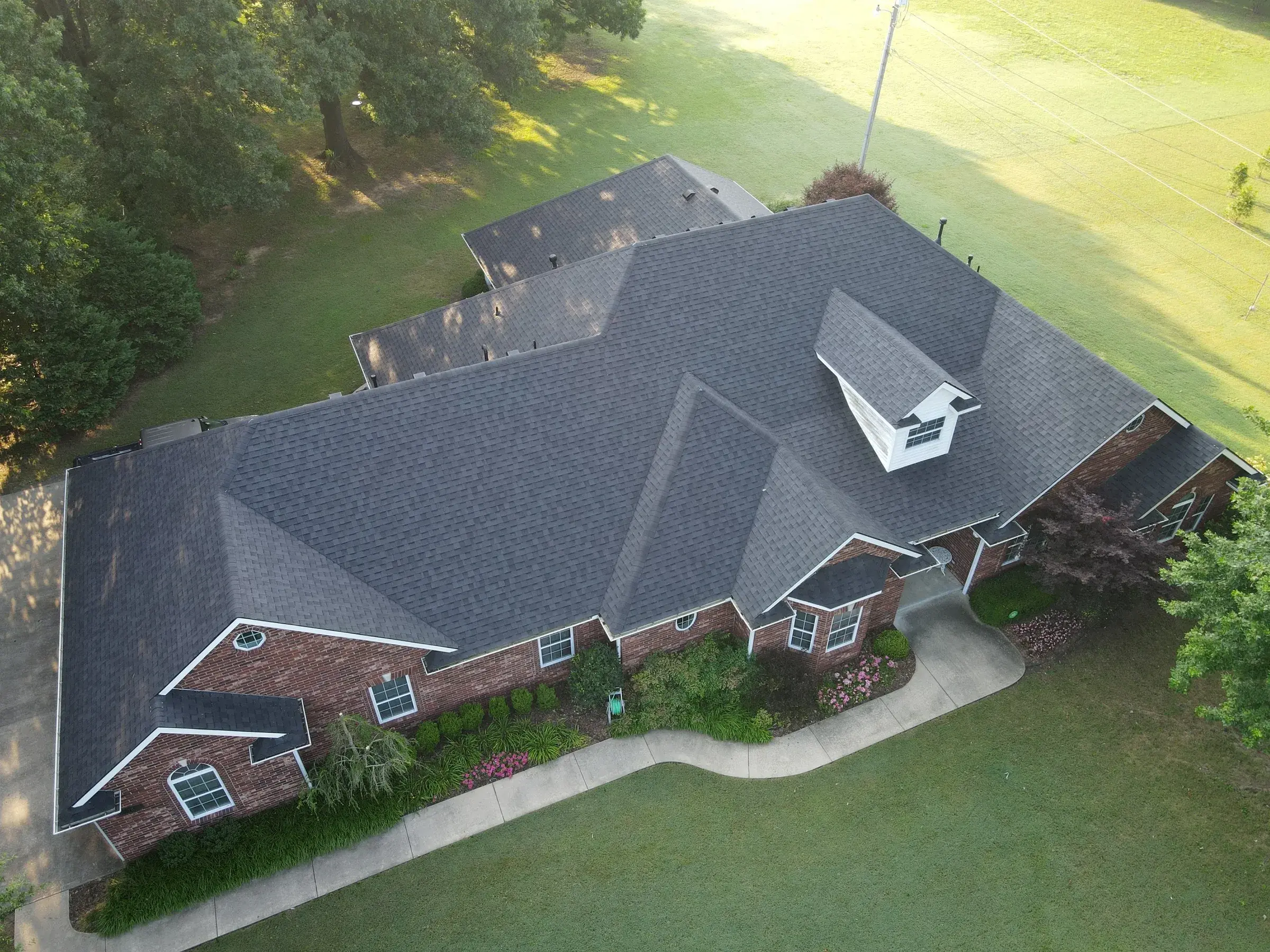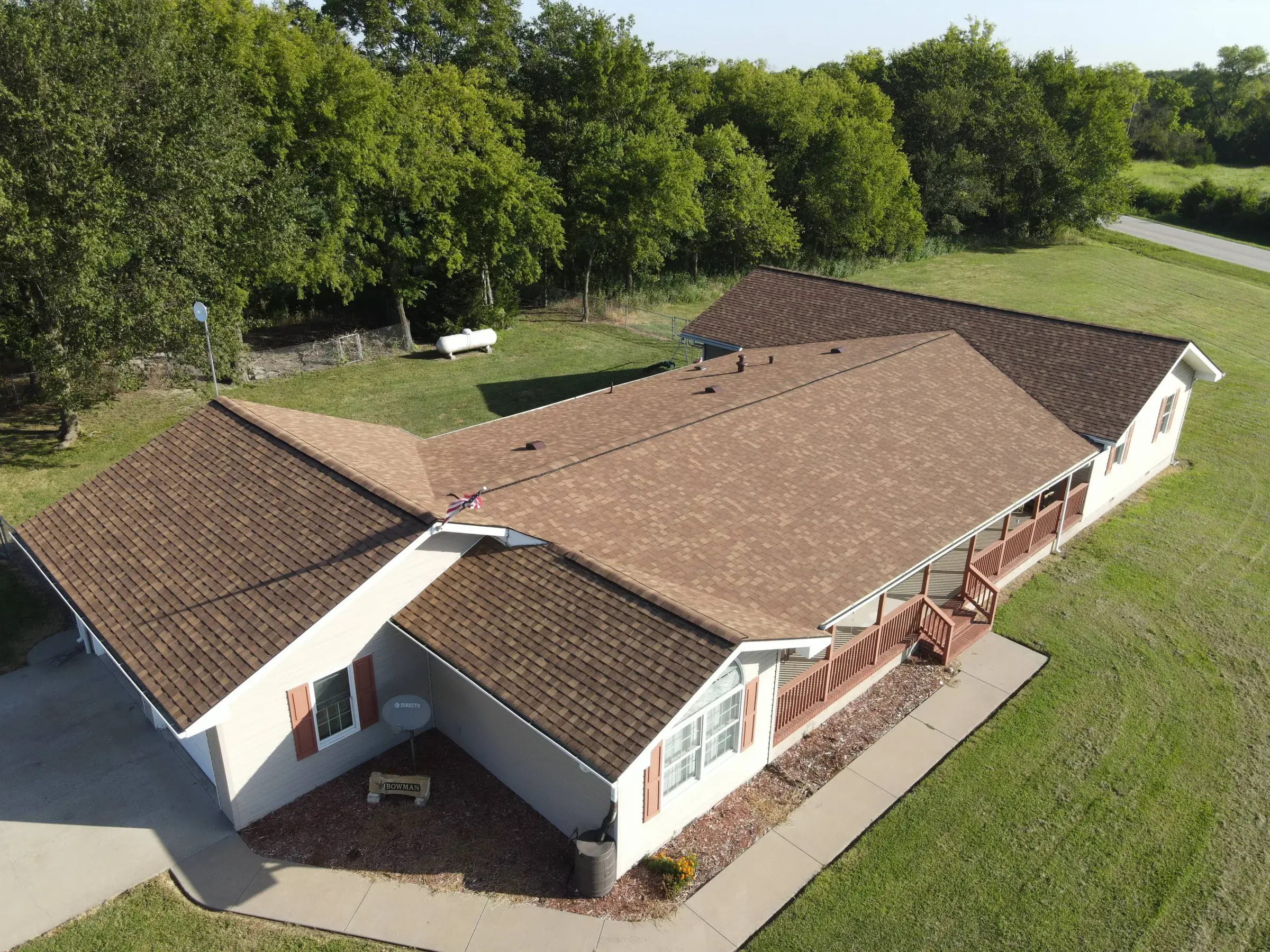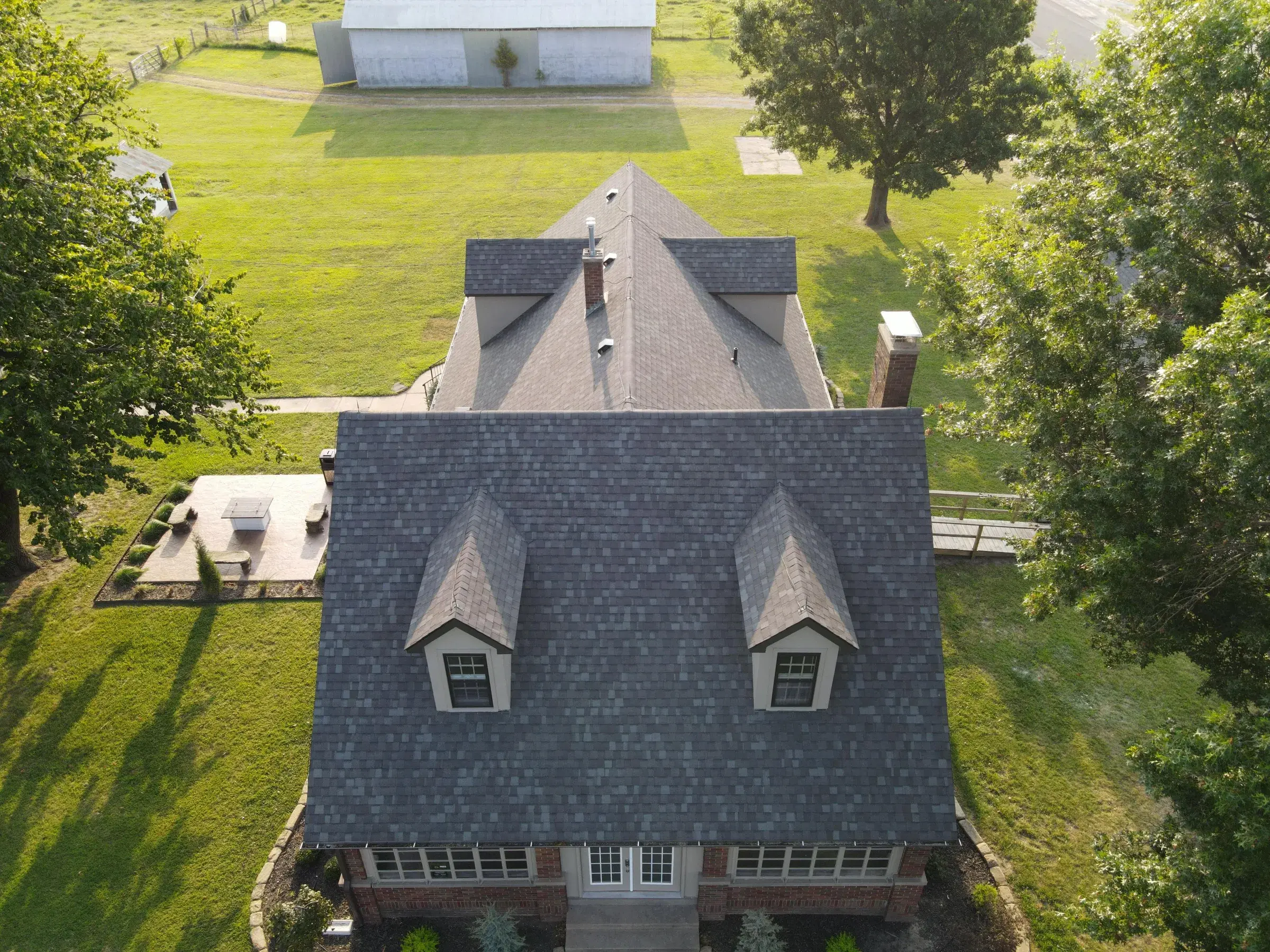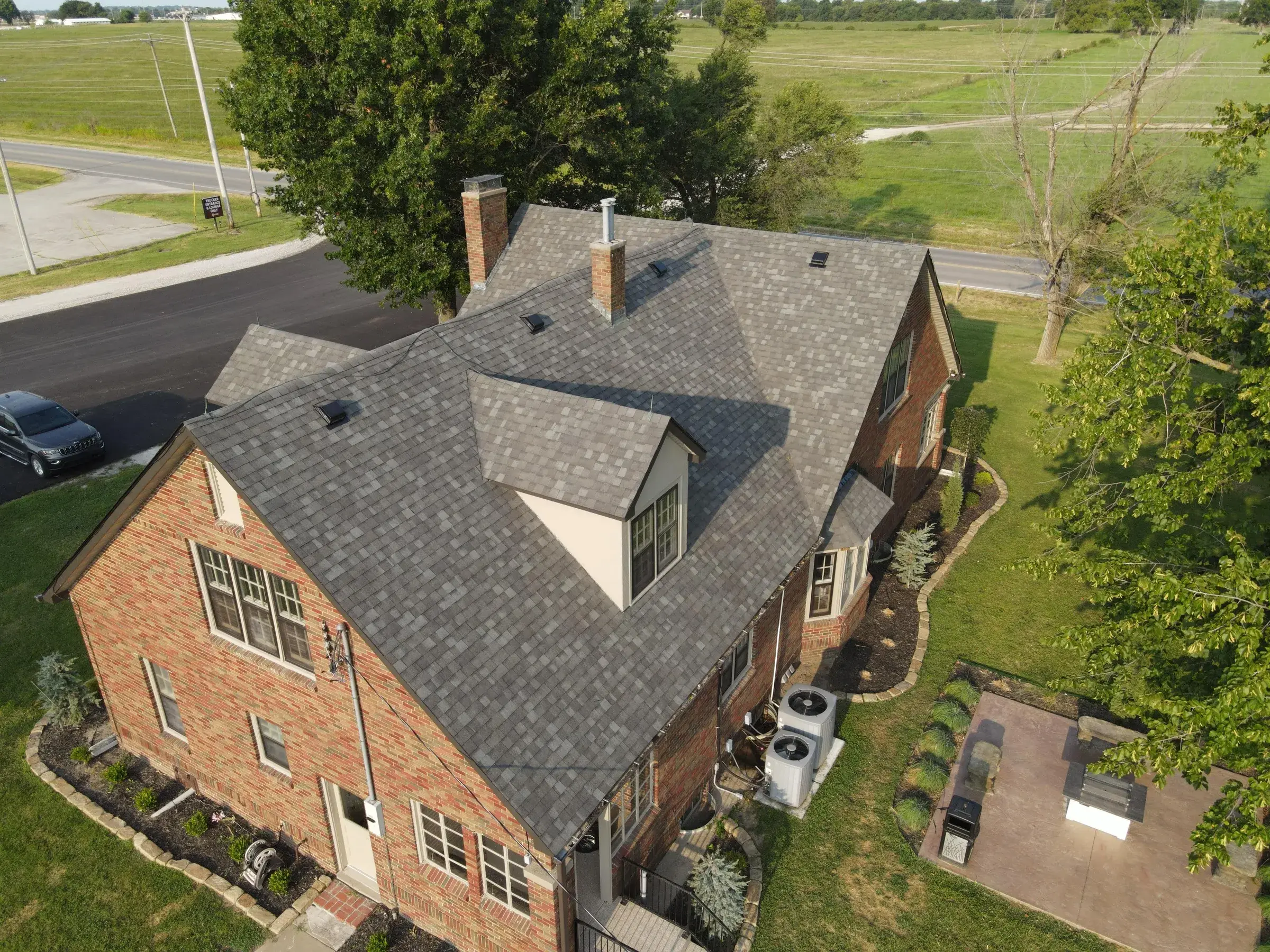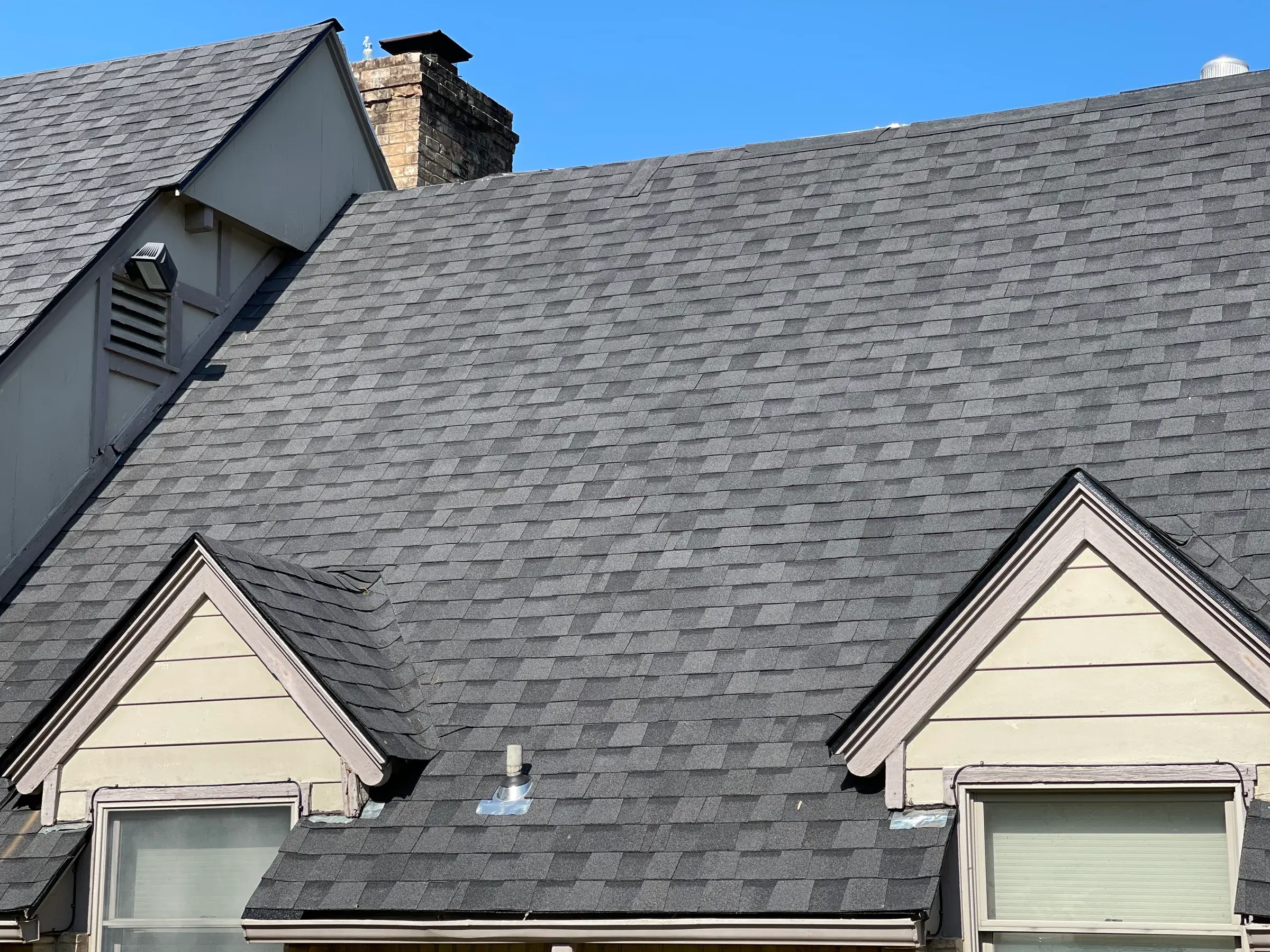
A thorough roof inspection covers five zones: ground-level exterior, the roof surface slope by slope, every penetration and flashing detail, gutters and drainage, and the attic from underneath. It typically takes 45 minutes to a couple of hours depending on size and access, and should end in a written report with photographs — not a verbal verdict.
What a Roof Inspection Is (and What It Isn't)
Two different things get called a roof inspection, and only one of them really is.
The first is the roof section of a general home inspection. The standards of practice published by InterNACHI and ASHI both allow a home inspector to observe the roof from the ground or from a ladder at the eave, and neither one requires the inspector to walk the surface. That is not a criticism of home inspectors — it is what the standard asks of them, and it exists for good safety reasons. It just means the roof paragraph in your closing packet may have been written from the driveway with binoculars, and it should not be mistaken for a roof inspection.
The second is a roofing contractor's inspection: someone on the roof, on every slope, in the attic afterward, producing photographs and a written record of condition. The National Roofing Contractors Association's maintenance guidance is to inspect a roof at least twice a year — spring and fall — and again after severe weather. In Ottawa County the "after severe weather" clause carries most of the weight. The Oklahoma Climatological Survey's 1991–2020 normals put this area at four to five days a year with hail larger than 0.75 inch. That is not a rare event you plan around. It is a recurring one you inspect after.
What an inspection is not: a sales appointment with a ladder. The whole point is a factual answer to "what condition is this roof in," and "it's fine, see you in two years" is a legitimate and common result. Our inspections are free and carry no obligation.
Step 1: The Ground-Level Walk-Around
The inspection starts on the ground, and it starts before anybody touches a ladder.
A person walks the full perimeter and sights the roof planes from all four sides. From down there you can see things you cannot see standing on the shingles: a ridge line that dips in the middle, a slope that has gone wavy, a plane that reads a different color than the one next to it because it lost more granules.
The soft metals tell on the storm
Then the inspector looks at everything around the house that dents. Gutters, downspouts, the metal wrapping on window and door trim, garage door panels, the fins on the air conditioner condenser, the mailbox, the grill lid. These are softer than shingles and they record a hailstorm plainly. Hail almost never lands on the roof and nowhere else, so when the roof looks suspicious and the soft metals are clean, that is worth knowing. When the condenser fins are flattened on the south side, that is worth knowing too.
Underneath the downspouts, at the splash blocks, the inspector looks for granules — the sand-like mineral coating on asphalt shingles. A small amount is normal, particularly on a roof in its first year. A cup of it under every downspout on a fifteen-year-old roof is the roof telling you it is shedding its sun protection.
Grade and landscaping get a look as well: where the downspouts let out, whether the soil falls away from the foundation, whether limbs are lying on the shingles. On the east side of Ottawa County — the Ozark Plains, rockier and wooded and rolling — overhanging trees are the usual finding. Out west in the Neosho Lowlands, where the ground opens up into prairie and farmland, the finding is the opposite: open wind fetch with nothing to slow anything down.
Step 2: The Roof Surface, Slope by Slope
A roof is not one thing. It is several planes that face different directions, and they age at different rates and get hit differently. A report that says "the roof has hail damage" is not much of a report. A report that says "the south and west slopes show random bruising, the north slope is clean" is.
Hail rarely falls straight down. It comes in on the wind, so it concentrates on the slopes facing the storm. Sun load does the same thing from the other direction — the Oklahoma Climatological Survey puts this area at roughly 62% of possible annual sunshine, with 57 days a year above 90°F and five above 100°F, and the slope that eats most of that will always be older than its birth certificate says.
What the inspector is actually looking at
A hail bruise is a spot where the granules were knocked off and the fiberglass mat underneath was fractured. Press it with a thumb and it gives — soft, like a bruise on a piece of fruit. It does not have to have punched through to matter, because the mat under it is broken and the surface above it is gone. Real hail hits are random in placement. Damage in a neat line or a path usually means feet, ladders, or a rake, not weather.
Wind shows differently. A creased shingle is one that folded back in a gust and laid down again — from the ground it looks fine, but the sealant strip is broken and the mat has a fracture running across it. Lifted tabs, missing tabs, and exposed nail heads all get counted. So do cupping and clawing (edges curling up or down as the shingle ages), blistering, and nail pops, where a fastener backs out and tents the shingle above it. Nail pops are a freeze-thaw story: the same survey records 89 nights a year below 32°F here, and a deck that expands through a 90-degree afternoon and contracts through a 25-degree night walks its nails out over time.
Counting matters. The common industry method for quantifying hail is a marked-off test square — typically ten feet by ten feet on each slope — with hits counted inside it, so the finding is a number instead of an adjective.
The inspector is also feeling the roof underfoot. A slope that flexes or feels spongy is not a shingle problem; it is a decking problem, and it changes the whole scope of the job. The warning signs of failing roof decking are worth understanding before anyone quotes you a price.
Step 3: Penetrations, Flashing, Valleys, and Chimneys
Most leaks do not start in the middle of a slope. They start where something interrupts the roof.
Pipe boots come first. The rubber collar that seals around a plumbing vent pipe is the shortest-lived part of most asphalt roofs — ultraviolet light hardens it, it cracks in a ring around the pipe, and water runs straight down the outside of the pipe into the ceiling below. With the UV load this area carries, a cracked boot on a roof with years of shingle life left is one of the most ordinary findings there is, and one of the cheapest fixes.
Flashing, explained
Flashing is the metal that seals a joint. Step flashing is the L-shaped pieces woven in shingle by shingle where a slope runs into a wall. Counter-flashing is the metal let into the chimney masonry that laps over the top of the base flashing. A kick-out is the small diverter at the bottom of a roof-to-wall run that throws water out into the gutter instead of letting it slide behind the siding — and a missing kick-out is a classic cause of wall rot that gets discovered years late, with no stain on the ceiling to warn anybody. All of it gets checked, along with valleys, chimney crickets, vents, skylights, and any satellite dish somebody screwed through the shingles. Flashing details fail more often than people expect, and they fail quietly.
Valleys get particular attention on the wooded east-county lots, where leaf and needle load packs into them, holds moisture, and wears the surface out from the top down.
Step 4: Gutters, Drip Edge, and Where the Water Goes
The roof's job is to move water. The inspection follows that water all the way to the ground.
Drip edge — the metal L-strip along the eaves and rakes that carries runoff off the deck edge and into the gutter instead of behind it — is required at eaves and rakes on asphalt shingle roofs under the current Oklahoma residential code. It is also one of the most common things missing on an older roof, and one of the easiest for a homeowner to check from the ground.
Gutters get inspected on both counts: as evidence and as equipment. As evidence, the dents in the top face of an aluminum gutter are a hail record. As equipment, the inspector checks pitch, fasteners, seams, whether the gutter has pulled away from the fascia, and how much debris is sitting in it. Then the downspouts: where they discharge, and whether they discharge somewhere useful. A downspout dumping at the foundation causes damage that gets blamed on the roof for years. Keeping gutters clear is dull, unglamorous maintenance that prevents a startling amount of expensive repair.
Step 5: The Attic — Why the Inside Tells the Truth
Plenty of "inspections" stop at the ladder. They should not. The underside of a roof answers questions the top cannot.
With the lights off, the inspector looks for daylight at penetrations and along the eaves. Then, with a light on, the decking gets read: water stains and their shape, whether a stain is dry or damp, delamination of OSB into fuzzy layers, darkening or mold growth, and the nail shanks poking through. Rusted nail shanks and a generally dark north slope usually are not a leak at all. They are condensation — warm indoor moisture reaching cold sheathing — which means the finding is a ventilation and insulation problem, not a shingle problem, and re-roofing would not have fixed it.
The inspector checks whether the bath fans and range hood actually exhaust outside or just blow into the attic, whether insulation is blocking the soffit vents, whether intake and exhaust ventilation are balanced, and whether the insulation is compressed or wet in spots. Attic ventilation matters more in this climate than people assume: with 89 freezing nights a year against 57 days above 90°F, the deck is cycling constantly, and a hot, damp attic ages a roof from underneath while you are looking at the outside of it.
On older houses — and Miami has been a town since 1891, so there are plenty — the decking may be spaced 1x6 planks rather than sheet goods. That is not a defect, but it changes what fasteners hold and what a replacement involves, so it belongs in the report.
The Five Zones at a Glance
| Zone | What gets checked | What a finding here usually means |
|---|---|---|
| 1. Ground level and exterior | Roof planes sighted from all four sides, gutters, downspouts, window and door trim wraps, siding, AC condenser fins, granules at splash blocks, grade and drainage | Dented soft metals put a storm on the record and corroborate what's found up top. Granule piles mean the surface is shedding faster than its age accounts for |
| 2. Roof surface, slope by slope | Bruising, creases, lifted or missing tabs, granule loss, cupping, blistering, exposed or popped nails, sealant strips, soft spots underfoot | Random bruising points to hail. Creases and lifted tabs point to wind. Even, uniform wear points to age and sun. Flex underfoot points to the decking, not the shingles |
| 3. Penetrations and flashing | Pipe boots, step flashing, counter-flashing, kick-out diverters, valleys, chimney and cricket, vents, skylights, dish mounts | Most leaks start here. A cracked boot or a missing kick-out can rot framing or a wall cavity long before anything on the ceiling gives it away |
| 4. Gutters and drainage | Drip edge at eaves and rakes, gutter pitch, fasteners and seams, dents, debris load, downspout discharge points | Water that leaves the roof correctly and then stops at the foundation causes damage the roof gets blamed for. Gutter dents also date the hail |
| 5. Attic, from underneath | Daylight at penetrations, stains on decking, rusted nail shanks, delamination, mold, wet or compressed insulation, bath fan terminations, soffit and ridge ventilation | The inside confirms or contradicts the outside. Rust and darkened sheathing usually mean condensation and ventilation — a different repair than a new roof |
What Belongs in the Written Report
The inspection is the work. The report is the product. If you do not get one in writing, with photographs, you did not get an inspection — you got an opinion, and you cannot take an opinion to a second contractor for comparison.
What your written inspection report should contain (print this and check it off)
- The address, the date of the inspection, and the name of the person who was actually on the roof
- The contractor's Oklahoma registration number — verifiable by anyone at verifyroofing.cib.ok.gov
- Photographs of the damage, each one identified by slope and location, not a loose gallery of anonymous close-ups
- Photographs of the undamaged areas too — a report that only shows problems is an argument, not a record
- Findings organized slope by slope (north, south, east, west), not lumped as "the roof"
- A count, not an adjective — hits per test square, number of creased shingles, number of missing tabs
- Roof measurements: total squares, pitch, number of penetrations, and how many layers are up there
- The approximate age of the roof and the shingle type, where they can be determined
- Attic findings, including ventilation and any moisture or condensation observations, stated separately from surface findings
- A plain-language conclusion: no action needed, repair, or replacement — and the reasoning behind it
- A written scope of the work being proposed, itemized, so it can be compared against another contractor's
- A separate written estimate for the work, with the price attached to that scope
How Long It Takes and What You Need to Do to Prepare
A single-story ranch with a simple gable roof and an accessible attic hatch can be done in about 45 minutes. A two-story with multiple valleys, dormers, a chimney, and a crawl-through attic can run two hours or more. Steep pitch, wet or iced surfaces, and blocked access all add time — and sometimes mean the roof gets looked at another day, because nobody should be walking a frosted 8/12.
Your part is small. Unlock the gate. Move vehicles out from under the eaves. Clear the path to the attic hatch — that is usually the closet or the garage ceiling, and it is usually full. Put the dog inside; a stranger on the roof is a lot to ask of a dog. If you have the closing paperwork, an old roofing invoice, or any idea when the roof went on, have it handy, because knowing the roof is nine years old versus twenty-two changes what a finding means.
You do not need to be on the roof and you should not try. You should be home at the end, though. The walkthrough — where somebody shows you the photographs on a screen and explains what each one is — is the part that is actually worth your time.
Red Flags: What a Sales Visit Looks Like Instead of an Inspection
After a hail event, Ottawa County fills up with out-of-state trucks. The Oklahoma Insurance Department publishes consumer guidance on exactly this: be cautious with contractors who show up at your door after a storm, verify who you are dealing with, and get everything in writing before you sign anything. Not everyone knocking is a problem. But the pattern is recognizable.
Red flags that you're being sold to, not inspected
- They knocked on your door after a storm and want to go up right now
- They will not put findings in writing, or show photos on a phone and will not send them to you
- The photos have no address, no date, and could be any roof in any state
- The price is only good today, or only if you sign before they leave
- The "authorization to inspect" they hand you turns out to be a contract, or gives them the job if insurance approves
- They offer to cover, waive, absorb, or "work with" your deductible in any form
- They offer you money, a discount, or a gift for a yard sign, a referral, or an online review on an insurance job
- They promise a "free roof," guaranteed approval, or no out-of-pocket cost
- They say they will file, handle, fight, or negotiate your claim for you
- They cannot give you an Oklahoma registration number you can check yourself
- They find damage on a slope, go up alone, and the damage is suddenly worse when they come down
- There is no written pre-contract disclosure and no explanation of your right to cancel
The cheapest protection available to you is free and takes a minute: the Oklahoma Construction Industries Board runs a public verification tool at verifyroofing.cib.ok.gov. Type in a name or a registration number and see whether the person on your roof is registered. Registration requires carrying at least $500,000 in liability insurance for residential work, so an unregistered contractor is also, quite possibly, an uninsured one. Almost nobody in this market tells homeowners that tool exists. It is worth knowing what else to ask a roofing contractor in Oklahoma before you hand over a deposit.
What Happens After — Your Options, Not Their Timeline
There are three honest outcomes and they are not equally exciting, which is the point.
The roof is fine. You get the report, you file it, and you inspect again on the NRCA's schedule — twice a year and after severe weather. Free inspections exist so that this outcome is not wasted money.
The roof needs a repair. Cracked boots, a few creased shingles, a failed kick-out, a length of missing drip edge. Targeted roof repair is the right answer far more often than the door-knocker's version suggests, and a good report makes the case for it plainly.
The roof needs replacement. If that is the finding, two Oklahoma specifics matter. First, if the inspection turned up a second layer of shingles, that changes the scope — Oklahoma amended IRC section R908.3.1.1 to require tear-off rather than shingle-over in defined conditions, so "we'll just lay over it" is not always on the table here. Second, the City of Miami requires a permit for new roofs and re-shingles. We pull it. A contractor who suggests skipping it is proposing that you own an unpermitted roof.
If the damage looks storm-related, the decision to contact your carrier is yours and the timing is yours. What we can do is hand you the photo documentation and a written estimate for the work we would perform, meet your adjuster on site if you want us there, and help you understand how the process runs. Your insurer decides what your policy covers. If you are considering impact-resistant shingles at replacement, ask your insurer directly whether they offer a premium credit for them — Oklahoma does not mandate one, and any contractor quoting you a percentage is guessing.
We are at 111 S Main St in Miami, on the old Route 66 alignment through town, and we work across northeast Oklahoma, southeast Kansas, southwest Missouri, and northwest Arkansas. Inspections and quotes are free. If you want one on the calendar, call (209) 758-8550.
Questions people ask about this
Do I have to be home during the roof inspection?
Not for the roof work itself, but you should be there at the end. The most valuable part is the walkthrough, where someone shows you the photographs and explains what each one shows and why it matters. You also need to let the inspector into the attic, which is where roughly half the useful information lives. If you can't be home, ask for the written report with photos rather than a phone call summary.
Is a free roof inspection actually free, or is it a sales pitch?
It can be either, and the report is how you tell the difference. A real inspection ends with written findings and photographs that you keep regardless of whether you hire anyone — including photos of the parts of your roof that are fine. A sales visit ends with pressure and a contract. Ours are free with no obligation, and "no work needed" is a normal result.
Can a roofing contractor tell me whether my insurance will cover the damage?
No, and be wary of anyone who says otherwise. A contractor documents the condition of your roof and gives you a written estimate for the work. Your carrier and its adjuster decide what your policy covers. Under Oklahoma's Title 36, a contractor who represents an insured's interests for compensation is acting as a public adjuster, which requires a licence — so offers to handle, fight, or negotiate your claim describe something a roofer isn't permitted to do.
How often should a roof in northeast Oklahoma be inspected?
The National Roofing Contractors Association recommends at least twice a year — spring and fall — plus an inspection after any severe weather. That last part matters here: the Oklahoma Climatological Survey's 1991–2020 normals record four to five days a year with hail larger than 0.75 inch in this area, so post-storm checks tend to outnumber the calendar ones.
How do I check that a roofing contractor is registered in Oklahoma?
Use the Oklahoma Construction Industries Board's public tool at verifyroofing.cib.ok.gov. Enter the company name or registration number and it will show you their status. Registration requires carrying at least $500,000 in liability insurance for residential work, so an unregistered contractor may also be an uninsured one. Note that Oklahoma, Kansas, and Arkansas issue registrations rather than licences, and Missouri has no state roofing licence at all.