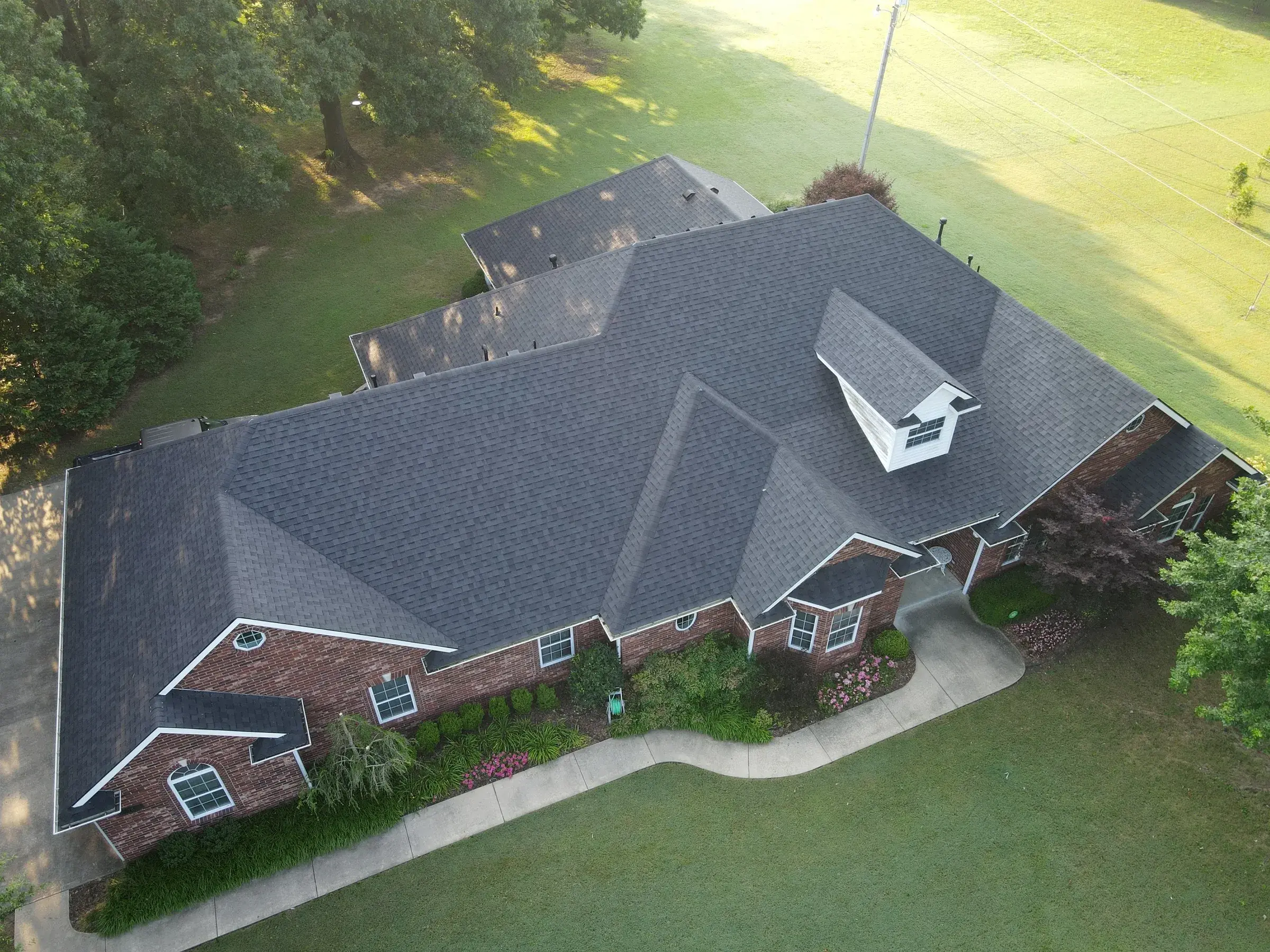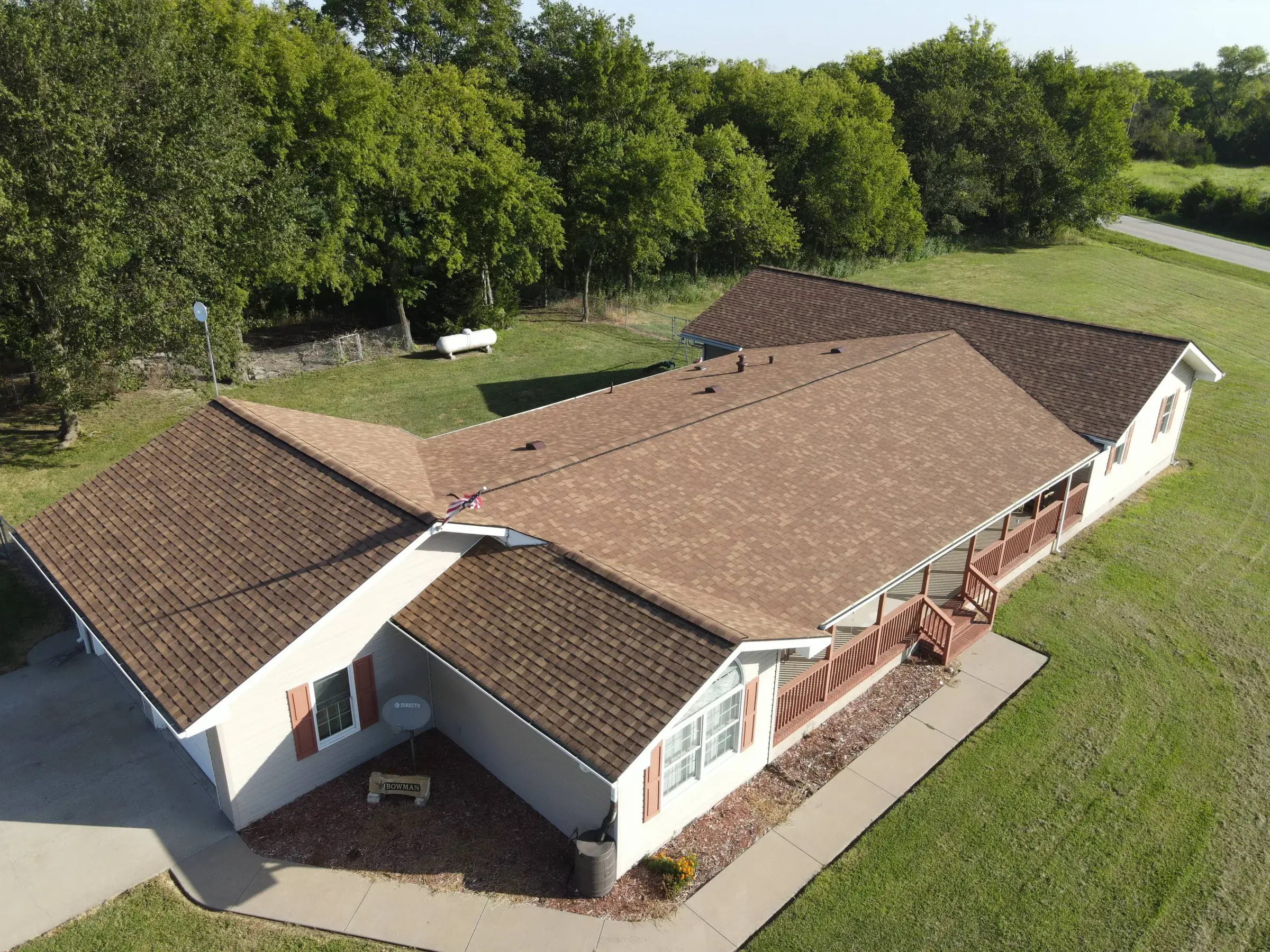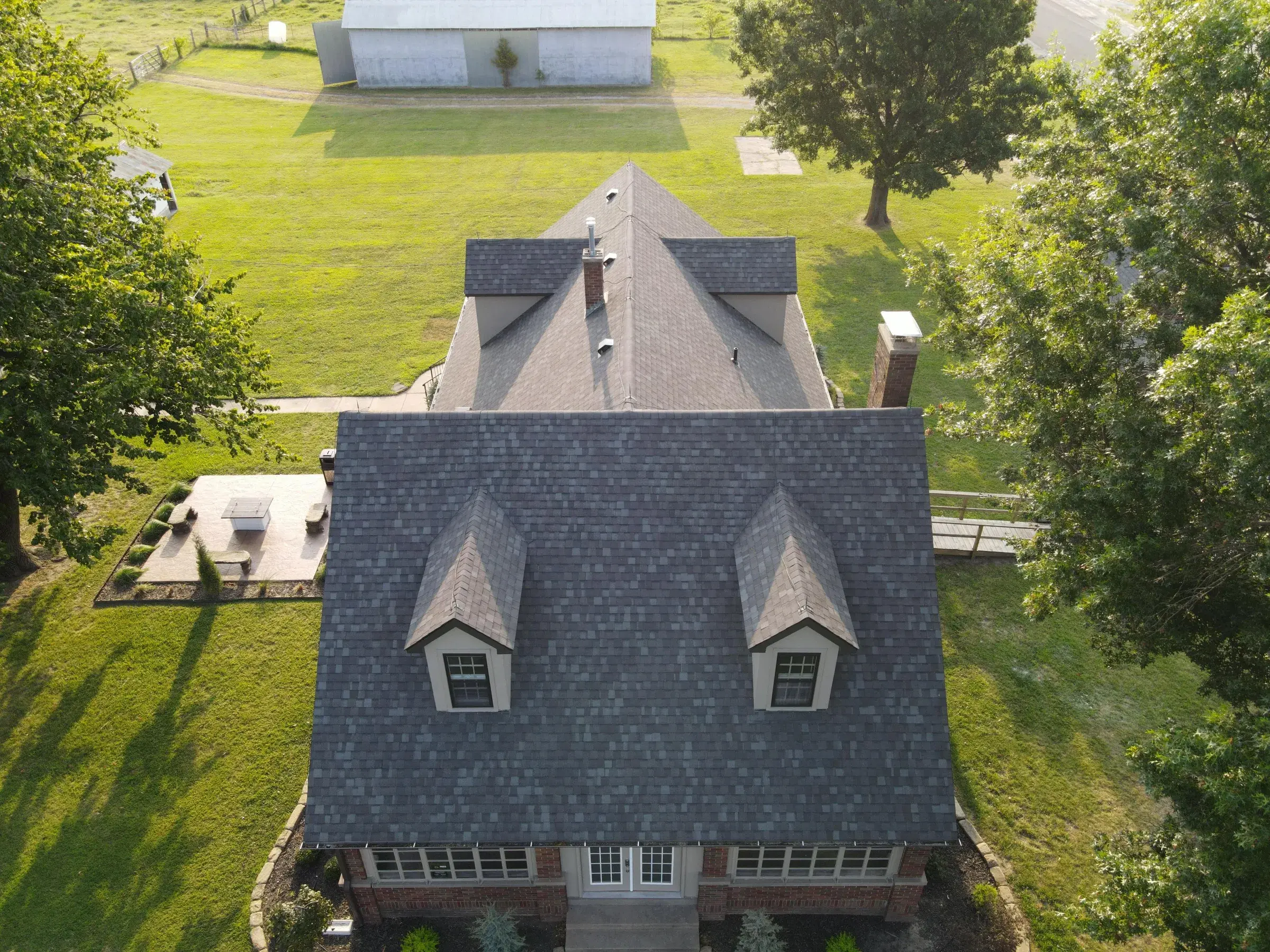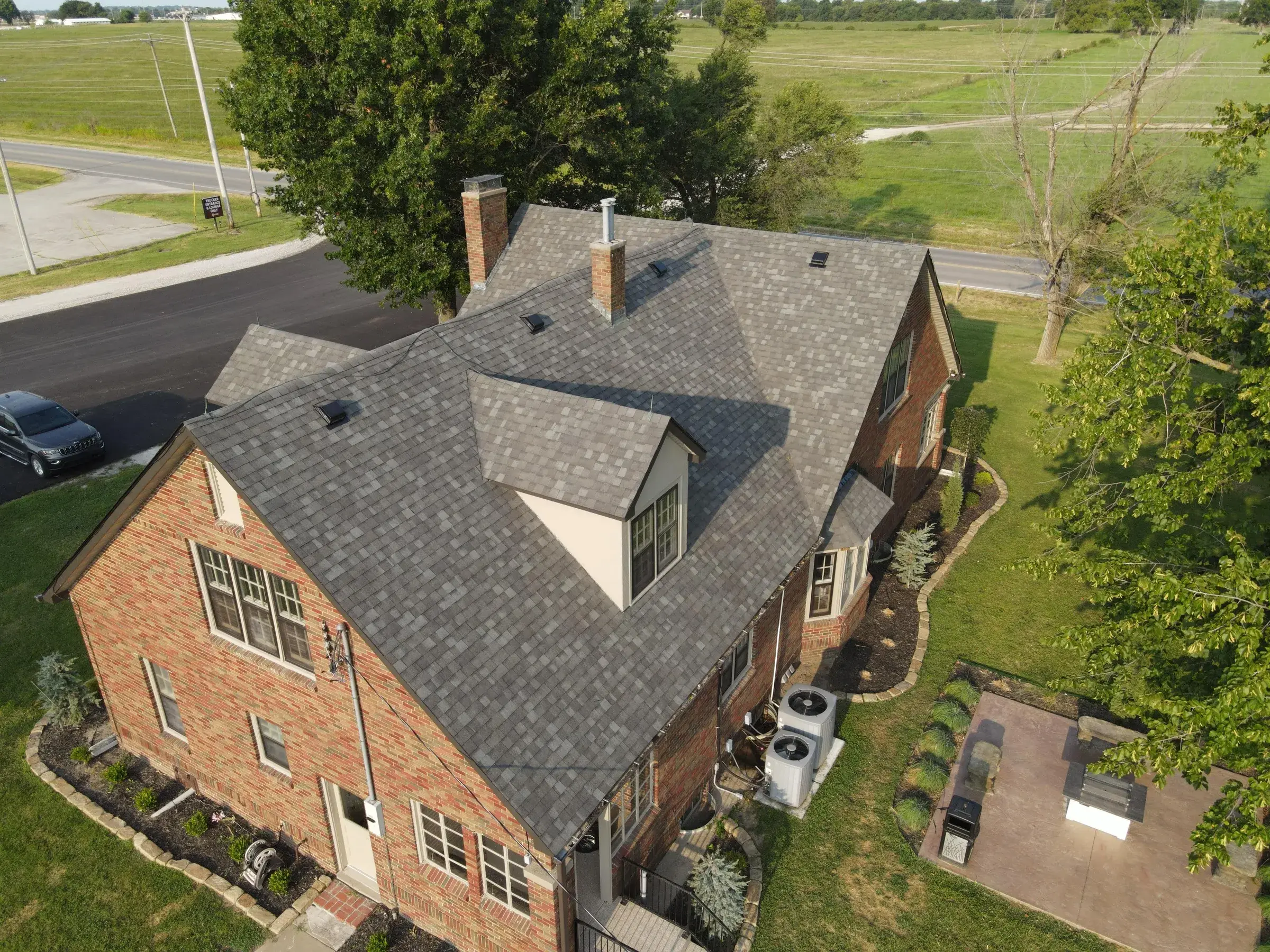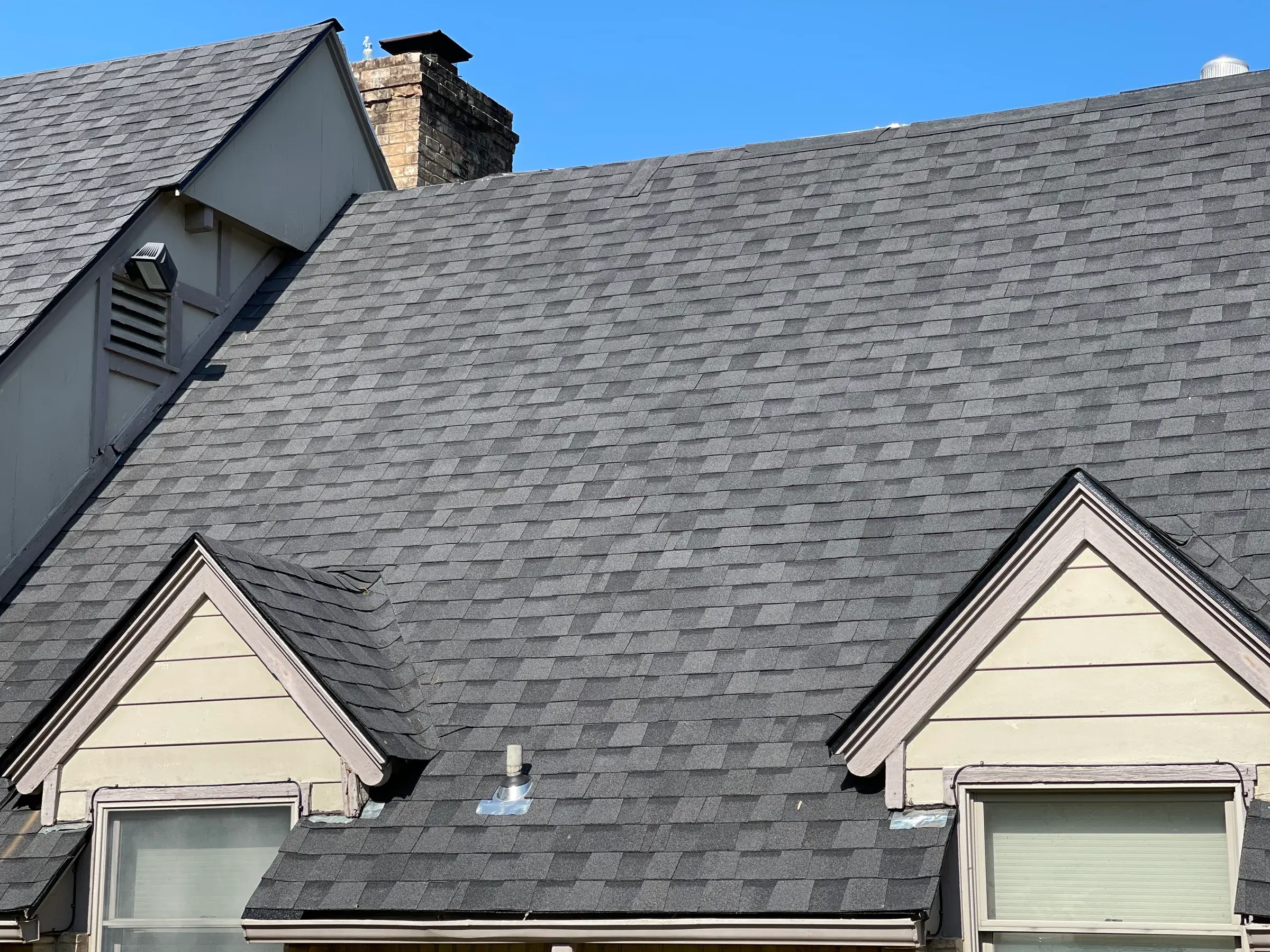
Repair makes sense when damage is isolated, the roof is well inside its expected service life, and the deck is sound. Replace when damage spans multiple slopes, the deck is compromised, or the roof is near end of life — because repairing a worn roof buys years you were about to lose anyway. Age, damage extent, and deck condition decide it.
The Five Variables That Actually Decide Repair vs. Replacement
Almost every disagreement about repairing or replacing a roof comes down to five things. Once you know which of the five is driving the answer, the decision usually stops being a coin flip and starts being arithmetic.
The five: how old the roof is compared with the service life you can reasonably expect from that system, how much of the roof surface is actually affected, whether the wood deck under the shingles is still sound, whether the existing shingle can still be matched, and what the repair costs per year of service it realistically buys.
They are not equal. Deck condition outranks everything. Age outranks damage extent. And cost per remaining year is the tiebreaker when the first four leave you undecided. Here is the order to work through them.
- Is the deck sound? If the plywood or board decking is soft, delaminated, or rotted across an area, no shingle repair fixes that. Go to replacement (or at minimum, a partial tear-off that exposes the bad wood).
- Is the roof well inside its expected service life? A roof in roughly the first two-thirds of its life has years left worth protecting. A roof past that point is spending money on time it was about to lose anyway.
- Is the damage confined to one area or one slope? Isolated damage repairs cleanly. Damage found on three or four slopes usually means the whole roof took the same hit at the same time.
- Can the shingle be matched closely enough that you can live with it? If the product is discontinued or the color has drifted, a repair leaves a visible patch. That is a comfort question, not a performance question — but it is yours to answer.
- Does the repair cost per year it buys come in well under the replacement cost per year? If yes, repair. If the two numbers are close, replace.
The rest of this article works through each variable and shows you the numbers and the physical evidence behind them.
Variable 1: Roof Age Against Expected Service Life
Age by itself is not a verdict. The National Roofing Contractors Association is direct about this: the service life of a roof system depends on the materials, the quality of the installation, attic ventilation, and the climate it sits in — which is why NRCA guidance points to condition assessment rather than a number on a calendar. Two identical roofs installed the same week in Miami can be in genuinely different shape at year fourteen if one has a properly vented attic and the other bakes.
It also helps to know what shingle standards actually promise, because most homeowners assume more than they should. ASTM D3462 is the specification asphalt shingles are tested against — tear strength, fastener pull-through, granule adhesion. It is a manufacturing quality standard. It is not a forecast of how many years the shingle survives on your house. Nothing in it says your roof will last a given number of years, and no honest contractor can tell you that either.
What Northeast Oklahoma does to the clock
This market ages roofs on the fast side, and the reasons are measurable. The Oklahoma Climatological Survey's 1991–2020 normals put Miami at 57 days a year above 90°F and five days above 100°F, with an August daily high normal of 91.5°F. Roughly 62% of possible sunshine reaches the ground here, so the UV load is steady. On the other end, there are 89 nights a year below freezing — that is 89 chances for water in a seam or a nail hole to freeze, expand, and work the material loose. Freeze-thaw does slow, quiet damage that nobody photographs.
Then there is hail. The Climatological Survey's figure for this area is 4 to 5 days a year with hail larger than 0.75 inch. Most of those days do nothing to your roof. A few of them do everything. That is the honest version — anyone quoting you a specific storm date and a specific hail size as a reason to act today is filling in blanks that the official record does not fill in.
So when you weigh age, weigh it against condition, not against a brochure. We wrote separately about what actually determines [how long roofs last in northeast Oklahoma](/blog/how-long-do-roofs-last-northeast-oklahoma), and the short version is that ventilation and installation quality move the number more than the shingle brand does.
Variable 2: How Much of the Roof Is Affected (One Slope or Four?)
This is the variable that separates a maintenance problem from a roof problem.
Damage from a single cause in a single place — a limb dropped on the north slope, a failed pipe boot, one length of step flashing (the L-shaped metal that ties the roof into a wall) that was never lapped correctly — is a repair. Nothing about the rest of the roof changed. You fix the one thing and the roof goes back to doing its job.
Damage spread across three or four slopes is a different animal. It means the whole roof took the same event at the same time, and the slope that looks fine today is usually just the slope nobody has walked yet.
What a hail bruise actually looks like
People expect hail damage to look like a hole. It rarely does. A hail bruise is a soft, dark, roughly circular spot where the granules were knocked loose and the fiberglass mat underneath was fractured. You find it as much by feel as by sight — press it and it gives slightly, like a bruise on an apple. That fractured mat is where water gets in later, sometimes a year or two later. The Insurance Institute for Business & Home Safety, which impact-tests shingles in a controlled lab, has built much of its roof performance research around exactly this failure mode: the shingle stops being watertight long before it stops looking like a shingle.
Ottawa County's east–west split matters here
Ottawa County is really two roofing environments. East of Miami you are into the Ozark Plains — rockier, wooded, rolling. Roofs there deal with tree debris, shade, moss on north slopes, and impact from limbs. That damage tends to be localized, which tends to favor repair. West of town is the Neosho Lowlands: flat prairie and farmland, with long open wind fetch and nothing to slow a storm down. Damage there tends to be uniform across the whole windward side of the house, which tends to favor replacement. Same county, different answer.
| Roof age | Isolated damage (one spot or one detail) | One slope affected | Multiple slopes affected |
|---|---|---|---|
| 0–7 years | Repair. Full stop. | Repair. Shingles and color should still match well. | Repair or partial — but find out why a young roof took this much. Installation or ventilation may be the real problem. |
| 8–15 years | Repair. | Repair if the shingle can be matched and the deck is sound. | Lean replace. Run the cost-per-year math before you commit. |
| 16+ years | Repair only as a stopgap while you plan and budget the replacement. | Lean replace. A patched slope on a worn roof usually fails at the seam between old and new. | Replace. |
Variable 3: Is the Deck Sound? Why This Overrules Everything Else
The deck is the plywood, OSB, or plank boards the whole roof is nailed to. Shingles are the wear layer. The deck is the structure. You can replace shingles as many times as you like; you cannot nail new shingles to wood that will not hold a nail.
This is also the variable homeowners cannot check from the ground, and the one some contractors skip because checking it takes time. IBHS research on roof performance keeps landing on the same point from a different angle: the sealed roof deck is what actually keeps water out of the house once shingles are gone. If the deck itself is wet or delaminating, the roof has already failed at the layer that matters most.
Signs the deck may be involved
- The roof feels spongy or gives underfoot when someone walks it — the single most reliable field sign.
- A roof plane looks wavy, dished, or sagging when you sight down it from the ground at a low angle.
- Daylight is visible through the deck when you are in the attic with the lights off.
- Water staining, dark streaks, or white mineral deposits on the rafters or the underside of the deck.
- Nail heads backing out and pushing shingles up from below — wood that has gone through repeated wet-dry cycles stops gripping.
- OSB edges that look swollen or fuzzy, like a book left in the rain and dried out.
- A persistent musty smell in the attic even on a dry week.
Any one of those earns a real look. Two or more and you should assume deck involvement until someone proves otherwise. We go into the specific patterns in more detail in our piece on [signs of roof decking damage](/blog/roof-decking-damage-signs).
The Oklahoma tear-off rule you should know about
There is a code point here that decides some of these cases for you. Oklahoma amended IRC section R908.3.1.1 so that in defined conditions a roof must be torn off rather than shingled over. That amendment exists precisely because a second layer hides the deck and adds weight to wood you never inspected. Ask any contractor proposing a layover to explain, on paper, why the amendment does not apply to your roof. The answer should be specific.
The City of Miami also requires a permit for new roofs and re-shingles. We pull it as part of the job. If a contractor tells you a re-shingle does not need one, that tells you something about the rest of their work.
Variable 4: Can the Existing Shingle Still Be Matched?
Matching is the variable people underestimate until they are standing in the driveway looking at the finished repair.
Three things work against you. Shingle lines get discontinued — the product on your roof from twelve years ago may simply not be manufactured anymore. Colors drift in the sun, and with roughly 62% annual sunshine here, a decade of UV takes weathered wood grey somewhere noticeably different from the weathered wood grey in the bundle. And even current products vary between production lots enough to read as a patch on a big open slope.
How much this matters depends on where the repair is. A patch on a back slope facing the treeline is a non-issue. The same patch on the slope facing Main Street is something you will look at every day for years.
Matching also has an insurance dimension, and here is the honest boundary on it: whether your policy covers replacing undamaged shingles for the sake of appearance is a coverage question your insurer decides under the terms of your policy. It is not something a roofer decides, and it is not something a roofer should be promising you. What we can do is document what is on your roof, photograph it, and give you a written estimate for the work we would perform. Your insurer takes it from there.
Variable 5: Cost Per Remaining Year — The Math That Cuts Through Opinion
When the first four variables leave you torn, this is the one that ends the argument. Take the cost of each path and divide it by the years of service it realistically buys. Compare the two per-year numbers. That is the whole method.
| Path | Illustrative cost | Years of service it realistically buys | Cost per year |
|---|---|---|---|
| Repair — 6-year-old roof, one pipe boot and eight shingles | $1,200 | 12 | $100 |
| Repair — 14-year-old roof, one slope reworked | $2,500 | 6 | $417 |
| Repair — 19-year-old roof, brittle shingles, worn field | $1,800 | 2 | $900 |
| Full replacement | $12,000 | 20 | $600 |
Read those rows carefully, because the numbers in them are arbitrary placeholders chosen to demonstrate the arithmetic. They are not our prices, they are not a market survey, and you should not use them to budget. Put your own written estimate figures in and re-run it.
What the pattern shows is real, though. Row one is not a close call — $100 a year against $600 a year means repairing a young roof is obviously the right use of your money. Row three is not a close call either, in the other direction: $900 a year to keep a nineteen-year-old roof limping is worse value than simply replacing it, and you will still be replacing it in two years. Row two is the genuine judgment call, and that is where the other four variables break the tie.
One caution about the middle column. "Years it buys" is an estimate, and it is only valid if the rest of the roof survives those years. A repair on a roof whose field is already brittle does not buy six years — it buys until the next slope fails. Be conservative with that number and the math stays honest. For context on what the replacement side of the equation involves in this market, we break it down in our guide to [roof replacement costs in Oklahoma](/blog/roof-replacement-cost-oklahoma).
Situations Where Repair Is Clearly the Right Call
Some cases do not need a framework at all. If your situation is on this list, a competent [roof repair](/services/roof-repair) is the correct answer and anyone pushing replacement should be asked why.
- A roof in the first half of its service life with damage confined to one identifiable spot.
- A failed pipe boot — the rubber collar around a plumbing vent. These crack from UV long before the shingles wear out. Replacing one is a routine repair, not a roof event.
- Flashing that was installed wrong from day one: missing kickout flashing at a roof-to-wall junction, or step flashing that was caulked in place instead of woven into the courses.
- Wind that lifted a run of shingles along one edge while the rest of the roof sealed down fine.
- A single limb strike from an Ozark-side tree, with a sound deck under it.
- Storm damage on a roof you know is young, where the immediate need is to stop water. Emergency tarping buys you the time to make the decision properly instead of under pressure.
Situations Where Repair Is a Bad Investment
And some cases are repair money you will not get back. In these, pricing out a [roof replacement](/services/roof-replacement) is the more honest starting point.
- Deck involvement across an area — spongy walk, sagging plane, staining on the rafters. This is the whole ballgame.
- Hail bruising verified on three or four slopes. The undamaged-looking slope is usually just the unwalked one.
- A roof in its last few years where the field shingles are brittle enough to crack when lifted. Repairing them creates new damage on the way in.
- Granule loss so advanced that the asphalt mat shows through across the slope. Once the granules go, the UV protection went with them.
- The second or third repair on the same roof in a handful of years. Three repairs at $1,200 is $3,600 spent on a roof you are still going to replace.
- Any roof where a contractor proposes shingling over the existing layer without explaining how Oklahoma's amended tear-off requirement is satisfied.
What an Inspection Should Tell You Before You Choose
You cannot run any of the math above without information, and the information has to come from someone on the roof. A [roof inspection](/services/roof-inspections) that ends with a verbal "yeah, it's shot" has told you nothing you can act on or verify.
A useful inspection report answers all five variables in writing. It should contain photographs of every slope, not a hero shot of the worst one. It should tell you what was found in test areas on each slope and how many hits were counted, so you can see whether the damage is isolated or general. It should state the deck's condition and say how that was determined. It should cover the flashings, the vents, the valleys, and the attic ventilation, because those are where roofs actually leak. And it should end with a plain recommendation and the reasoning behind it, in language you can repeat to somebody else.
That is what we hand over. Our inspections and quotes are free, you get a photo report of what is up there, and you get a written estimate for the work we would perform. If you have filed with your insurer and you would like us to meet your adjuster on site, we can do that. Coverage itself is your insurer's decision under your policy — we document, we estimate, we explain the process. That is the line, and it is set by Oklahoma law, not by preference.
Getting a Second Opinion Without Wasting Anyone's Time
If two contractors give you opposite answers, that is normal and it is worth resolving rather than just picking the cheaper number. The trick is making the two opinions actually comparable.
Give both contractors the same information: the roof's age if you know it, any past repairs, and where you have seen water. Do not tell the second contractor what the first one said — you want an independent read, not a reaction. Then compare scope line by line, not price to price. A $9,000 estimate and a $14,000 estimate are not comparable if one includes deck replacement, permit, and full tear-off and the other does not say.
Ask both the same five questions: What condition is the deck in, and how did you determine that? Which slopes did you walk, and what did you find on each? Is a tear-off required here under Oklahoma's amended code, and why? Are you pulling the City of Miami permit? What is your Oklahoma registration status? The answers sort people quickly.
Also check registration yourself on the Construction Industries Board's verification tool rather than taking anyone's word for it. Oklahoma issues roofing registrations, not licenses, under the Roofing Contractor Registration Act at 59 O.S. §§ 1151.1–1151.30 — the distinction matters, because a company advertising itself as a "licensed and bonded roofer" in this state is describing something Oklahoma does not issue. Kansas, Missouri, and Arkansas each handle this differently again, which is worth remembering if your property sits close to a state line.
If you want a straight read on which side of the line your roof falls, we're at 111 S Main St in Miami and we work across [Miami and the surrounding Ottawa County area](/locations/miami-ok). The inspection and the quote cost nothing, and if the answer is "repair it, you've got years left," that is what the report will say. (209) 758-8550.
Questions people ask about this
Is there an age at which a roof should just be replaced, regardless of condition?
No — and be skeptical of anyone who gives you one. The National Roofing Contractors Association ties service life to the materials, the installation quality, the attic ventilation, and the climate, which is why NRCA guidance emphasizes assessing condition rather than reading a calendar. Age tells you where to look and how carefully. Condition tells you what to do. A well-vented, well-installed roof at year sixteen can be in better shape than a poorly vented one at year ten.
Can a roofer tell whether my deck is damaged without tearing anything off?
Partially. A lot can be read from walking the roof (spongy spots), sighting the planes from the ground (sagging), and going into the attic (daylight, staining on the rafters, swollen OSB edges). Those signs are reliable enough to make the call in most cases. But confirming the full extent means opening up the affected area. That is one reason Oklahoma's amended tear-off requirement matters — shingling over a second layer hides deck that nobody ever actually looked at.
Will repairing part of my roof void the manufacturer's warranty on the rest?
It depends entirely on the specific manufacturer's warranty terms, which vary product by product, so read yours or ask the manufacturer directly. What is generally true is that warranty terms distinguish between material defects and workmanship, and improper repair work is a common exclusion. Get the repair scope in writing and keep the documentation.
How much of my roof has to be damaged before replacement is the better call?
There is no fixed percentage, and any contractor quoting you one is quoting a rule of thumb, not a standard. What actually matters is whether the damage is confined or general. Damage found in test areas on three or four slopes means the whole roof took the same event, and the clean-looking slope is usually just the one nobody walked yet. Damage in one identifiable spot on one slope is a repair, even if that spot is large.
Are impact-resistant shingles worth it in northeast Oklahoma?
They are worth asking about. The Oklahoma Climatological Survey records 4 to 5 days a year here with hail larger than 0.75 inch, and IBHS publishes lab impact-test research on shingle performance, which is the most useful independent data available. On insurance, be careful what you are told: Oklahoma does not require insurers to offer a discount for impact-resistant roofing. Some carriers offer one anyway. Ask your insurer directly whether yours does, and get the answer before you pay the upcharge.