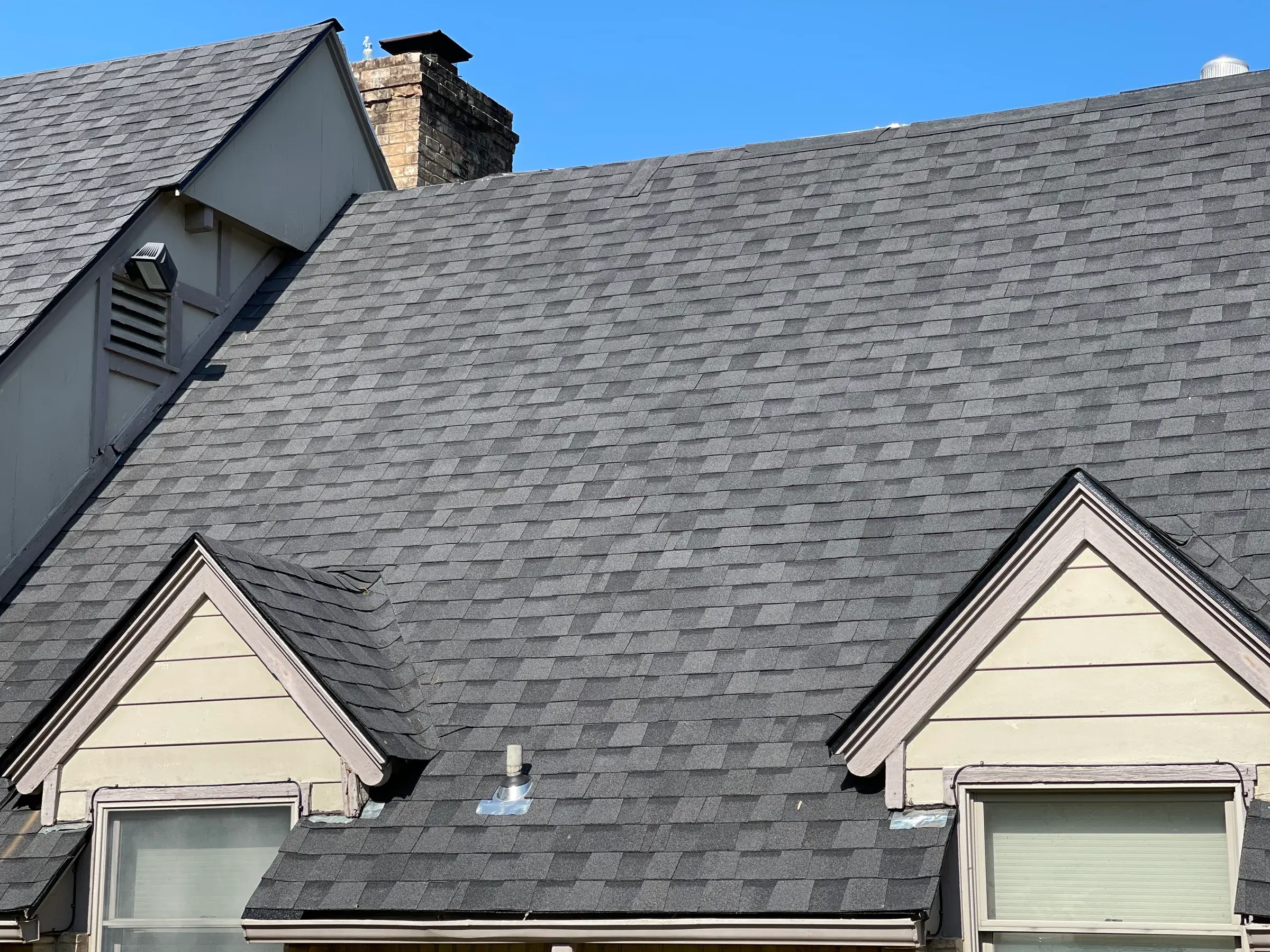
Commercial Roofing in Miami, Oklahoma
Miami's commercial building stock is Main Street storefronts, churches, clinics, small manufacturing and light industrial — not high-rises. That means low-slope membranes over old parapets, ponding on the back half of a 1950s building, and mechanical curbs nobody has looked at in years. That's the work we do.
If you own a storefront on Main Street, sit on a church board, or manage a shop building out toward the edge of town, your roof problem is almost certainly low-slope. Flat membranes, old masonry parapets, rooftop units nobody has climbed up to look at in years. This page is about that work — and about what to ask any contractor who bids it.
What Commercial Roofing Means in a Town of 13,000
Miami has about 12,969 people and is the county seat of Ottawa County, population 30,285. Nothing here is a high-rise. Commercial roofing in this town means a one- or two-storey building with a flat or nearly-flat roof, a parapet wall around the edge, and a rooftop air conditioner sitting on a curb. The buyer is usually the person who owns the building, or a board that meets once a month.
That changes the job. There is no regional facilities department to route the work through. The owner is often standing in the back room with a bucket. The question isn't "what's your process" — it's "is this roof done, or does it have five more years, and what do you need from me to decide."
Every building type here has its own failure pattern. Downtown masonry fails differently than a metal shop building out toward the edge of town. Both fail differently than a church that has grown three additions since it was built.
Main Street and Downtown: Parapets, Party Walls and Century-Old Buildings
Miami was founded in 1891 as a planned, platted town. That's why downtown is a continuous run of masonry buildings sharing walls with their neighbours. Main Street is also the historic Route 66 alignment — today's US-69. The Coleman Theatre opened on North Main in 1929, and a lot of what stands around it is the same vintage.
Old downtown buildings leak in ways that confuse people, because the water almost never enters where it shows up.
Coping and the parapet
The parapet is the low wall that runs up past the roof at the street edge and along the sides. On top of it sits coping — the metal or stone cap. Coping joints open up over time. Once they do, water runs down inside the wall cavity instead of onto the roof. You get a wet interior wall and a roof that looks perfectly fine from the ladder.
Party walls are the other downtown surprise. Your building and the one next door share a wall. If their roof drains toward it, or their coping is open, your tenant gets the leak. We'll tell you when the source is on the other side of the property line. We'd rather tell you that before you pay for a roof that was never the problem.
Then there's the deck. Buildings of this era often have wood plank decking rather than steel. That matters, because a mechanically attached membrane depends on fasteners holding in the deck, and fasteners don't hold in a rotten 1x6. We cut a small test opening and look before we specify anything.
Ponding on the back half is close to universal downtown. Rear additions settle, insulation compresses, and internal drains and scuppers get clogged or were undersized from the start. Standing water isn't automatically a failure. But it finds every seam and every fastener, and on a parapet building it has nowhere to go except through. Drainage gets solved first. Then the membrane.
Churches, Clinics and Community Buildings
These buildings grow. A sanctuary gets a fellowship hall, then an office wing, then a covered entry. Each addition brings a new roof plane, and every place two roofs meet is a transition. Transitions leak far more often than open field does.
The steep-to-low-slope transition is the one to watch. A shingle or metal slope dumps its water onto a small flat roof over an addition, so all the volume off the big roof arrives at one narrow strip of membrane. If the flashing there was done as an afterthought, that strip is where your money goes.
Clinics and offices bring a different constraint: you can't shut down. Tear-off is loud, and the vibration drops dust through ceiling tiles into the rooms below. That's a planning problem, not a surprise, so we plan it with you.
And the decision is rarely one person's. Church boards, nonprofits and multi-owner buildings need something they can actually vote on. A number written on a business card does not survive a board meeting. That's what the documentation section below is for.
Light Industrial and Manufacturing Buildings
Out from downtown the stock shifts to metal buildings and shop roofs — exposed-fastener panels, low slope, big open interiors.
Exposed-fastener metal fails at the fasteners, and Northeast Oklahoma is hard on them. We get about 57 days a year above 90 degrees and 89 nights a year below freezing. That is a great deal of expansion and contraction, and the panel moves against a screw that doesn't. The rubber washer under the screw head is also sitting in roughly 62 percent annual sunshine, and UV turns it hard and brittle. Screws back out. Washers crack. You end up with a hundred small leaks instead of one big one.
Re-screwing with larger-diameter fasteners into fresh metal is often the right first move, and it costs a fraction of a roof.
Translucent fibreglass skylight panels are the other item. They chalk, yellow and go brittle with age. Two consequences: they're the first thing hail breaks, and a brittle panel is a fall hazard for anyone walking that roof, including us. We treat every skylight as a hole in the roof until it's proven otherwise.
One more worth knowing. If your "leak" only shows up on cold mornings, and it drips across a wide area rather than from one point, that's usually condensation on the underside of an uninsulated metal deck — not a roof leak. A new roof will not fix it. We'll say so rather than sell you one.
Low-Slope Systems We Work On
There is no single right system. The right one depends on the substrate, the drainage, how long you intend to hold the building, and what's already up there.
- Single-ply membrane (TPO, PVC) — sheet goods with heat-welded seams. Mechanically attached, adhered or ballasted depending on what the deck can take.
- EPDM — rubber membrane, seamed with tape or adhesive. Forgiving and long-standing, but hail bruising on it is easy to miss without a slow, hands-on inspection.
- Modified bitumen — asphalt-based sheets in two or more plies. Self-adhered and cold-adhesive versions avoid open flame, which matters on an old wood deck.
- Coatings (silicone, acrylic) over an existing system — a genuine option when the roof underneath is sound and dry, and a waste of money when it isn't.
- Metal — standing seam and exposed-fastener, plus repair and re-fastening of what's already on the building.
On a century-old building with wood plank decking, torch-applied work deserves a hard conversation about fire watch, or a self-adhered product instead. We'd rather work slower than start a fire.
Roof Access, Tenants and Keeping the Doors Open During Work
Downtown, your building doesn't have a parking lot. It has a sidewalk on a street that Route 66 traffic still drives, and a back alley you share with your neighbours. That's where the dumpster and the loading have to go, and it gets worked out before day one, not on day one.
- Where the dumpster and the material sit, and for how long
- Which hours are loud — planned around your customers, deliveries or services
- Whether we reach the roof from the alley, the interior, or a lift out front
- Protection for stock, ceilings, and the rooftop mechanical units
- A magnet sweep of the parking and sidewalk at the end of each day
Most commercial work here does not require closing. It requires agreeing on a plan. Tell us when your busy hours are and we'll build the schedule around them.
Documenting a Commercial Roof for an Owner or a Board
Inspections and quotes are free, and on a commercial building the output should be a document, not a number.
- We walk the roof and photograph it — field, seams, perimeter, parapets and coping, drains and scuppers, every penetration and every mechanical curb.
- We open the roof where it's warranted: a core cut to find out whether the insulation is wet, and a test opening to identify the deck.
- You get a written photo report describing what we found and exactly where we found it.
- You get a written estimate for the work we would perform, broken out so you can see what's deck, what's drainage and what's membrane.
- If it has to be budgeted across more than one year, we lay it out by phase, with what's urgent separated from what can wait.
Storm damage gets its own pass. We average four to five days a year with hail larger than three-quarters of an inch. On a commercial building that damage is scattered across separate items — bruising in the membrane, bent fins and dented casings on rooftop units, torn flashing at parapets, displaced coping — and a carrier will scope each of those separately, so we document them separately.
Here's what we do and don't do on that. We document the damage with a photo report. We provide a written estimate for the work we would perform. If you ask, we can meet your adjuster on site and walk the roof with them. Your insurance company decides what is covered — not us. We'll help you understand the process, but we won't run your claim for you, and it's worth knowing why: in Oklahoma, a contractor who represents your interests on a claim for compensation is acting as a public adjuster, and that takes a separate licence.
For work inside city limits, the City of Miami requires a permit on new roofs and re-shingles, and we pull it. One note on code, because it gets misquoted at people: Oklahoma amended the residential code to require tear-off rather than shingling over in defined conditions. Your commercial low-slope building isn't under the residential code, so that rule isn't what decides tear-off versus recover on your roof. What decides it is the condition of the deck and whether the insulation is dry. Don't let anyone quote you a residential rule to justify a commercial shortcut.
Oklahoma's Commercial Roofer Endorsement: What It Is and Why You Should Ask
Most people don't know this one. It's worth two minutes.
Oklahoma does not licence roofers. It registers them, under the Roofing Contractor Registration Act. "Licensed and bonded" is a phrase you'll hear on the radio, but it isn't how this state actually works — and no state in our working area requires a surety bond for roofing.
Under that Act, commercial roofing is a separate endorsement on a contractor's registration. It is not automatically included with residential. The insurance floor is different too. State law sets the minimum general liability at not less than $1,000,000 for commercial work, against not less than $500,000 for residential, with the Construction Industries Board named as certificate holder.
So if you're taking bids on a commercial building, ask every bidder two questions: what is your registration number, and do you carry the commercial endorsement. That information is public and checkable. Ask us the same. A contractor who gets cagey about a public registration number has just told you something useful.
We're a family-owned shop at 111 S Main St in Miami — on the old alignment, same as most of the buildings on this page. Free inspections, free quotes, and emergency tarping to stop the damage while the real repair gets scoped properly. Call (209) 758-8550 and tell us what your building is doing.
Commercial Roofing questions
Do you work on flat and low-slope commercial roofs?
Yes — that's most of what commercial roofing is here. Single-ply membrane, modified bitumen and coatings over existing systems all show up on Miami's commercial buildings, and the right answer depends on the substrate, the drainage, and how long the owner intends to hold the building.
What is a commercial roofer endorsement in Oklahoma?
Oklahoma's Roofing Contractor Registration Act treats commercial roofing as a separate endorsement on a contractor's registration, and the insurance floor is higher — not less than $1,000,000 for commercial work versus not less than $500,000 for residential. Any contractor bidding your commercial building should be able to tell you their registration number and whether they carry the endorsement. Ask. It's public.
Can you work on our building without closing it?
Usually. Most commercial work here is scheduled around business hours, deliveries and tenants rather than around us. Tear-off is loud and dusty, so we'd rather plan the noisy phases with you than surprise your customers.
Why does water pond on the back of my building?
Old low-slope roofs settle, insulation compresses, and drains or scuppers get undersized or clogged. Ponding itself isn't automatically a failure, but standing water finds every seam and every fastener, and on a downtown building with a parapet it has nowhere to go but through. Drainage gets solved before the membrane does.
Can you give us documentation for our board or owner?
Yes. For churches, nonprofits and multi-owner buildings we put the inspection in writing with photos and a scope that a board can actually vote on, rather than a one-line number. If you need it laid out by phase so it can be budgeted across years, say so up front.
Do you handle storm damage on commercial buildings?
Yes, and it's a different inspection than a house. Hail bruising on a membrane, damaged mechanical units and curbs, torn flashing at parapets and displaced coping all get documented separately, because a carrier will scope them separately.
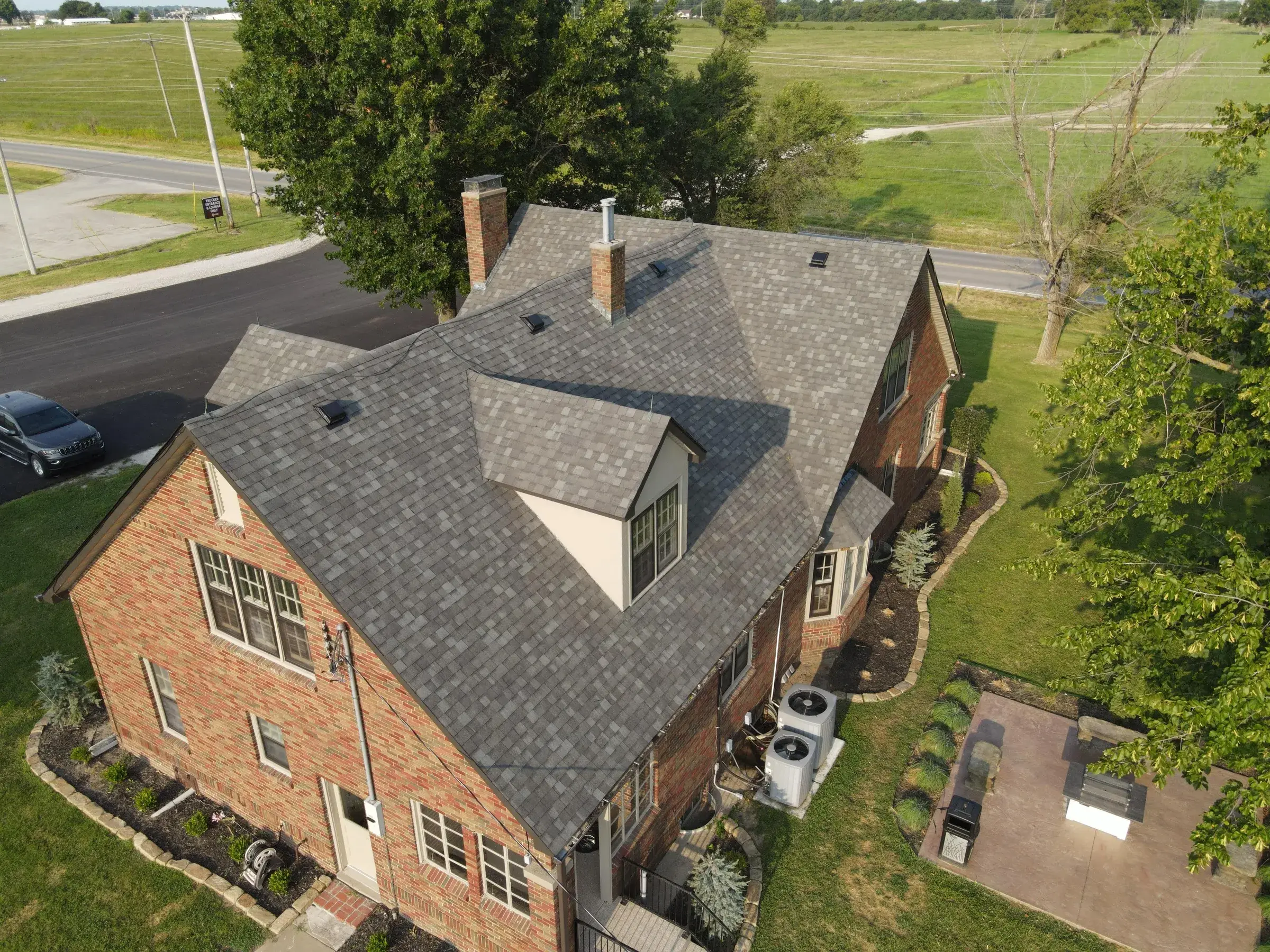
Protect Your Property with a Free Roof Inspection
Tell us what you're seeing. We'll arrange an inspection, explain the findings, and provide clear next steps without pressure.
- • A real look at the roof, not a sales visit
- • Photos of whatever we find, and what it means
- • A written quote if you want one — and an honest “you don’t need us yet” if that’s the answer