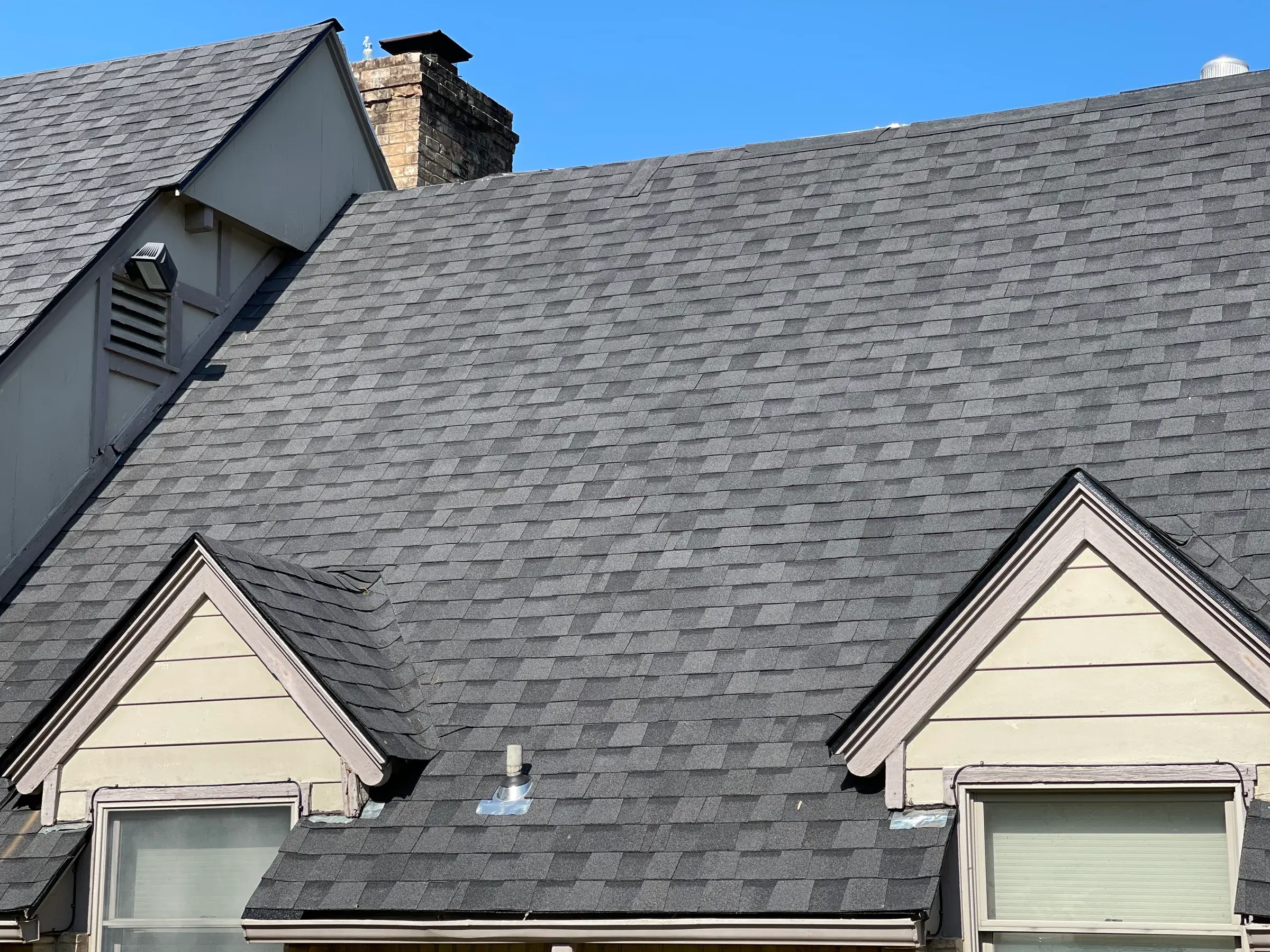
Roof Inspections in Miami, Oklahoma
An inspection is where every honest roofing job starts and where a lot of dishonest ones start too. Ours is free, it includes the attic when we can get to it, and it ends with photographs and a written finding — including the finding that your roof is fine and you should spend your money on something else.
A roof inspection should end with you knowing more than you did an hour ago — not with a contract on your tailgate. We walk the roof, get into the attic when we can, photograph what we find, and explain it in plain language. It's free, across Miami and Ottawa County. Sometimes the finding is that your roof is fine.
What Our Free Roof Inspection Includes
Most of an inspection happens before anyone touches a ladder. The ground tells you where to look. Granules washed out at the bottom of the downspouts. Dents in the gutter apron and in the aluminum fins on the AC condenser — soft metals record hail honestly, and they don't heal. Then we go up.
- Ground pass: gutters, downspout discharge, soft metals, siding, window wraps, condenser fins. Hail that hit the roof hit these too, and they're easier to read.
- Slope-by-slope walk. We check each roof plane separately, because hail arrives on a bearing. Bruising on the north and west slopes with a clean south slope is a real pattern. Uniform damage on every slope usually is not.
- Penetrations and transitions: pipe boots, vent caps, valleys, ridge, and the step flashing — the L-shaped metal pieces that tie the roof into a wall. This is where the actual leaks live.
- Attic, whenever we can safely get to it.
- Photographs of everything we call out, with a reference shot so you can tell where on the roof you're looking.
We note slope, layer count, and the condition of the field shingles against the condition of the penetrations. Those age at different rates, and the difference matters. A ten-year-old roof with a split pipe boot is not a roof problem. It's a short repair that looks like a roof problem from your ceiling.
The Attic Half of the Inspection (The Half Most Roofers Skip)
You cannot diagnose a roof from the top only. From above, decking looks like shingles. From underneath, decking tells you the truth: rusted nail shanks, dark staining around a chimney, a bright pinhole of daylight at a valley, or plywood that's gone soft and springy where water has been sitting for a couple of seasons.
The attic also settles the most common false alarm we get called out for. Northeast Oklahoma runs 89 nights a year below freezing. On a cold night, warm moist air from your house hits the underside of cold decking and condenses. It drips. It stains. It looks exactly like a leak, and it isn't — it's ventilation. Replacing shingles will not fix it, and anyone who sells you a roof for it either didn't look or didn't want to.
What Hail Actually Looks Like on a Shingle — and What It Doesn't
Ottawa County averages four to five days a year with hail larger than three-quarters of an inch. That's frequent enough that real damage is common here, and frequent enough that fake damage is a business model.
Real hail damage to an asphalt shingle is a bruise. Press it with your thumb and it gives, like a soft spot on an apple, because the fiberglass mat underneath has fractured. Granules are knocked loose and the asphalt below is exposed and dark. The hits are random in placement and consistent in size across a slope, and they show up in the soft metals nearby at the same size. That last part is the tell that's hardest to fake.
Here's what gets miscalled as hail, constantly, sometimes on purpose:
- Blistering — small pockmarks from gases escaping the asphalt. Round, hollow, no bruise, no mat fracture. Manufacturing and heat, not weather.
- Granule loss from age and UV. With about 62% annual sunshine and 57 days a year above 90 degrees, shingles here shed granules on schedule. Thinning is not impact.
- Mechanical marks — scuffs and heel prints from someone walking the roof. If the "damage" runs in a line, it's footsteps.
- Algae streaking. Common on shaded slopes on the wooded east side of the county. Cosmetic.
- Blowoffs and creased tabs. That's wind, which is a different conversation with a different scope.
Inspections After a Storm vs. Scheduled Inspections
After a storm, the inspection has a narrow job: establish what happened, to which slopes, and document it while it's fresh. We photograph the roof, the soft metals, and the collateral on siding and windows, and we give you a written estimate for the work we would perform. If you file, your insurer decides what's covered — not us, and not the person who knocked on your door. If you want us on site when your adjuster comes out, ask and we'll be there.
A scheduled inspection has a wider job and, honestly, saves more money. Twice a year is a sensible baseline here: once after spring storm season, once before winter. The reason is the freeze-thaw cycle. Water finds a gap in October, freezes in December, expands, opens the gap wider, thaws, goes deeper, and repeats — 89 times a year. A lifted flashing leg found in April is a repair. The same flashing leg found in January is a ceiling.
That's doubly true if you're not there. Roughly 13% of Ottawa County's housing sits vacant a good part of the year, much of it second homes near Grand Lake. Nobody hears the drip in a house nobody's in. By the time somebody opens it up in May, the decking's gone.
Inspections for a Real Estate Transaction
Buyers and agents ask for this often, and the useful output isn't a pass/fail. It's two things: a realistic read on remaining life, and a scope of what it would actually cost to put the roof right. That second number is what you take into a negotiation.
Layer count is the item that moves the number most. A roof with two or three layers on it costs meaningfully more to replace than a roof with one, because all of it has to come off and go in a dumpster. On a house near the county median value of $123,300, that difference is not a rounding error. We count layers at the rake edge and tell you the number before you're under contract, not after.
Inspecting an Older Miami Roof: Layers, Decking and Discontinued Shingles
Miami platted in 1891 and peaked in population in 1980. A lot of the housing stock reflects that, and older roofs bring their own set of findings. Three come up over and over.
Layers and the tear-off rule
Oklahoma amended IRC section R908.3.1.1 to require tear-off rather than shingling over in defined conditions. So "just go over it" is often not on the table, whatever a door-knocker tells you. It's also worth knowing the City of Miami requires a permit for new roofs and re-shingles. We pull it. If a bid doesn't mention a permit, ask why.
Decking under the shingles
On older houses we frequently find plank decking with gaps between the boards rather than solid sheathing, and we sound the deck as we walk it — a soft spot underfoot means rot underneath, and it won't hold a nail. Nobody can promise you a deck condition from the ground, and any number quoted without a decking allowance is a number that's going to change.
Discontinued shingles
If your shingle line is out of production, a spot repair won't match, and on a small area that's usually fine. On a whole slope facing the street, it isn't. We'd rather tell you that at the inspection than surprise you with it mid-job.
Red Flags: How Storm-Chaser "Inspections" Work
Miami gets worked hard by out-of-market crews after storms. The pattern is consistent enough to describe. A free inspection is offered at the door. The inspector goes up alone. He comes down with photos of chalk-circled marks you can't verify, tells you it's totaled, and produces an agreement to sign right there — usually one that ties you to him if a claim is approved. The pressure is the product.
- Chalk circles you didn't see drawn. Ask to see the roof yourself, or ask for photos wide enough to place the marks on an actual slope.
- Damage on all four slopes in identical density. Hail doesn't work that way.
- Any offer touching your deductible — waiving it, covering it, "working it into the price."
- Anything of value dangled for a signature or a review: a gift card, a yard-sign discount, a referral kickback.
- A crew that can't give you a registration number, or a phone number with an area code from three states away.
- Someone offering to handle, file, or negotiate the claim on your behalf.
What You Get at the End: Photos, Findings, and a Straight Answer
You get a photo report of what we found, in order, with enough context to see where each shot was taken. You get an explanation in plain language, in your driveway, with the pictures in front of you. If there's work worth doing, you get a written estimate for the work we would perform. If there's a claim in it, we can walk you through how the process generally goes and meet your adjuster on site if you want us there — the coverage decision is your insurer's to make.
And if the roof is fine, we say so and go home. A roof with ten years left has ten years left. We're based on Main Street in Miami and we're not leaving after the next storm passes, which means telling you that your roof is fine costs us nothing and telling you it isn't would cost us everything. That's the whole basis of the thing.
Call (209) 758-8550 to get on the schedule, or reach us through the contact page. No obligation, nothing to sign.
Roof Inspections questions
Is the inspection really free?
Yes, and there's no obligation attached to it. We're not going to hand you a contract at the end of it. You get photos of what we found and a written estimate only if there's something worth estimating.
What does hail damage actually look like on my roof?
On asphalt shingles, real hail damage is a bruise — a soft, dented spot where the mat is fractured and granules are knocked loose, usually random in pattern and matching in size across slopes. What it is not: scuffs, blistering, manufacturing defects, or mechanical marks from someone walking the roof. Those get miscalled as hail constantly, sometimes on purpose.
Someone knocked on my door and said I have storm damage. Should I let them on my roof?
Slow down first. Under Oklahoma law a roofing contractor cannot advertise or promise to pay any part of your insurance deductible, and any contract tied to an insurance claim has to carry specific disclosures and a cancellation right. If a stranger is pressuring you to sign on the spot, that's the signal to stop, get their registration number, and get a second opinion.
Do you inspect the attic too?
Whenever we can safely access it, yes. Half of what looks like a roof leak from inside a house is condensation from poor attic ventilation, and half of the real leaks are only visible from underneath as staining on the decking. Inspecting shingles alone tells you a fraction of the story.
Can you inspect a roof for a home I'm buying?
Yes. Buyers and agents ask for this often, and the useful output is a realistic remaining-life read plus a scope of what it would take to fix what's there — something you can use in negotiation. We'll tell you if the roof has three layers on it, because that changes the cost of the next one substantially.
How often should a roof be inspected in northeast Oklahoma?
Twice a year is a reasonable baseline here — once after the spring storm season and once before winter — plus after any storm that drops hail or brings a hard wind through your area. This corner of Oklahoma runs through a lot of weather in a year, and small failures found in April are cheap compared to the same failure found in January.
Will you tell me if my roof is fine?
Yes, and it happens regularly. A roof that has ten years left is a roof that has ten years left. Telling you otherwise would be the thing that costs us your business the next time you actually need us.
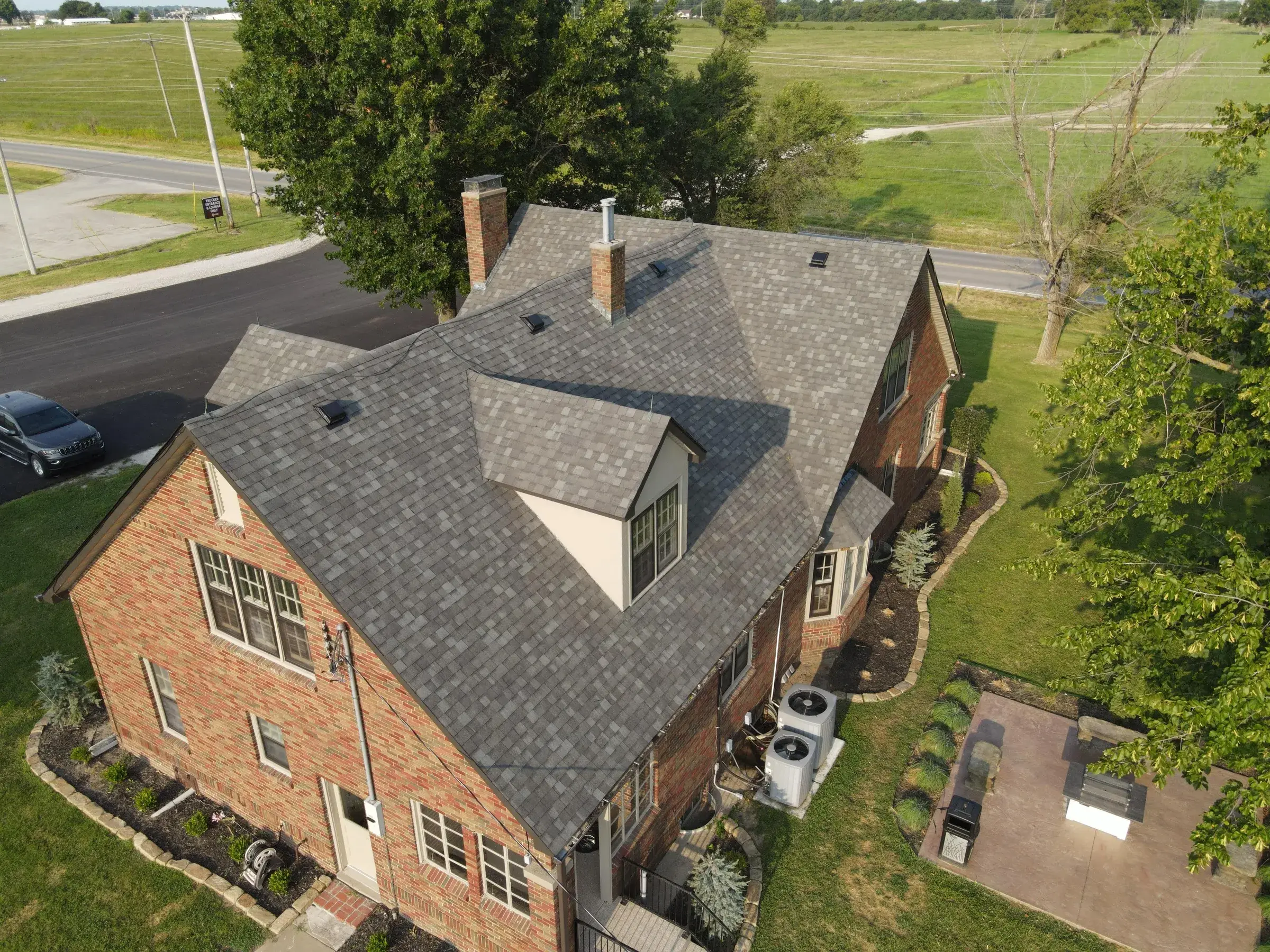
Protect Your Property with a Free Roof Inspection
Tell us what you're seeing. We'll arrange an inspection, explain the findings, and provide clear next steps without pressure.
- • A real look at the roof, not a sales visit
- • Photos of whatever we find, and what it means
- • A written quote if you want one — and an honest “you don’t need us yet” if that’s the answer