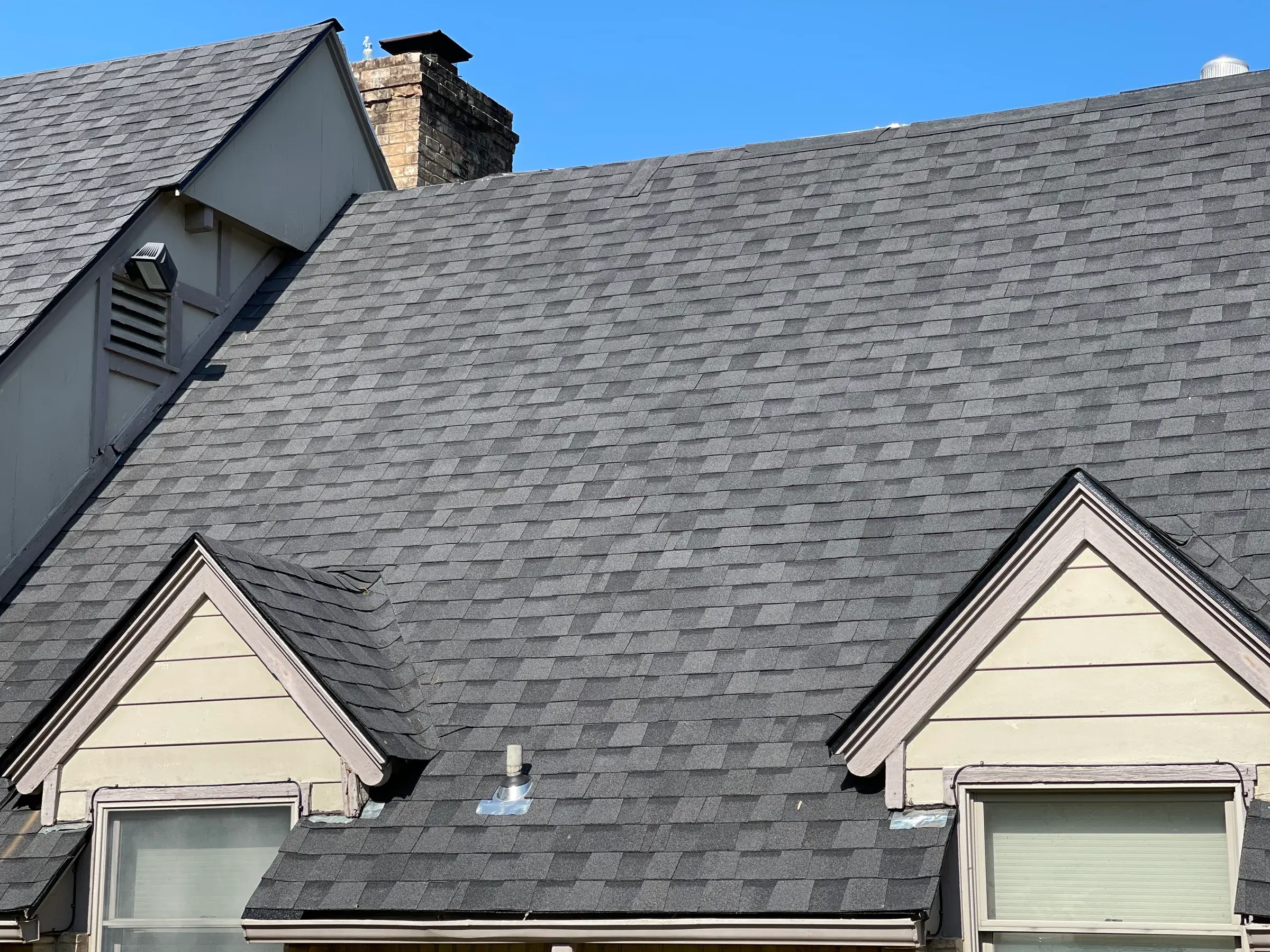
Roof Maintenance in Miami, Oklahoma
Roofs here don't fail from one bad day. They fail from a hundred small ones: a sealant joint that opened in a February freeze, a valley that filled with oak leaves in November, a boot that cooked in July. Maintenance is finding those in daylight instead of at 2 a.m. with a bucket.
Roof maintenance here is a calendar problem, not a checklist problem. Ottawa County runs the full range in twelve months — storm season, plains heat, and a genuine freeze — and each one attacks a different part of your roof. This page walks the year the way we walk it: what fails, when it fails, and why the leak you find in March started in February.
The Northeast Oklahoma Roofing Year, Season by Season
Roofs here don't wear out evenly. The field of shingles ages slowly and predictably. The details — flashing, pipe boots, fasteners, valleys, seams — age in jumps, and they age because of what the weather did to them last Tuesday.
Miami sits at 778 feet on the Neosho, out where plains heat and real winter both reach. The climate normals for this area record 57 days a year above 90 degrees, five of them above 100, and 89 nights a year that fall below freezing. Read those two numbers together and you have the entire maintenance problem: every material on your roof expands in July and contracts in January, and they don't all do it at the same rate.
Metal moves more than asphalt. Sealant moves more than metal. Where two materials meet and move differently, a joint opens. That isn't a defect — it's physics, and it happens on good roofs put on by good crews. Maintenance is the habit of closing those joints back up before water finds them.
So we work the year, not a generic checklist. Twice around covers most roofs: once in late spring after storm season has finished its business, once in autumn before the first hard freeze. Here's what each season actually does to your roof.
Spring: After the Storm Season, Before the Heat
Spring is the reckoning. Northeast Oklahoma averages four to five days a year with hail larger than three quarters of an inch, and most of it arrives in the first half of the year. The trouble with hail is that it rarely announces itself on the shingle. It bruises — the impact fractures the fiberglass mat beneath the surface and knocks granules loose — and the shingle keeps looking fine from the driveway for a year or two while the exposed asphalt cooks.
So we don't start on the shingles. We start on the soft metals: gutter aprons, downspouts, vent hoods, roof jacks, and the fins on your AC condenser. Those dent before asphalt shows anything at all. If soft metal at ground level took hits, the roof took hits and we go looking hard. If the soft metals are clean, you probably have a spring roof and not a hail roof.
Then wind. Spring wind lifts shingles at the rakes and eaves — the edges — because that's where uplift is highest. A shingle can break its sealant bond and lay right back down looking perfect. We check that bond by hand along the perimeter, and we look at ridge caps, which sit highest and take the most.
Summer: What 100-Degree Decking Does to a Roof
Air temperature isn't roof temperature. A dark roof in full sun runs well above whatever your porch thermometer says, and this area collects roughly 62 percent of its possible sunshine in a year. That's a great many ultraviolet hours falling on materials that were never going to enjoy them.
The pipe boot is the first thing to go
The rubber collar around your plumbing vent stacks — the pipe boot — is usually neoprene or EPDM. Sun bakes the flexibility out of it. It shrinks, hardens, and splits in a ring around the pipe. Once it splits, every rain runs straight down the outside of that pipe and into your attic. It's a small, cheap part. It's also the single most common leak we find on roofs that are otherwise in decent shape, and it fails on a schedule that has almost nothing to do with how old your shingles are.
Summer also shows you your ventilation. If the attic is baking, the underside of the decking is baking, and shingles cook from both sides at once. We look for intake that's been choked off — blown-in insulation pushed out over the soffit vents is the usual culprit, and it's completely invisible from outside. A ridge vent with no intake feeding it is a decoration.
Autumn: Debris, Valleys and the Ozark Tree Line East of Miami
Ottawa County is two different maintenance problems wearing one name, and the line runs roughly through Miami.
East of town you're into the Ozark Plains — rockier, rolling, wooded. Roofs over there have a tree problem. Leaves pack into valleys and gutters, and a packed valley doesn't shed water, it redirects it sideways underneath the shingle courses on either side. Overhanging limbs abrade the surface every time the wind blows. Shaded north slopes stay damp long enough to grow algae and moss, which holds water against the shingle instead of letting it run.
West of Miami you're in the Neosho Lowlands — flat, open prairie and farmland. Hardly any trees, so hardly any debris. What those roofs get instead is wind with nothing standing in front of it. Rakes, eaves, drip edge, ridge caps and every exposed fastener take a beating a wooded lot never sees.
Same county, same crew, two genuinely different autumn visits. East side, we're clearing and cutting back. West side, we're checking sealant bonds and edge metal. Nobody should be selling you the identical checklist for both.
Timing matters more than people expect. A valley cleared in November is housekeeping. That same valley left packed until January is a dam — debris holds water, water freezes, and now there's ice sitting on a seam that was never designed to hold standing anything.
Winter: Freeze-Thaw, Ice and the Damage You Find in March
Eighty-nine nights a year below freezing. That's the number that runs this whole section.
Freeze-thaw is a slow mechanical wedge. Water works into a hairline gap in a sealant joint, freezes, expands roughly nine percent, and leaves the gap fractionally wider than it found it. The next night it does it again. Across a winter that's dozens of cycles on the same joint. Sealant shrinks and pulls away from counterflashing. Exposed nail heads back out a hair at a time until the shingle above them tents. Old caulk crazes into a spiderweb and quietly stops being caulk.
None of that leaks in January. It leaks in March, when everything thaws at once and the water finally has somewhere to go. That's why the spring visit exists, and it's why so many people believe a March rainstorm broke their roof. The March rain didn't break anything. February did.
Winter is also the honest time to look in your attic. Frost on the nail shanks poking through the decking means warm, moist air from inside the house is reaching cold sheathing — that's a ventilation and air-sealing problem long before it's a roofing one. Left alone, it wets the decking from underneath every cold night and dries it every warm day, over and over.
One thing worth knowing locally: Oklahoma's residential code doesn't carry a mandatory ice barrier requirement the way northern states do — the state leaves that call open. So whether there's a membrane under your eaves depends entirely on who roofed the house and what they chose to do. It's worth finding out which you have before you need it.
The Maintenance Punch List We Actually Work Through
A maintenance visit isn't a walk-around and a handshake. It's a sequence, and it runs from the outside in.
- Ground and perimeter first — soft metals, downspout discharge, grade at the foundation, and a long look at every roof plane from three or four angles before anyone touches a ladder.
- Gutters and valleys — clear them, then look at what came out. Granules in the debris tell you where the roof sits in its life.
- Penetrations — pipe boots, vent hoods, exhaust caps, satellite mounts, anything that punches through the plane. Every one gets touched, not just looked at.
- Flashing — step flashing where the roof meets a wall (the L-shaped metal woven into each shingle course), counterflashing at the chimney, kick-out flashing at the bottom of every wall-to-roof run, and every lap and termination.
- Fasteners and field — exposed nail heads, backed-out fasteners, popped ridge caps, lifted tabs, and sealant bond along the edges.
- Attic — daylight at penetrations, staining on the sheathing, frost or rust on nail shanks, insulation blocking the soffit intake, and insulation depth while we're up there.
- Photo report — everything found, everything sealed, everything that's changed since last time, in writing.
That last step is the one people underestimate. The value of maintenance isn't any single visit — it's the record. When we can hold this autumn's photos next to last autumn's, we can tell you whether you're looking at a condition or a trend. A stain that hasn't grown in two years is a stain. A stain that has grown is a leak.
Maintenance on Commercial and Low-Slope Roofs
Low-slope roofs need maintenance more than steep-slope roofs do, and they generally get it less.
A steep roof sheds water whether you look after it or not. A low-slope roof holds water long enough to find any weakness you left it. That changes the entire list: internal drains and their strainers, scuppers, seam integrity, mechanical curbs where the HVAC units sit, pitch pans around conduit, parapet flashing and the coping caps on top of it. Water still standing 48 hours after rain is telling you something about slope or a plugged drain, and it's worth chasing down before it becomes structural.
There's a fair amount of older masonry on and around Main Street — Miami's Main Street is the historic Route 66 alignment, and the buildings along it have the parapets and details to prove their age. Parapet walls are the classic weak point: the wall moves, the coping moves, and the flashing joint between roof and wall is asked to absorb the difference forever. It eventually declines.
For churches and small commercial buildings run by a board that budgets a year at a time, an annual documented inspection is worth more than the inspection itself. It turns 'the roof might need something someday' into a line item with photographs attached to it.
What Maintenance Cannot Save
We'd rather say this plainly now than have you discover it later.
- Sun-weathered shingles. Once granules are gone and the mat is exposed and brittle, nothing reverses that. Maintenance doesn't un-cook a roof.
- Hail bruising. A fractured mat is fractured. You can't seal it back together, and coating over it only hides it.
- Wet decking. If the sheathing has been damp long enough to delaminate, it comes off. Every time.
- A roof that's simply finished. Every roof has a last year, and the sun does the same arithmetic on all of them.
Worth knowing as well: Oklahoma amended the residential code — IRC R908.3.1.1 — to require a tear-off rather than a shingle-over in defined conditions. The old escape hatch of laying a second layer over a tired roof isn't always on the table here. And the City of Miami requires a permit for new roofs and re-shingles. We pull it.
The point of maintenance was never to make a roof immortal. It's to stop a cracked rubber boot from turning into decking, insulation and a drywall ceiling — and to make sure that when your roof genuinely is finished, you learn it from a photo report on a clear day in April, with time to plan, rather than from a stain spreading across the living room in the middle of a storm.
Inspections are free. If you'd like a set of eyes on your roof before the heat or before the freeze, call us and we'll come look. We'll also tell you when the answer is 'you're fine — see you in the autumn.'
Roof Maintenance questions
How often should a roof be maintained in northeast Oklahoma?
Twice a year suits this climate: once in late spring after the storm season, once in autumn before the freeze. Add a look after any significant hail or wind event. Ottawa County runs the full range in a year — plains heat, storm season, and real winter — and each of those does something different to a roof.
What does roof maintenance actually include?
Clearing valleys and gutters, checking and re-sealing exposed fasteners and flashing laps, inspecting boots and vents for cracking, checking ridge and edge details, looking at the attic for moisture and blocked intake, and documenting anything that's changed since last time. It's unglamorous and it's the cheapest roofing money you'll ever spend.
Why does freeze-thaw matter so much here?
Because everything on a roof moves. Water gets into a hairline gap, freezes and expands, and opens the gap slightly wider — then the cycle repeats through the winter. Sealants shrink and pull away from flashing, exposed nail heads back out fractionally, and old caulk crazes. It's a slow mechanical wedge, and spring is when the results show up as leaks.
Does maintenance extend the life of a roof?
It extends the life of the details, and details are what fail first. Nothing stops shingles from weathering out in the sun; maintenance stops a $40 cracked pipe boot from becoming a decking replacement and a drywall repair. It also means you find out your roof is finished on your schedule instead of the weather's.
Do you offer maintenance for commercial and church buildings?
Yes, and low-slope roofs benefit from it more than steep-slope ones do. Drains, scuppers, seams, mechanical curbs and parapet flashing all need eyes on them regularly, because a low-slope roof holds water long enough to find any weakness. For boards budgeting a year at a time, a documented annual inspection is worth a great deal.
Can I do any of this myself?
Some of it, from the ground. Keep gutters clear, keep tree limbs off the roof, and look at your ceilings and attic occasionally. What we'd rather you didn't do is walk your own roof — falls are the actual danger here, and a wet or brittle roof is worse than it looks from below.
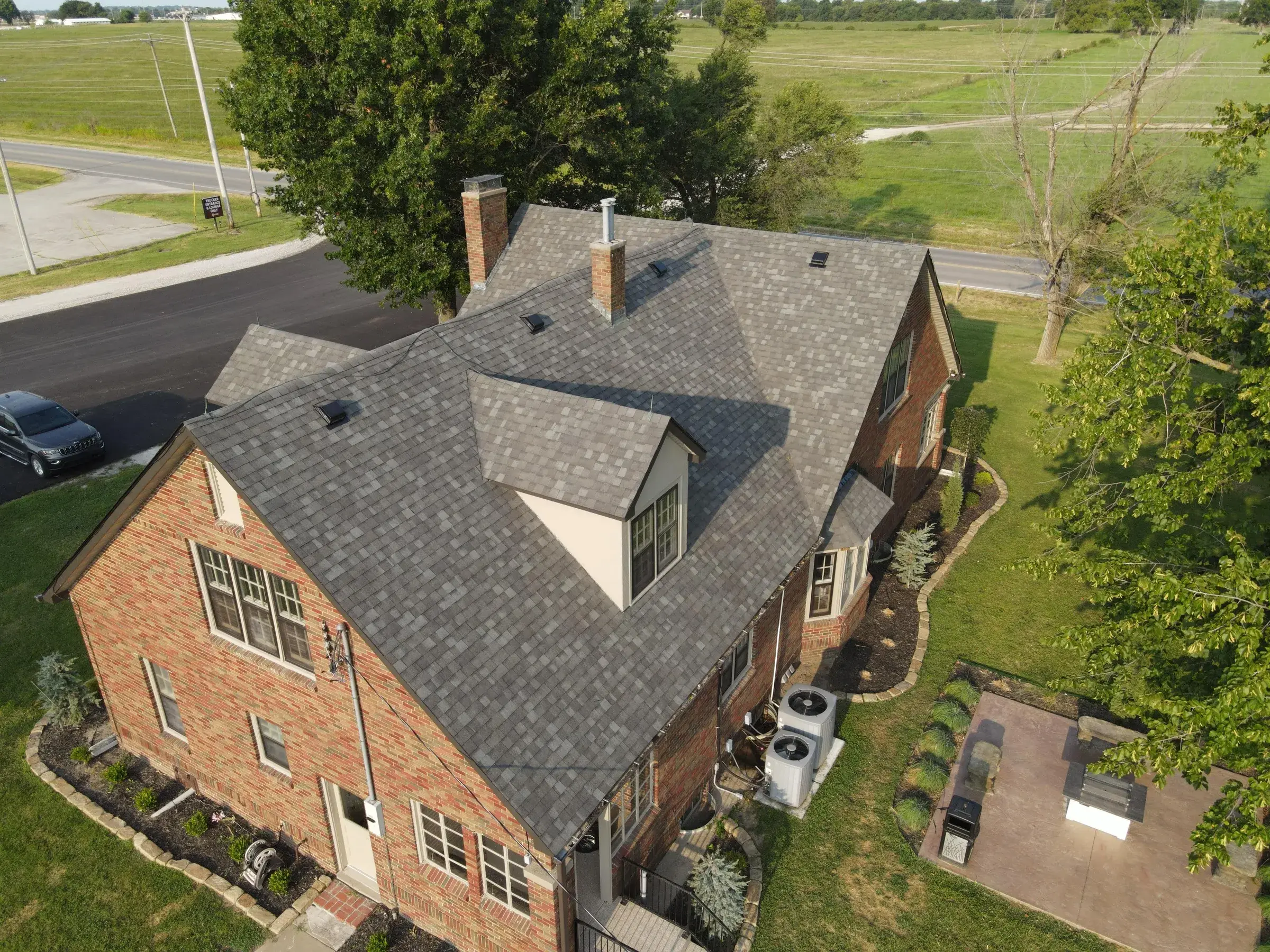
Protect Your Property with a Free Roof Inspection
Tell us what you're seeing. We'll arrange an inspection, explain the findings, and provide clear next steps without pressure.
- • A real look at the roof, not a sales visit
- • Photos of whatever we find, and what it means
- • A written quote if you want one — and an honest “you don’t need us yet” if that’s the answer