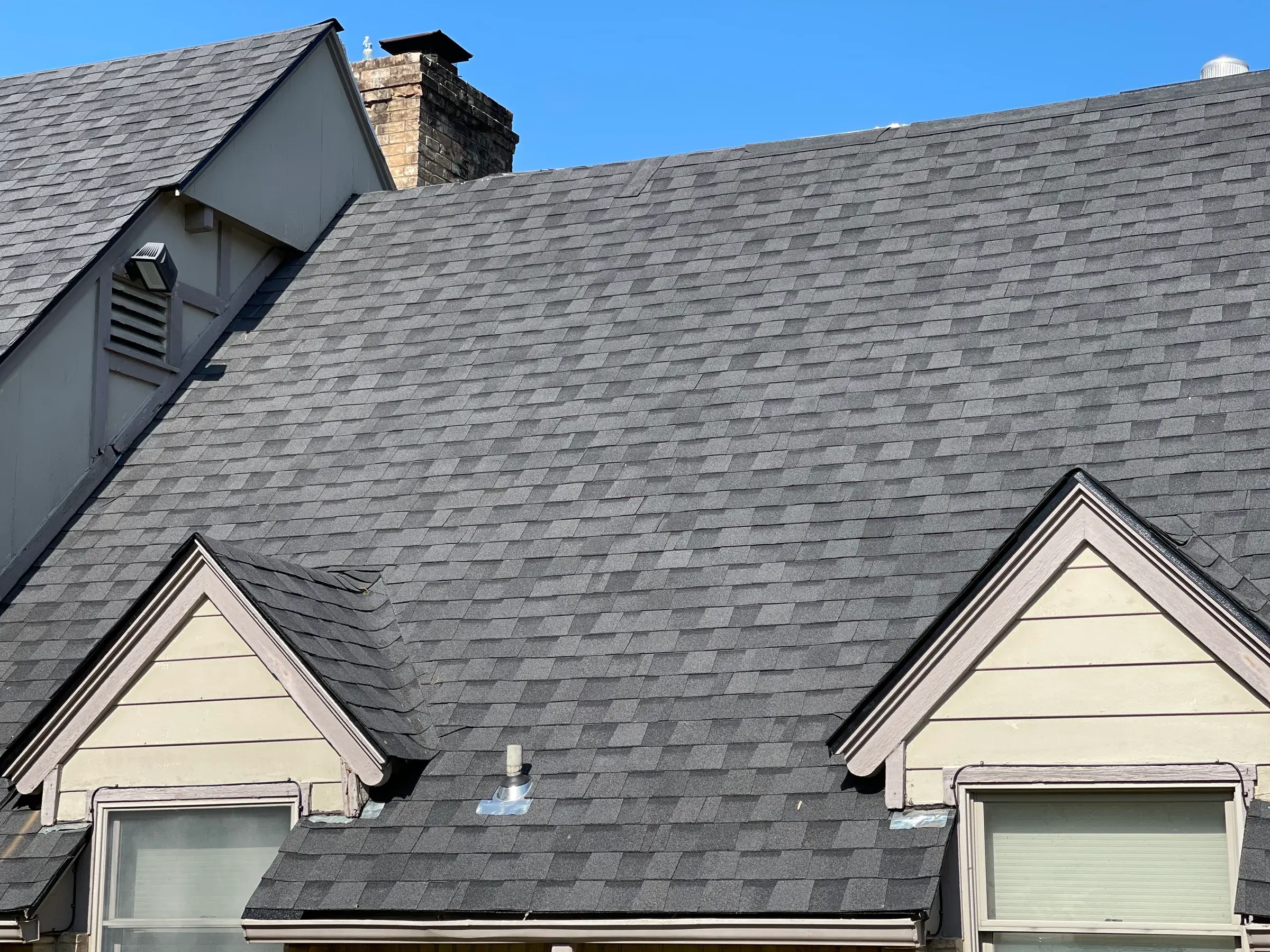
Asphalt Shingle Roofing in Miami, Oklahoma
Almost every roof in Miami is asphalt shingle, and for good reason — it's the best cost-to-performance material for this climate when it's installed right. The differences that matter aren't the color. They're the shingle class, the nailing, the starter and the underlayment, and that's where bids diverge.
If you're replacing a roof in Miami, you'll be handed color samples and brand names first. Neither one decides how long the roof lasts. What decides it is the shingle class, and four or five components underneath that you'll never see again once the job is done. Here's how to read a bid for the parts that matter.
Why Asphalt Dominates Roofs in Ottawa County
Asphalt won here on arithmetic, not fashion. The median home value in Ottawa County is $123,300 and the median household income is $49,947. A roofing material that works in this market has to be affordable the first time, and affordable again — because a roof in Northeast Oklahoma sees hail larger than three-quarters of an inch on four to five days in an average year. Some of those days do nothing. Some of them end a roof.
Asphalt is the material that survives that math. It's repairable in sections, replaceable without re-engineering the structure, and it sits well on the kind of housing we actually have — 76.7% of the county's homes are detached single-family, mostly straightforward pitched roofs. So the question in Miami is almost never whether to use shingles. It's which shingle, and who nails it down.
Three-Tab vs. Architectural vs. Impact-Resistant: An Honest Comparison
There are really only three decisions on the table, and the difference between them is physical, not cosmetic.
- Three-tab: one flat layer of asphalt-saturated mat with cutouts stamped into it. Those cutouts — the keyways — are the problem. Every one is an open edge, and open edges are where wind gets underneath a shingle and starts working. Thin, light, cheap on day one.
- Architectural (laminate): two layers bonded together, so the shingle is thicker and heavier, there are no cutouts, and the exposed edge is a solid laminated tab. That extra mass is doing structural work in wind, not just casting a shadow line.
- Impact-resistant (Class 4): an architectural shingle built on a polymer-modified asphalt that flexes under a hail strike instead of fracturing. It's tested by dropping a two-inch steel ball onto it from height and checking whether the mat cracked on the back side. Class 4 means it didn't.
Our honest read: architectural is the sensible floor for a house you intend to keep. Class 4 is the upgrade that's worth a real conversation given how often hail comes through here. Three-tab still has a place — a shed, a detached garage, a property being sold this year — but on a home you're staying in, the day-one savings tend to get spent back.
What Oklahoma Heat Does to Asphalt
Miami averages 57 days a year above 90°F and five above 100°F, with an August daily high normal of 91.5°F and roughly 62% annual sunshine. The record here is 116°F, set in 1954. Air temperature isn't the number that matters, though — a dark shingle in direct sun runs far hotter than the air around it, and that's the temperature the asphalt actually lives at.
Heat drives the volatile oils out of the asphalt over time. The mat gets stiffer and more brittle, and the granules — which are the shingle's sunscreen, not decoration — start shedding faster once the asphalt around them hardens. Then we swing the other way: 89 nights a year below freezing. Every one of those is an expansion-and-contraction cycle. That thermal cycling is what opens blisters, curls edges, and loosens the bond between a laminate's two layers years before anything else on the roof is worn out.
The part of the heat problem you can actually fix
Attic ventilation. A roof deck cooking from below ages the shingle from the underside, where you can't see it and can't wash it off. Balanced ventilation means intake low at the soffits and exhaust high at the ridge, in proportion. Exhaust with no intake doesn't move air — it just pulls conditioned air out of your house. If your soffit vents are painted shut or buried in insulation, no shingle on the market will reach its published service life on that roof.
What Oklahoma Hail Does to Asphalt
Hail rarely punches a hole. What it does is bruise — a strike fractures the fiberglass mat under the surface and knocks the granules off the impact point. The roof doesn't leak that afternoon. It leaks in two or three years, once the exposed asphalt at each bruise has been baked by 57 days of 90-degree sun and flexed through 89 freeze cycles until the fracture opens.
That's why hail assessment is a hands-on job, not a drive-by. A genuine hail bruise is soft under a thumb, like a bruised apple, with the granules displaced in a rough circle and a bright spot of asphalt underneath. Blistering, foot traffic, and manufacturing scuffs all look similar from the ground and feel completely different up close. We chalk out test squares on each slope, count strikes per square, and photograph what we find — including the soft metals like vents and flashing, which register hail size honestly when shingles don't.
If a claim is in play, what we do is document the damage in a photo report and give you a written estimate for the work we would perform. We can meet your adjuster on the roof if you'd like us there. Your insurer decides what's covered — that's their call, not ours, and anyone telling you otherwise is telling you something Oklahoma law doesn't allow them to promise.
Wind Ratings and What They Actually Mean
A wind rating is a lab result, not a warranty on your house. Read what the test actually assumes: brand-new shingles, sealant strips fully activated, a specified deck material, a specified nail count in a specified location, and a specified slope. Change any one of those and the number stops describing your roof.
The condition that fails most often here is sealing. The adhesive strip on a shingle is heat-activated — it needs sun and warmth to bond the course above it into a continuous sheet. Shingles installed in a cold week in December may not seal until March. Until they do, every tab is a loose flap, and a February wind event doesn't care what the wrapper said. That's a real, manageable thing: it's why hand-sealing along rakes and eaves matters on a cold-season install, and why we'll tell you if a roof needs to wait a few days rather than pretend the calendar doesn't exist.
The Parts of a Shingle Roof That Aren't Shingles
This is where bids diverge, and it's the reason two quotes for the same shingle can be a few thousand dollars apart. Everything below is invisible once the roof is on, which is exactly why it's where corners get cut.
- A real starter course at eaves AND rakes. Starter is a purpose-made strip with its sealant band positioned at the roof edge. Some crews save money by cutting up field shingles instead — which puts the sealant in the wrong place, leaving the outer edge unbonded. That's the failure mode where a rake edge lets go in a gust and the roof unzips one course at a time, up the slope.
- Ice-and-water membrane at eaves, in valleys, and around every penetration. Oklahoma's code table leaves the ice-barrier requirement blank, so this is genuinely optional here — which is why it appears on some bids and not others. We use it because it's the one layer that's still watertight when a valley backs up or a driving rain pushes water uphill under the shingles.
- Synthetic underlayment across the field instead of felt. Felt absorbs water, wrinkles when it gets damp, tears at the fasteners in wind, and telegraphs those wrinkles through the shingles. Synthetic doesn't do any of that, and it holds up if weather catches the roof mid-job.
- New flashing at every transition. Step flashing — the L-shaped pieces of metal that tie a roof plane into a wall — has to be replaced with the roof, not re-bent and re-used. Same for pipe boots, which fail from UV-cracked rubber long before the shingles around them are done.
- Drip edge at the eaves and rakes, and a ventilation plan that balances intake against exhaust rather than just adding vents to the ridge.
And the deck itself. Oklahoma amended the residential code to require tear-off rather than shingling over the existing roof in defined conditions — which is the right outcome anyway, because tear-off is the only way anyone finds out what the plywood under your old roof has been doing. Soft decking gets found on tear-off day or it doesn't get found at all. The City of Miami requires a permit for new roofs and re-shingles. We pull it.
Nailing: Four vs. Six, and the High-Nail Problem
If you remember one thing from this page, make it this one. Every shingle has a nailing zone — a narrow band, often about an inch tall, marked on the shingle. On a laminate shingle, that band sits in the common bond area, where both layers overlap. A nail placed in that band does two jobs at once: it holds the shingle it's driven through, and it pins the top edge of the course below.
A nail driven above the zone does neither. It passes through only the thin upper layer, misses the course below entirely, and leaves that shingle held on by nothing but its sealant strip. Once the next course is laid, the mistake is invisible forever — from the ground, from the attic, from a photo. It's the single most common reason a roof loses shingles in wind nowhere near its rating.
Depth matters the same way. An overdriven nail cuts through the mat and the shingle tears off around the head. An underdriven one leaves a bump that lifts the course above it and telegraphs through the finished roof. Six nails per shingle instead of four is a fair thing to ask about in this part of the country — but six nails in the wrong place are worse than four in the right one.
Choosing a Shingle for a Miami Home: The Questions We'd Ask You
There's no single right shingle for every house in Ottawa County, because the county isn't one place. Before we quote anything, this is what we want to know.
- How long are you keeping the house? A property you're selling this year and a house you're retiring in are two different decisions, and we'd rather you spend less on the first one.
- Which side of the county are you on? East of Miami is Ozark Plains — rockier, wooded, rolling. Tree cover cuts UV load but fills valleys with debris and puts limbs over the roof. West is Neosho Lowlands, flat prairie: no shade, full sun, and wind with nothing to slow it down. Those two houses have different weak points.
- Is this a lake place you're not there to watch? Roughly 13% of the county's housing sits vacant much of the year, a lot of it second homes near Grand Lake. An unsealed shingle or a small valley leak on a house nobody visits has months to do damage before anyone notices. That argues for the more durable build, not the cheaper one.
- What did the last roof fail from? Hail bruising, wind loss at a rake, and heat-driven curling each point at a different fix. If it's curling, the roof isn't the whole problem — the attic is.
- What is the attic doing right now? We want to look at soffit intake and ridge exhaust before we talk about shingle class, because ventilation decides how much of the shingle's published service life you'll actually get.
- How steep is the roof, and how many penetrations are in it? Slope drives water speed and shingle sealing. Penetrations are where roofs leak. A simple gable and a cut-up roof with five pipes and two skylights are not the same job.
Inspections and quotes are free, and we'll give you the photo report either way — including if the answer is that your roof has years left in it. Call (209) 758-8550 and we'll come look at it.
Asphalt Shingle Roofing questions
What's the difference between three-tab and architectural shingles?
Three-tab is a single flat layer with cutouts — lighter, cheaper, thinner, and generally shorter-lived. Architectural (laminate) shingles bond two layers together, so they're thicker, heavier, hold up better to wind, and look dimensional. For a climate that throws hail and wind at a roof, the extra thickness is doing real work, not just looking nice.
Which shingle is best for Oklahoma?
For most homes here, a quality architectural shingle is the sensible baseline, and an impact-resistant Class 4 shingle is the upgrade worth having the conversation about. What we'd steer you away from is builder-grade three-tab on a house you intend to keep — the savings on day one get spent back in years of life.
What does a shingle's wind rating actually promise?
Less than it sounds like. Wind ratings come from a lab test on new shingles, properly nailed, fully sealed, on a specific deck. Every one of those conditions can fail in the real world — cold-weather installs that never sealed, high nailing, missing starter — and when they do, the number on the wrapper is irrelevant. The rating describes the shingle's potential, not your roof's.
What's underneath the shingles, and does it matter?
It matters more than the shingle brand. A starter course at the eaves and rakes, ice-and-water membrane at eaves, valleys and penetrations, synthetic underlayment across the field, new flashing at every transition, and correct ventilation. Bids that look cheap are usually cheap right here, in the parts you'll never see.
Does nailing really make a difference?
It's the single biggest install variable. Shingles have a narrow nailing zone; a nail placed too high misses the layer it's supposed to hold and the shingle is effectively hanging on nothing. High-nailing is invisible once the next course goes on, and it's why roofs blow off in wind well below their rating. Six nails per shingle rather than four is worth asking about here.
How long will an asphalt roof last in Miami, OK?
Longer with ventilation, shorter with hail. Manufacturers publish expected service lives, and the real number on any given house depends on attic airflow, install quality, slope, sun exposure and how many storms come through. We'd rather talk about what your specific roof is likely to do than quote a number that assumes conditions your house doesn't have.
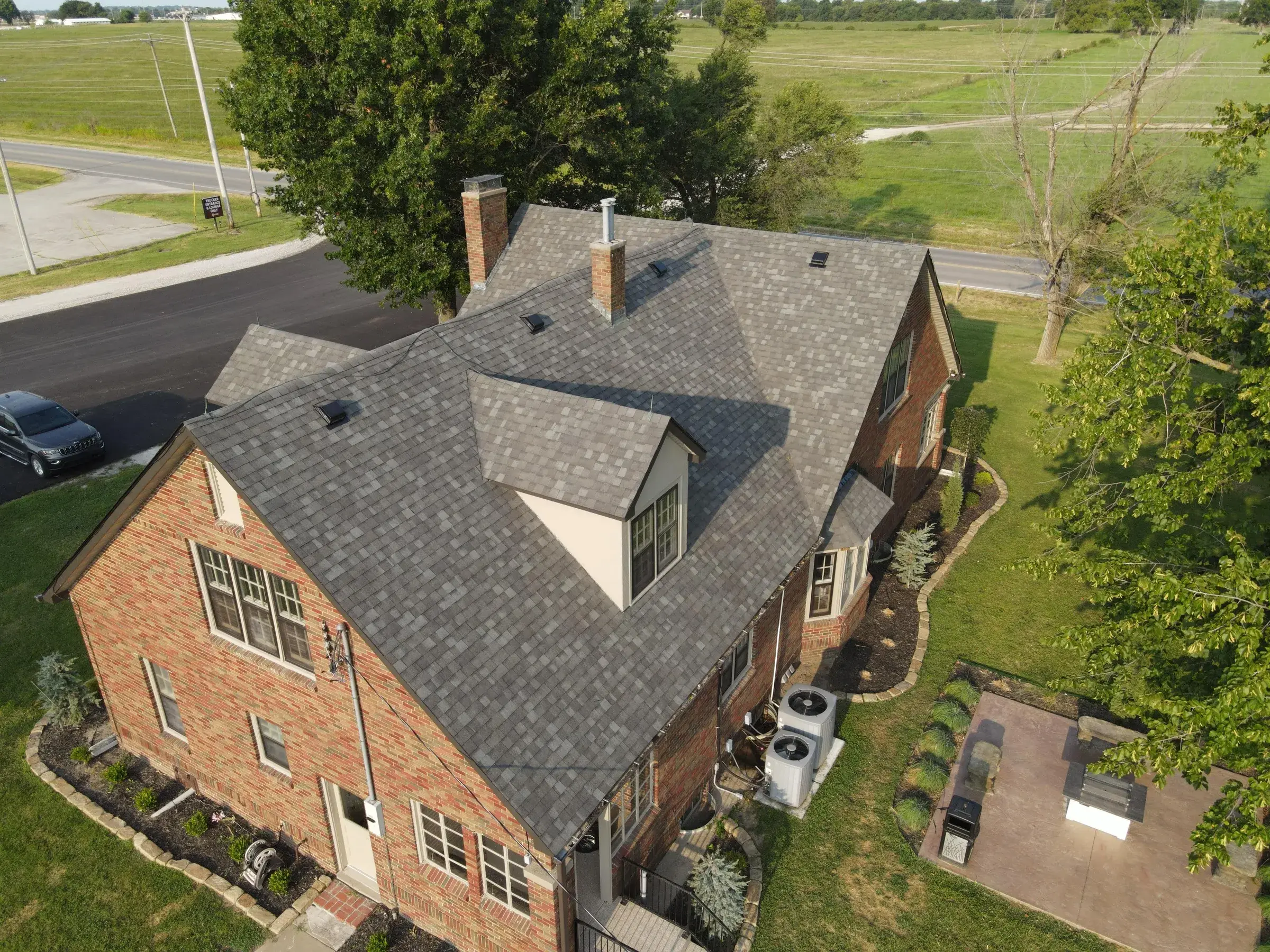
Protect Your Property with a Free Roof Inspection
Tell us what you're seeing. We'll arrange an inspection, explain the findings, and provide clear next steps without pressure.
- • A real look at the roof, not a sales visit
- • Photos of whatever we find, and what it means
- • A written quote if you want one — and an honest “you don’t need us yet” if that’s the answer