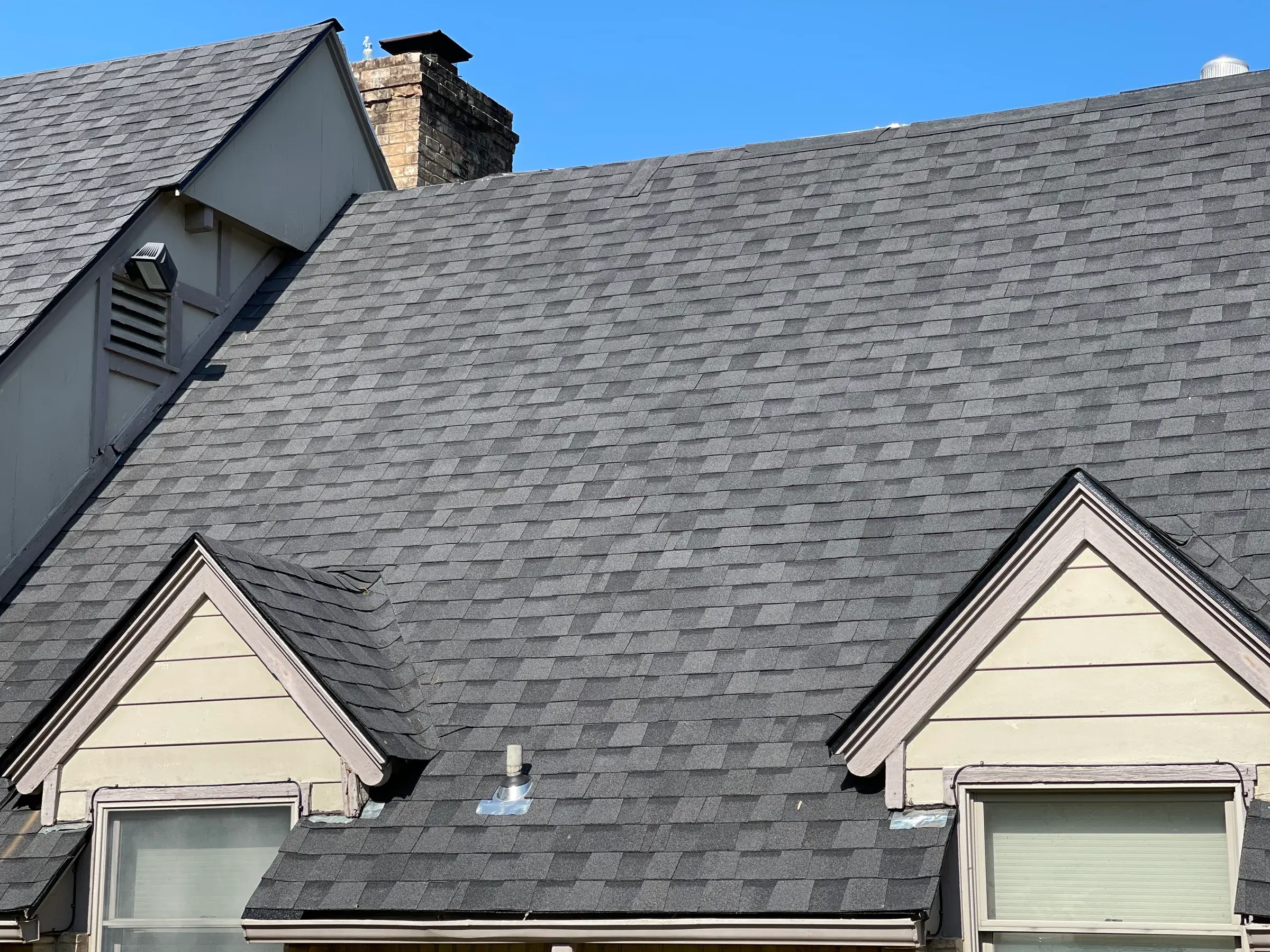
Storm Damage Roof Repair in Miami, OK
Northeast Oklahoma sits where the plains storms run out of room. Hail, straight-line wind, and the occasional tornado track all pass through Ottawa County, and they leave different signatures on a roof. This is the page for the days after — what to do first, what to photograph, and who to call before you sign anything.
Storms here don't announce what they left behind. Hail, straight-line wind, a falling limb, and a winter of freeze-thaw all hit the same roof and leave four different signatures — and usually only one of them leaks right away. This is the page for the days after a storm: what to photograph, what to stabilize, and what to ask the trucks in your driveway before you sign anything.
First 48 Hours After a Storm in Miami, OK
Stay off the roof. Storm-loosened shingles slide, wet decking gives, and a ladder on soft ground after a downpour is its own kind of emergency. Everything useful in the first two days can be done from the ground, from inside the house, and with your phone.
There are really only two jobs in those 48 hours. Build a record that has a date on it. And stop water from getting further into the house. That's it.
Here's what does not need to happen in 48 hours: signing a contract, choosing a roofer, or starting permanent repair. Those decisions get better with a day or two of daylight and a second opinion. The pressure to decide fast almost never comes from the roof. It comes from whoever is standing in your driveway.
Hail, Wind, Debris, Ice: Four Different Damage Signatures
One storm can leave all four. They look different, they fail differently, and they get scoped differently. Learning to read them from the ground puts you ahead of most of the conversations you're about to have.
Hail — random, round, and often invisible from the ground
- Random placement. Hail doesn't aim, so the marks scatter with no pattern across every slope, not just one.
- Granules knocked loose. Look in the gutters and at the bottom of downspouts for a gritty black pile. Granules are the shingle's sunscreen.
- A bruise you feel, not see. Press with your thumb — a hail-struck shingle mat goes soft and spongy where the fiberglass fractured underneath.
- Soft metals tell on the storm. Dented vent caps, gutter aprons, downspout faces, and AC condenser fins are often clearer evidence than the shingles themselves.
- Miami averages four to five days a year with hail larger than three-quarters of an inch. Most of those days do nothing at all. A few of them do everything.
Wind — directional, concentrated at the edges
- It picks a slope. Damage clusters on the windward face and along rakes, eaves, and ridge caps, where the wind gets under an edge and peels.
- The crease is the giveaway. A shingle folds back, then lays down again — leaving a hairline fracture across the tab that re-seals and looks perfectly fine from the driveway.
- Broken seal strips. If a tab flutters in a light breeze, the adhesive line is gone and the next gust has a handle to pull on.
- Sun makes it worse. With about 62% annual sunshine and 57 days a year above 90°F, Oklahoma asphalt gets brittle. Brittle shingles crease instead of flexing.
Debris — localized, with a direction of travel
- Punctures, gouges, and granules scraped off in a line rather than in dots.
- Damage in one confined area, usually with the object still in the yard.
- Geography decides your odds. The east half of Ottawa County is Ozark Plains — rockier, wooded, rolling, with trees close to houses. The west half is Neosho Lowlands: flat prairie, far fewer limbs overhead, and far more open ground for wind to build across.
- Same storm, two counties' worth of damage profiles, inside one county line.
Ice and freeze-thaw — the slow one
- Miami sees roughly 89 nights a year below freezing. That isn't one event. It's hundreds of small cycles.
- Water finds a lifted tab, freezes, expands, and lifts it a little more. Repeat all winter.
- It shows up at eaves, in valleys, and around penetrations — the places where water already slows down.
- This is why a spring storm matters in January. A gust that breaks one seal strip in April hands winter a way in.
What to Photograph Before Anyone Touches Your Roof
You are building a record, and your phone stamps every shot with a date and time. That metadata is worth more than a perfect picture. Shoot wide, shoot plenty, and don't crop or edit anything.
- All four sides of the house from the ground, wide enough to show the whole slope.
- The gutters and downspout outlets — granule piles, dents on the face, sections pulled loose.
- Every soft metal on the property: vent caps, gutter aprons, AC fins, garage door, mailbox.
- Ground evidence — hail next to a coin for scale, downed limbs, and where they landed.
- Every interior stain, on ceilings and walls, on the day you find it.
- The damaged material itself, if a piece came off. Keep it in the garage.
Stabilize First, Repair Second
Stabilizing and repairing are two different jobs with two different clocks. Rushing the second one is how people end up with a roof they didn't need or a scope they can't explain.
- Contain the water inside. Buckets, towels, move the furniture. If a ceiling is bulging, that bag of drywall is holding pounds of water — poke a small relief hole at the low point and let it drain into a bucket. A pinhole and a bucket beats the whole ceiling letting go at 2 a.m.
- Get the opening covered. A proper tarp runs over the ridge and is fastened into sound decking, not weighted down with bricks. A weighted tarp is a sail waiting for the next gust.
- Get the whole roof looked at — not just the spot that's leaking. The leak tells you where water got in today. It says nothing about the other three slopes.
- Get the findings and the scope in writing, with photographs attached.
- Then decide. That order protects you. The reverse order costs money.
Tarping is a temporary measure, measured in weeks, not seasons. Sun is hard on poly — the same UV load that ages your shingles chews through a tarp — and a tarp left up all summer becomes its own problem. We tarp so the house stops getting worse while the real decisions get made properly.
Why the Trucks Show Up the Day After — and What to Ask Them
Ottawa County borders Kansas on the north and Missouri on the east. A storm that crosses this corner puts damaged roofs in three states inside one afternoon, and crews from all over follow that line. Plenty of them are good at the work. Some of them will be unreachable by fall. You can't tell which is which by the truck, so ask questions instead.
- What's your Oklahoma roofing contractor registration number? Oklahoma, Kansas, and Arkansas issue registrations. Missouri has no state roofing licence at all — so "licensed in Missouri" is a sentence that means nothing.
- What's your physical address? Not a P.O. box, not a magnet on a door.
- Who pulls the permit? The City of Miami requires a permit for new roofs and re-shingles. We pull it.
- Will the full scope be in writing before I sign anything?
- Are you tearing off or laying over? Ask why, and make them answer.
- If I call you in three years about this roof, what happens?
Repairable Storm Damage vs. Total Loss
A repair is the honest answer when the damage is confined to one area, the rest of the roof still has real life in it, and we can match what's up there. Debris damage often lands exactly there — one limb, one slope, one afternoon of work.
A repair stops being honest in three situations. When damage is scattered across every slope, because hail doesn't stay in one place and patching one face just moves the argument. When the shingles are old and sun-baked enough that walking on them to fix one spot creates two more. And when the colour or profile is discontinued, so the patch will always read as a patch.
There's also a code point specific to this state. Oklahoma amended IRC R908.3.1.1 in its residential code to require tear-off rather than shingle-over under defined conditions. So "we'll just run a second layer over the top" isn't always available here, even when it's the version a homeowner would rather pay for. Any roofer working in Miami should know that before they quote it, not after.
Our job is to tell you which of those situations you're actually in, show you the photographs that prove it, and give you a written estimate for the work we'd perform. If a claim is part of your plan, we can meet your adjuster on site if you ask. What's covered is your insurer's decision to make, not ours.
What Storm Damage Looks Like From Inside the House
Water travels. It runs along a rafter, crosses a truss, and drops somewhere else entirely. The stain is almost never directly under the hole, which is why chasing the stain instead of the roof wastes so many afternoons.
- A ring-shaped ceiling stain with a darker outer edge — that ring means it dried, then got wet again. It has happened more than once.
- Rust on nail points in the attic, or daylight visible through the decking.
- One bay of insulation that's matted or damp when the ones beside it are dry.
- A musty smell in one closet or one corner of a room.
- Drywall tape or paint lifting on an interior wall, from water running down inside the cavity.
- A ceiling that bulges or sags. That one is urgent — relieve it and call.
Go into the attic in daylight with your flashlight off and let your eyes adjust. Any pinhole of sky is a hole in your roof. Do it early in the morning — with 57 days a year above 90°F, an Oklahoma attic in August will run you off before you've finished looking.
Storms in This Corner: Oklahoma, Kansas and Missouri All at Once
Miami sits at 778 feet on the Neosho, about 90 miles north-northeast of Tulsa, in the county seat of the only corner of Oklahoma that touches two other states. Weather doesn't respect any of those lines, and neither does the aftermath. A single system can hail on Quapaw, throw straight-line wind across the lowlands west of town, and drop limbs on the wooded east side, all in the same hour.
That's the whole reason this page doesn't hang on a storm date. The storms here are recurring, not historic. Four to five hail days a year, 89 freezing nights, and a summer that bakes the flexibility out of asphalt — that's the pattern your roof lives in, every year, whether or not the last one made the news.
We're a family-owned roofer with one office, at 111 S Main St in Miami, with roots up Route 66 in Commerce — about five miles north. We work across Oklahoma, Kansas, Missouri, and Arkansas, and we're not hard to find in October when you have a question about the work we did in May. Inspections are free, quotes are free, and emergency tarping is available when you need the water to stop first. Forty-two homeowners have left us a Google review.
If a storm just went through, call (209) 758-8550. We'll come out, walk it, photograph what we find, and tell you straight whether it's a repair, a replacement, or nothing at all. No job's too big or too small, and we'd rather treat you like a neighbour than a lead.
We are roofing contractors, not public adjusters or insurance attorneys. Coverage decisions are made by your insurer under your policy.
Storm Damage Roof Repair questions
What should I do first after a storm damages my roof?
Get safe, then get evidence. Photograph the exterior from the ground, photograph any interior water, and note the date. If water is actively coming in, contain it and get the roof stabilized — but do not throw away damaged materials, and do not let anyone start permanent repairs before the damage is documented.
How do I tell hail damage from wind damage?
Hail bruises: round, random, granules knocked off, mat soft under thumb pressure, usually with matching marks on soft metals like vents and gutters. Wind lifts and creases: shingles folded back, tab corners broken, damage concentrated on one slope and along edges and ridges. They're often both present after one storm, and they get scoped differently.
A contractor from out of town says my whole roof needs replaced. Is that likely?
It might be true, and it might not. Storms bring crews from three states into this corner, and some of them are excellent while others will be unreachable by fall. Get the damage documented, get a second opinion from someone with a physical address in the area, and check the roofing contractor registration number of anyone who bids.
My roof isn't leaking. Can it still be storm damaged?
Yes, and this is the most expensive misunderstanding in roofing. Hail can fracture the shingle mat without opening a hole — the roof looks fine, then fails years early. That's why a post-storm inspection is worth doing even on a roof that seems intact.
Can you tarp my roof now and repair it later?
Yes. Stabilizing first is usually the right sequence: it stops interior damage from compounding while the scope, the estimate and any insurance process play out. Tarping is a temporary measure, not a repair.
Does a storm mean I should file a claim?
Not automatically. It depends on the extent of the damage, your deductible, and your policy. We can document what we find with photographs; the decision to file is yours, and the coverage decision is your carrier's.
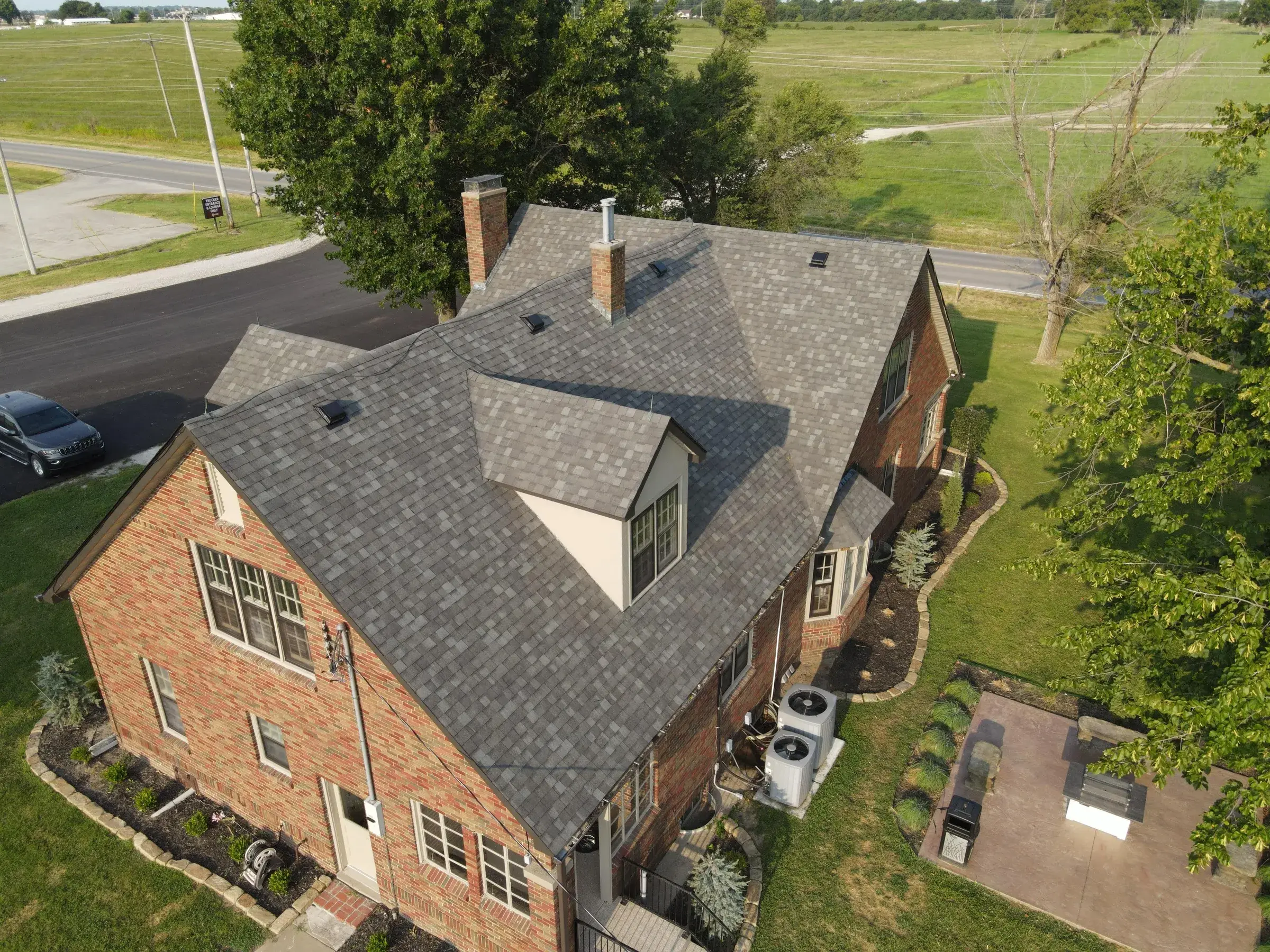
Protect Your Property with a Free Roof Inspection
Tell us what you're seeing. We'll arrange an inspection, explain the findings, and provide clear next steps without pressure.
- • A real look at the roof, not a sales visit
- • Photos of whatever we find, and what it means
- • A written quote if you want one — and an honest “you don’t need us yet” if that’s the answer