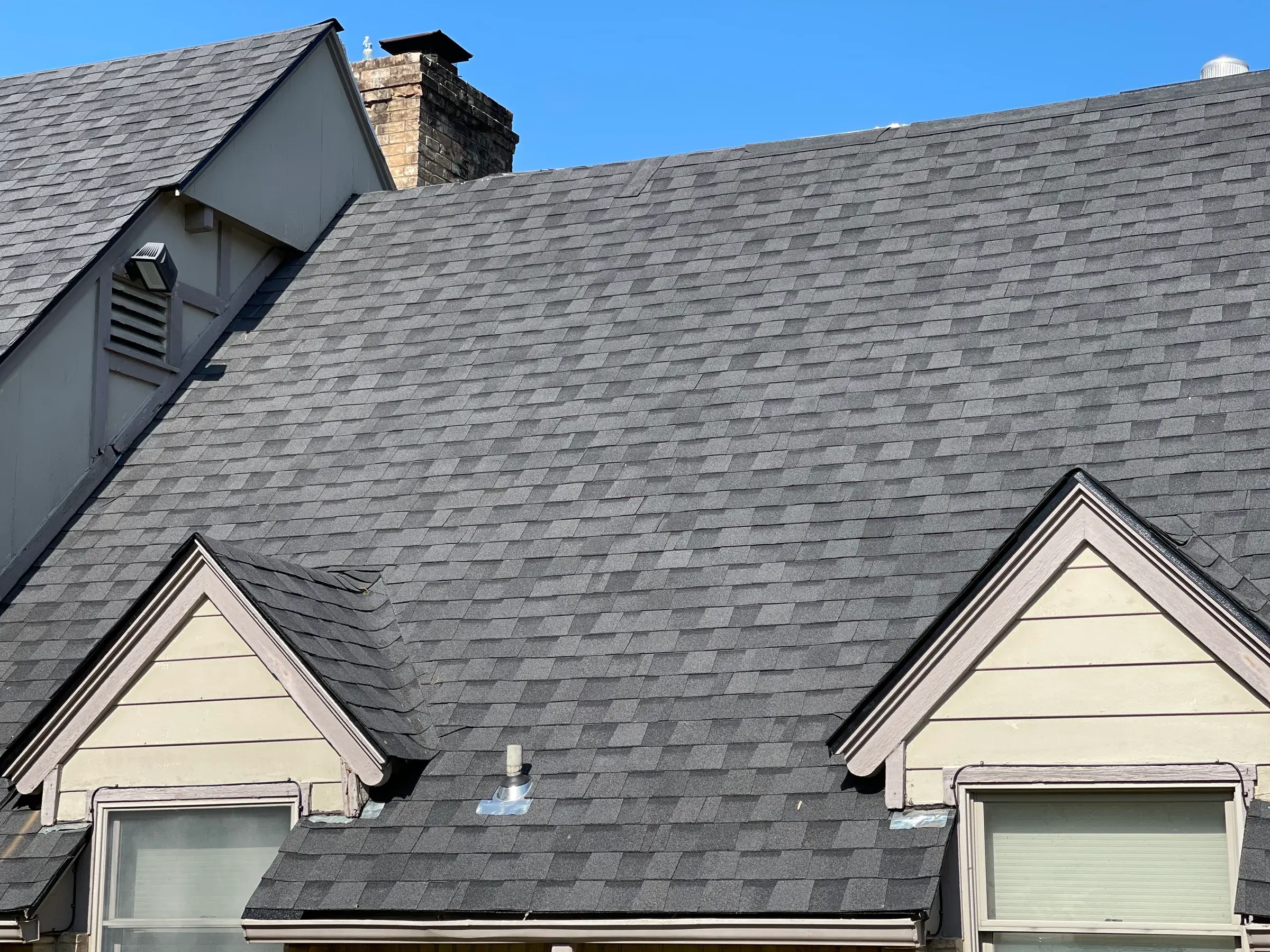
Hail Damage Roof Repair in Miami, Oklahoma
Hail is the damage that hides. A hail-struck roof usually looks fine from the driveway and keeps looking fine until it starts failing years early. This page shows you what real bruising looks like, what gets misidentified as hail, and how we document a hail-damaged roof in Miami honestly.
Ottawa County averages four to five days a year with hail larger than three-quarters of an inch. Most of those days leave roofs that look completely normal from the driveway. This page is about what hail actually does to a shingle, how to tell a real bruise from the four things routinely mistaken for one, and what honest documentation looks like.
Why Hail Is the Damage You Can't See From the Ground
Wind damage announces itself. Shingles are in the yard, a corner is lifted, you know something happened. Hail does the opposite. It hits the roof, it stops, and the roof looks exactly like it did the day before.
That's because hail doesn't usually break a shingle in half. It fractures the layer underneath the part you can see. The surface stays flat, the color stays even, and nothing leaks. Homeowners in Miami walk out the next morning, look up, decide they got lucky, and move on.
Then Northeast Oklahoma goes to work on the damage. We get 57 days a year above 90 degrees, five above 100, an August daily high that normals out at 91.5, and roughly 62 percent annual sunshine. That's a heavy ultraviolet load on asphalt. We also get 89 nights a year below freezing, which means water gets into a fracture, expands, and opens it a little more — 89 times a year, every year. A bruised shingle isn't a leak. It's a shingle that will fail years before the rest of the roof, quietly, on a schedule the weather sets.
So the point of a hail inspection isn't to find a hole. It's to find out whether the clock on your roof got moved up while it was still possible to prove it.
What a Real Hail Bruise Is: Fractured Mat, Lost Granules, Soft Spot
An asphalt shingle is three things stacked. On top, granules — the colored ceramic grit that takes the sun so the asphalt doesn't. Under that, the asphalt itself, which is what actually keeps water out. Under that, the mat — a fiberglass sheet that gives the shingle its strength and holds the whole thing together.
A hailstone lands, drives the granules down into the asphalt or knocks them clear, and the shock travels through to the mat. If the mat fractures, you have a bruise. That fracture is the damage. Everything else is a symptom.
Here's what a genuine hail bruise looks and feels like on the roof:
- A roughly round mark with no sharp edge — hail is blunt, it doesn't cut
- Granules displaced or missing, exposing black asphalt underneath
- Soft or spongy when you press it, like the bruise on an apple — that's the mat giving way
- A dark, sometimes shiny spot where the asphalt has been driven and compressed
- Random placement across the shingle, not lined up with anything on the roof
- Matching hits on nearby shingles at similar density, not one lonely mark
That soft spot is the single most useful test there is, and it is the reason a hail inspection has to happen on the roof rather than from the ground or a photo. You cannot feel a fractured mat through a drone image.
The Soft-Metal Tell: Gutters, Vents, Fascia, A/C Fins
Before anyone climbs anything, there's a faster read available: the soft metal around your house. Hail that was big enough and hard enough to bruise a shingle almost always leaves fingerprints on metal that dents easily.
- Gutters and downspouts — dimples in the flat faces and the back of the gutter
- Roof vents and turbine caps — thin sheet metal, dents at the first real impact
- Aluminum fascia and drip edge wrap
- The fins on your air conditioner condenser — one of the most sensitive surfaces on the property
- Garage door panels, mailbox, grill lid, the tops of gate posts
If those surfaces are clean and undimpled, be skeptical of anyone telling you your shingles are wrecked. If they're peppered, the shingles took the same hits and the shingles are where the fracture matters. Soft metal doesn't prove your roof is damaged — it corroborates. Corroboration is the whole game in hail.
One local note: about 12 percent of Ottawa County housing is manufactured or mobile, and a lot of those carry metal roofs. Hail dents metal roofing readily. A dent in a metal panel and a fracture in a fiberglass mat are not the same finding, and they shouldn't be reported as if they are. A dented panel that still sheds water is a cosmetic issue. We'll say so, even when saying so is the smaller job.
What Gets Miscalled Hail Damage (Blistering, Scuffing, Foot Traffic, Mfg. Defects)
This is the section nobody else writes, and it's the one that saves you the most trouble. Four things routinely get pointed at and called hail. None of them are.
Blistering
The most common false positive by a mile, and Oklahoma heat makes us a blistering climate. When moisture or gas trapped in the asphalt expands under sun load, it pushes a small bubble up. The bubble eventually pops and leaves a little crater with granules gone. It looks like hail to an untrained eye — or to a trained eye that wants it to. The differences are real: blisters have a sharp, defined rim rather than a blunt blown-out edge, they're usually smaller and more uniform, the mat underneath is intact and firm, and they show up on every slope including the north side. Hail does not hit every slope evenly.
Scuffing and foot traffic
Granules smeared rather than knocked out, often with a directional streak or a shiny drag mark. It follows paths — up from the ladder point, along the ridge, around the chimney and the satellite dish. That's a person, not a storm. Storms don't walk to the vent and back.
Manufacturing defects and normal aging
Defects repeat. If the bare spot lands in the same place on shingle after shingle, or runs in a pattern that follows the shingle's own geometry, that came out of a factory, not a cloud. And plain granule loss from age looks like thinning across whole slopes, heaviest where the sun is hardest — not like discrete impacts. With 62 percent sunshine, an old roof here sheds granules without any help from weather. You'll find them in your gutters after any hard rain, hail or no hail.
The fourth is debris. On the east side of Ottawa County, out in the Ozark Plains where it's rockier, wooded and rolling, we see limb strikes and blown branch damage that gets called hail. It's usually linear, usually gouged, and usually has a tree standing right there explaining it.
Test Squares and Why a Chalk Circle Isn't Evidence
A test square is how a roof gets assessed methodically. You mark off an area — ten feet by ten is the common one — on each slope, and you count actual hits inside it. Then you do it again on the next slope. The count and the pattern are what you're after, not a single impressive-looking shingle.
Counting matters because it separates two very different roofs. Three scattered marks on one slope and a dense, consistent pattern repeated across the slopes that faced the storm mean completely different things about the condition of your roof, and only one of them changes what should happen next.
Directionality: Why One Slope Gets Hit and Another Doesn't
Hail rarely falls straight down. It rides the wind, so it arrives on a slant, and the slopes turned into that slant take the beating while the sheltered slopes take very little. That asymmetry is one of the most reliable signatures hail leaves. Which slopes get hit depends on how that particular storm was moving, which is exactly why every slope gets checked separately instead of assumed.
It also cuts the other way. Damage spread evenly across all four slopes at the same density is a strong argument that you're looking at something other than hail — blistering, aging, or wishful thinking.
Exposure varies across our area in a way that's worth knowing. West of Miami you're in the Neosho Lowlands — flat prairie and farmland, no windbreak, roofs standing in the open taking the full angle. East, out toward the Ozark side, there's real tree cover and rolling ground. Tree cover can shield one elevation of a house while the exposed side gets hammered, which produces lopsided results that look strange until you stand in the yard and see why. Same storm, same county, two different roofs.
Repair, Partial Replacement, or Full Replacement After Hail
Hail damage isn't automatically a new roof, and anyone who tells you it is before they've been up there is selling. Here's how the decision actually breaks down.
Repair makes sense when hits are isolated — a handful of bruised shingles on one slope, the rest of the roof sound, and the shingle still available in a close match. That's a real outcome and we do it.
Slope-level replacement comes up when one or two elevations caught the storm and the others genuinely didn't. It's the middle answer and it's often the right one, particularly on the tree-sheltered houses out east.
Full replacement is where hail lands across every exposure on the storm-facing slopes at a density that means the field itself is fractured. Patching a fractured field doesn't fix a fractured field — you'd be replacing individual shingles inside an area that's all going to weather early anyway. Age drives this too. There's no clean size threshold with hail; a brittle 20-year-old shingle can bruise from a stone that would bounce off a new one.
Two practical things about our area specifically. First, matching. Sun fades shingle color, and with our UV load a roof that's been up ten years does not match a fresh bundle of the same product — and plenty of products get discontinued outright. Second, code. Oklahoma amended the residential code at R908.3.1.1 to require tear-off rather than shingle-over in defined conditions, so laying a new layer over a hail-bruised roof often isn't an option here even where a homeowner would prefer it. The City of Miami also requires a permit for new roofs and re-shingles. We pull it.
Documenting Hail Damage Properly — and What We Can't Promise You
Our inspection is free, and here's what it consists of:
- We start on the ground with the soft metals — gutters, downspouts, vents, fascia, the A/C condenser — because they tell us what size and angle we're dealing with before we ever set a ladder.
- We get on the roof and run test squares slope by slope, checking each mark for a fractured mat by feel, not by eye.
- We separate what we find: real bruising here, blistering there, foot traffic where the last person walked. You get told which is which.
- We photograph it — the hits, the test squares, the soft metals, and the slopes that are clean — and put it in a written report.
- We give you a written estimate for the work we would perform, so you have a real scope and a real number in hand.
- If you ask us to, we can meet your adjuster on site and show them what we found and where.
- If the roof is open and weather is coming, we can tarp it in the meantime.
Now the part most hail pages leave out.
If you're weighing impact-resistant shingles for the next roof, that's a fair conversation — just know that Oklahoma does not mandate an insurance discount for them. Ask your own insurer whether they offer one before you make a decision on that basis.
And if a crew is at your door this week telling you your roof is destroyed, you don't have to decide today. A bruise doesn't spread while you get a second opinion — that's the one mercy in hail. Call us at (209) 758-8550 and we'll come look and tell you what we actually see, including that your roof is fine, if your roof is fine.
We are roofing contractors, not public adjusters or insurance attorneys. Coverage decisions are made by your insurer under your policy.
Hail Damage Roof Repair questions
How can I tell if my roof has hail damage?
From the ground, mostly you can't — which is the whole problem. The reliable tells are on soft metals: dents in gutters, downspouts, roof vents, fascia wraps and A/C condenser fins. If those are dimpled, the shingles almost certainly took the same hits, and the shingles are where the fracture matters.
My roof isn't leaking. Why would hail matter?
Because hail damages the mat under the granules, not the surface you can see. A bruised shingle loses the granule layer that protects it from UV, then weathers years faster than the rest of the roof. The failure shows up long after the storm, which is exactly why hail damage is worth identifying while it's still identifiable.
What is a hail test square?
It's a marked-off area, typically ten by ten feet, where an inspector counts hits on each slope. It's how a roof gets assessed methodically instead of by someone pointing at one shingle. Counting matters because scattered marks and a dense, matching pattern across multiple slopes mean very different things.
A roofer circled marks on my shingles in chalk. Is that proof of damage?
No. Chalk circles are a marker, not evidence — they show where someone says a hit is, and they can be drawn around scuffs, blisters, or nothing at all. What matters is whether the mat is actually fractured under the mark, whether the pattern is consistent, and whether the soft metals corroborate it.
Can hail-damaged shingles just be replaced in the damaged spots?
Sometimes, if the hits are isolated to a slope or two and the shingles are still available. More often hail lands across every exposure on the storm-facing slopes, and patching a fractured field doesn't fix a fractured field. We'll tell you which situation you're in.
Will my insurance cover hail damage?
That's your carrier's decision and it depends on your policy, your deductible, and their inspection. What we can do is document what we find with photographs and give you a written scope. What we cannot do — and no Oklahoma roofer legally can — is promise you an approval or offer to cover any part of your deductible.
How big does hail have to be to damage a roof?
There's no clean threshold. Impact energy depends on stone size, density, wind speed and angle, and the roof's own age matters enormously — an old, brittle shingle can bruise from a stone that would bounce off a new one. Small hail on a 20-year-old roof is a real scenario.
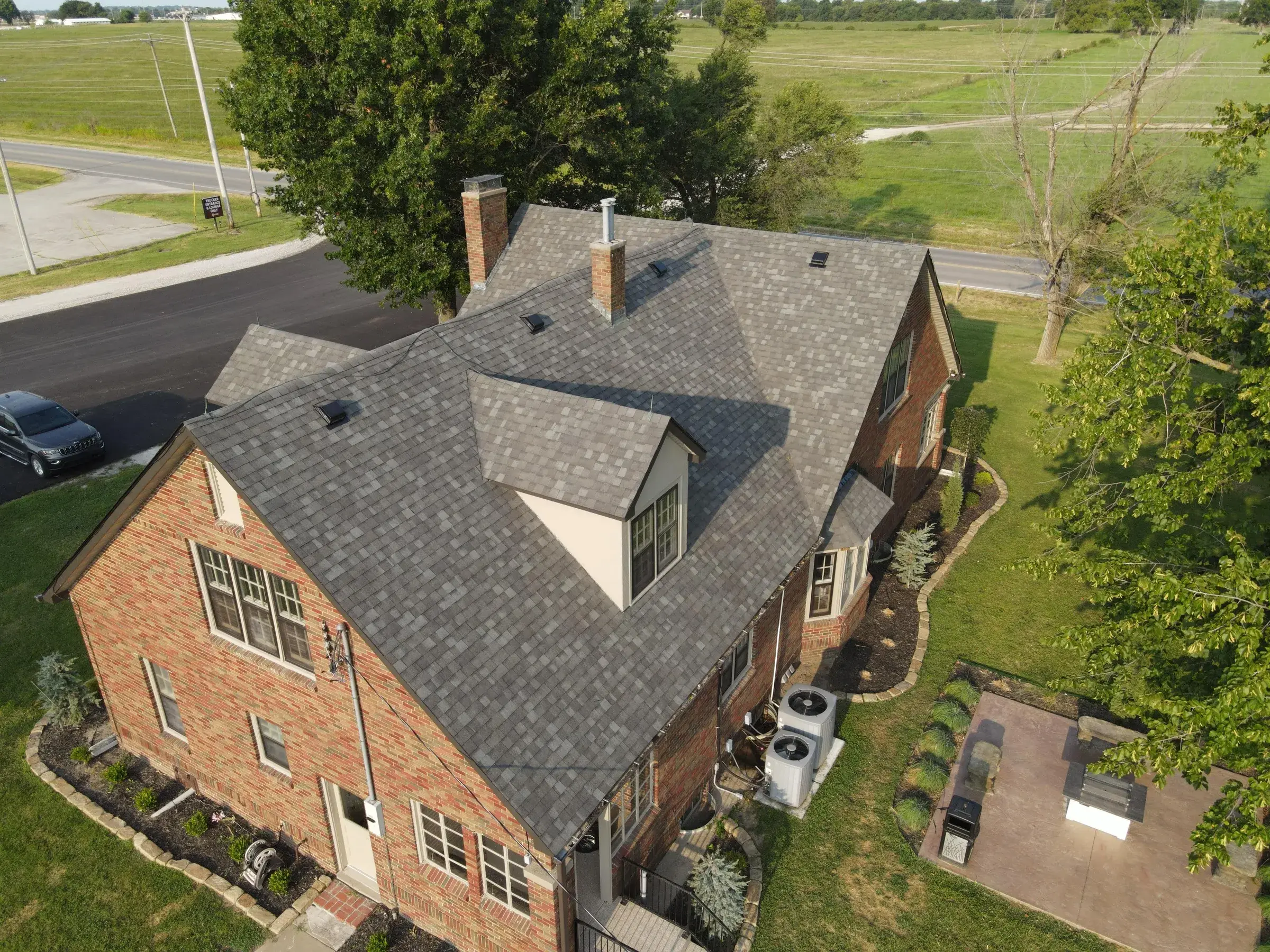
Protect Your Property with a Free Roof Inspection
Tell us what you're seeing. We'll arrange an inspection, explain the findings, and provide clear next steps without pressure.
- • A real look at the roof, not a sales visit
- • Photos of whatever we find, and what it means
- • A written quote if you want one — and an honest “you don’t need us yet” if that’s the answer