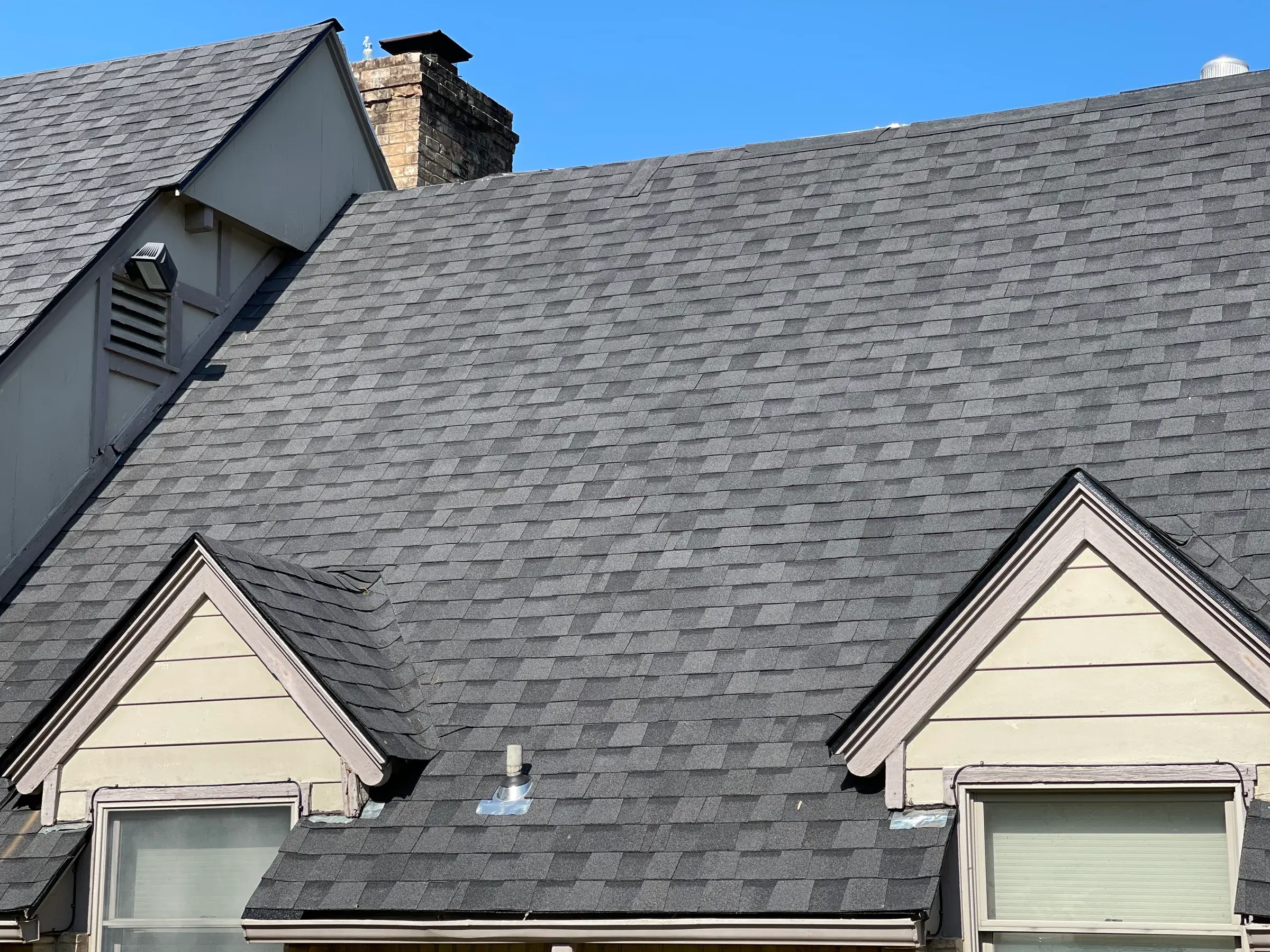
Flat & Low-Slope Roofing in Miami, Oklahoma
Flat roofs aren't flat and that's the whole problem — they're low-slope, they're supposed to drain, and when they stop draining, water sits on every seam until it finds one. Downtown Miami's buildings, church additions, shop roofs and the low-slope porch on the back of a house are all this same job.
A flat roof that leaks is rarely leaking because the membrane wore out. It's leaking because the water stopped leaving. We work low-slope roofs across Miami and Ottawa County — downtown buildings with parapet walls and scuppers, church and shop additions, and the shingled back porch that's been leaking every spring since somebody built it too shallow.
Low-Slope, Not Flat: Why the Distinction Decides Everything
Slope is measured as rise over run. A 4:12 roof climbs four inches for every twelve inches you travel across it. Most houses in Miami are somewhere between 4:12 and 8:12. A "flat" roof is usually designed at a quarter-inch of fall per foot — real slope, just barely enough to see.
That tiny difference changes the whole job. A steep roof sheds water. Gravity does the work and the shingles just steer it. A low-slope roof cannot rely on gravity, so it has to be genuinely waterproof — a continuous membrane, sealed at every seam, that could hold water in a pinch even though it's not supposed to.
So the first thing we do on a low-slope call isn't look at the membrane. It's put a two-foot level and a tape measure on the deck and find out what the slope actually is. Buildings settle. Decks sag. A porch framed at 1:12 in 1962 might be closer to a half-inch per foot today. Everything after that — the material, the drainage plan, the price — follows from that number.
Where Low-Slope Roofs Show Up in Miami — Downtown and at Home
People assume flat roofing is a commercial-only conversation. In a town of about 13,000 it isn't. The same roof is on both sides of Main Street and on the back of a lot of houses.
Downtown Miami is a block of attached masonry storefronts standing on what is literally the historic Route 66 alignment — Main Street is the old road, now US-69. Those buildings were built the way commercial blocks were built a century ago: a low-slope roof hidden behind a parapet wall, shared walls with the neighbor, and no eaves anywhere. The Coleman Theatre has been sitting at 103 N Main since 1929, and its neighbors up and down the street share that same basic construction.
On the residential side, Ottawa County has 13,701 housing units and 76.7% of them are detached single-family homes — most of them old enough to have collected additions. That's where low-slope hides:
- Back porches and covered patios framed shallow so the roof clears a second-story window
- Kitchen and bedroom bump-outs added off the back of a house
- Carports and breezeways tied into the main roof
- Sunrooms and enclosed porches, often with a leak nobody has ever fully solved
- Awnings and add-on porch roofs on manufactured homes — 12.2% of the county's housing stock
- Church, school and shop additions with a flat section behind a pitched front
Ponding Water: Causes, Consequences and Honest Fixes
The working definition of ponding is water still standing 48 hours after the rain stops, in weather dry enough that it should have gone. A damp low spot is normal. A birdbath is a symptom.
It almost never means the membrane wore out. It means the water lost its path off the roof. Common causes: the structure has deflected between joists; insulation compressed where people walk to service a rooftop unit; wet insulation slumped and created a bowl; a drain or scupper is undersized, or it's full of leaves and gravel; someone set a new HVAC curb in the drainage path; or thirty years of patches built a dam out of asphalt.
Here's how we work out which one you've got.
- Walk the roof after a rain and photograph the standing water before it evaporates — where it sits tells you more than where it leaks.
- Measure fall from the high point to each drain and scupper with a level, and check whether the drains are actually at the low points.
- Probe the roof underfoot. Insulation that gives, squishes, or sounds different is wet.
- Clear and flow-test the drains and scuppers with a hose to see whether they're undersized or just blocked.
- Confirm with a moisture survey or test cuts — a small square cut out of the roof, insulation inspected, hole patched the same day.
- Then, and only then, price the fix.
The honest fixes are drainage fixes: tapered insulation to build slope back in, crickets and saddles to steer water between drains, sumping a drain so it sits at the true low point, adding or enlarging scuppers. All of those cost money and none of them are exciting. They are also the only things that work.
The Systems: TPO, EPDM, Modified Bitumen and Coatings
There are three families of low-slope membrane in common use, plus coatings, which are a different animal and get their own section below.
TPO — heat-welded single-ply
A single sheet of thermoplastic, usually white, where the seams are welded with hot air so the sheet fuses to itself. The weld is the whole system. A good weld is stronger than the sheet; a cold weld looks identical from six feet away and fails in a year. It gets probed with a hook, seam by seam, not eyeballed. White reflects, which is worth real money on a building that runs air conditioning through 57 days above 90.
EPDM — rubber single-ply
A rubber sheet, black, with seams bonded by tape or adhesive rather than heat. It comes in wide rolls, so a big open roof gets very few seams. It stays flexible when it's cold, and repairs are straightforward — clean it, prime it, patch it. Being black, it absorbs heat instead of bouncing it.
Modified bitumen — asphalt sheet, multiple plies
Reinforced asphalt sheets applied in layers, either torch-applied or self-adhered. It's tough underfoot and it details well around lots of small penetrations, which makes it a sensible pick on small, busy roofs — a porch, a shop with three vents and a flue, a roof that gets walked on.
Hail behaves differently on all three. We average 4 to 5 days a year with hail larger than three-quarters of an inch. On a steep roof you can often read the damage from a ladder. On low-slope you can't — hail bruises the plies of a modified bitumen roof without opening them, and it can puncture single-ply where the insulation underneath has gone soft, because there's nothing firm behind the sheet to resist the strike. That damage shows up as a leak months later. After a hail event we document what's there with a photo report and give you a written estimate for the work we'd perform. If you want us on the roof with your adjuster, we'll meet them. Your insurer decides what's covered.
Choosing a System: Substrate, Drainage, Traffic and Hold Period
Four questions decide this, and none of them is "which membrane is best."
- Substrate — what's under the roof? A wood deck on a residential porch, a steel deck on a shop, concrete downtown, or an existing membrane with insulation over it. Torch-applied work over an old wood-decked porch attached to a house is a fire question, not a preference question; a self-adhered sheet solves it.
- Drainage — the fewer seams sitting where water lingers, the better. On a roof with long, clear runs, a wide rubber sheet means almost no seams in the water's path. On a cut-up roof full of curbs and vents, seam count is unavoidable and the detailing matters more than the sheet.
- Traffic — if somebody services a unit up there monthly, the membrane needs to survive boots, tools and dropped screws. That points toward a heavier system or walk pads.
- Hold period — how long are you keeping the building? A five-year plan and a thirty-year plan are different roofs, and we'd rather you told us the truth than got sold the expensive one by default.
One code point that catches people out: Oklahoma amended the residential code (IRC R908.3.1.1) to require tear-off rather than layering a new roof over the old one in defined conditions. And regardless of code, you cannot recover a roof with wet insulation under it — you'd be sealing the water in. The City of Miami also requires a permit for new roofs and re-shingles. We pull it.
Parapets, Copings and Scuppers on Century-Old Main Street Buildings
On a downtown building, the roof isn't usually the problem. The walls are.
A parapet is the wall that carries up past the roof and hides it from the street. It means water has exactly two ways off: an internal drain, or a scupper — an opening cut through the wall that lets water out to a downspout or straight onto the sidewalk. Two exits, no eaves, no margin.
The failures on those buildings are almost all detail failures:
- Coping — the cap on top of the parapet — with open joints, letting water into the top of the wall where it runs down inside the masonry and appears on your ceiling well away from any roof defect
- Counterflashing pulled loose from mortar joints that have been soft for decades
- Through-wall flashing that was never installed, because it wasn't standard when the building went up
- Scuppers sized for a smaller roof, or packed with leaves, gravel and a bird's nest
- Party walls shared with the building next door, where their water and your water argue about whose roof it is
Here's the diagnostic that saves people money: if the stain inside is along an exterior wall on a parapet building, wet the coping only — not the roof field — and watch. If it leaks, you have a wall problem, and no amount of new membrane in the middle of the roof will touch it. That's detail work, not field work, and it's where most of the honest hours go on Main Street.
Why Shingles on a Low-Slope Porch Always Leak Eventually
This is the most common low-slope call we get, and it's residential every time.
Asphalt shingles shed water. They do not seal against it. They're overlapping flaps that rely on water moving downhill fast enough to leave before it finds a lap. Shingle manufacturers generally set 2:12 as the minimum slope, and between 2:12 and 4:12 they call for a doubled underlayment underneath. Below 2:12, shingles aren't an under-performing roof — they aren't a roof.
The scenario repeats itself all over older Miami housing. The house is a 6:12. Somebody added a back porch and framed it shallow, maybe 1:12, to duck under a window. The roofer carried the same shingles across both because it looked right from the driveway. It's leaked in wind-driven rain ever since.
The tells:
- It only leaks when the rain comes in sideways, not in a straight downpour
- The stain is at the ceiling-to-wall junction where the porch meets the house
- Shingles on the low section stay wet and dark long after the main roof dries
- Nail heads backing out, or shingles that look flat and tired well before the rest of the roof
- Sagging soffit or peeling paint under the porch edge
The fix isn't more shingles or more sealant. It's a low-slope membrane on the porch section, and the transition is the part that matters: the membrane has to run up under the shingle courses above it far enough that water coming off the steep roof lands on membrane, not on the seam between two systems.
Coatings: What They Can Restore and What They Only Hide
A coating is a fluid applied over an existing roof — rolled or sprayed — that re-establishes a UV surface, re-seals minor seam detail, and usually reflects heat. Over a fundamentally sound, well-drained membrane, that's a legitimate and cost-effective move. It's cheaper than a tear-off, it's less disruptive to a business, and the reflectivity earns something real in an August that normals out at 91.5°F.
What a coating cannot do is dry out what's underneath. Wet insulation doesn't get better under a coating — it gets sealed in, and now it can't dry in either direction. A coating over ponding is a coating sitting in water. A coating over failed seams is a thin film bridging a moving joint, and the joint wins.
We'll tell you which one you have. If your roof is sound and draining and a coating buys you real time, we'll say so. If it's saturated and the coating would just be lipstick, we'll say that too, and you can decide what to do with the information.
Inspections and quotes are free. We'll get on the roof, measure the actual slope, check the drains, probe for wet insulation, and hand you photos of what we found alongside a written estimate for the work. Call (209) 758-8550 — we're at 111 S Main St in Miami, on the old road, and we treat every homeowner and building owner here like family.
Flat & Low-Slope Roofing questions
Why does water sit on my flat roof?
Because it isn't draining, and low-slope roofs only work by draining. Structures settle, insulation compresses under foot traffic, drains and scuppers get undersized or clogged, and you end up with a birdbath. Ponding doesn't automatically mean failure, but standing water tests every seam and fastener continuously, and it magnifies UV and freeze damage. Drainage gets solved before the membrane does.
What's the difference between TPO, EPDM and modified bitumen?
TPO and EPDM are single-ply membranes — TPO is a heat-welded, usually white sheet, EPDM is a rubber sheet with seams that are taped or glued. Modified bitumen is an asphalt-based sheet, often torched or self-adhered, in multiple plies. They're different in cost, seam method, repairability and heat behavior. The right one depends on your substrate, your drainage and how long you plan to hold the building — not on which one a salesman prefers.
My porch roof leaks every year. It has shingles on it. Why?
Because shingles need slope to work and your porch probably doesn't have enough. Asphalt shingles shed water; they don't seal against it, and below a certain pitch water moves too slowly and gets under them, especially in wind-driven rain. It's one of the most common residential problems in older housing stock, and the fix is a low-slope system, not more shingles.
Will a coating fix my flat roof?
Sometimes genuinely, sometimes it's lipstick. A coating over a fundamentally sound membrane with good drainage can extend its life meaningfully and is a legitimate, cost-effective move. A coating over saturated insulation, failed seams or standing water hides the problem for a season while the substrate keeps rotting underneath. The honest test is what's under the membrane, and that means a moisture survey or test cuts, not a guess from the parapet.
How long does a flat roof last?
It depends far more on drainage and detailing than on the membrane you pick. A well-drained, well-flashed single-ply can run a long service life; a ponding roof with bad parapet flashing will fail early no matter what's written on the box. The seams, the terminations and the drains are where the years are won or lost.
Do you work on downtown buildings with parapet walls?
Yes, and those buildings have their own problems. Century-old masonry parapets, failing coping, undersized scuppers and party walls shared with the building next door all mean the water has limited places to go and lots of places to get in. It's detail work more than field work.
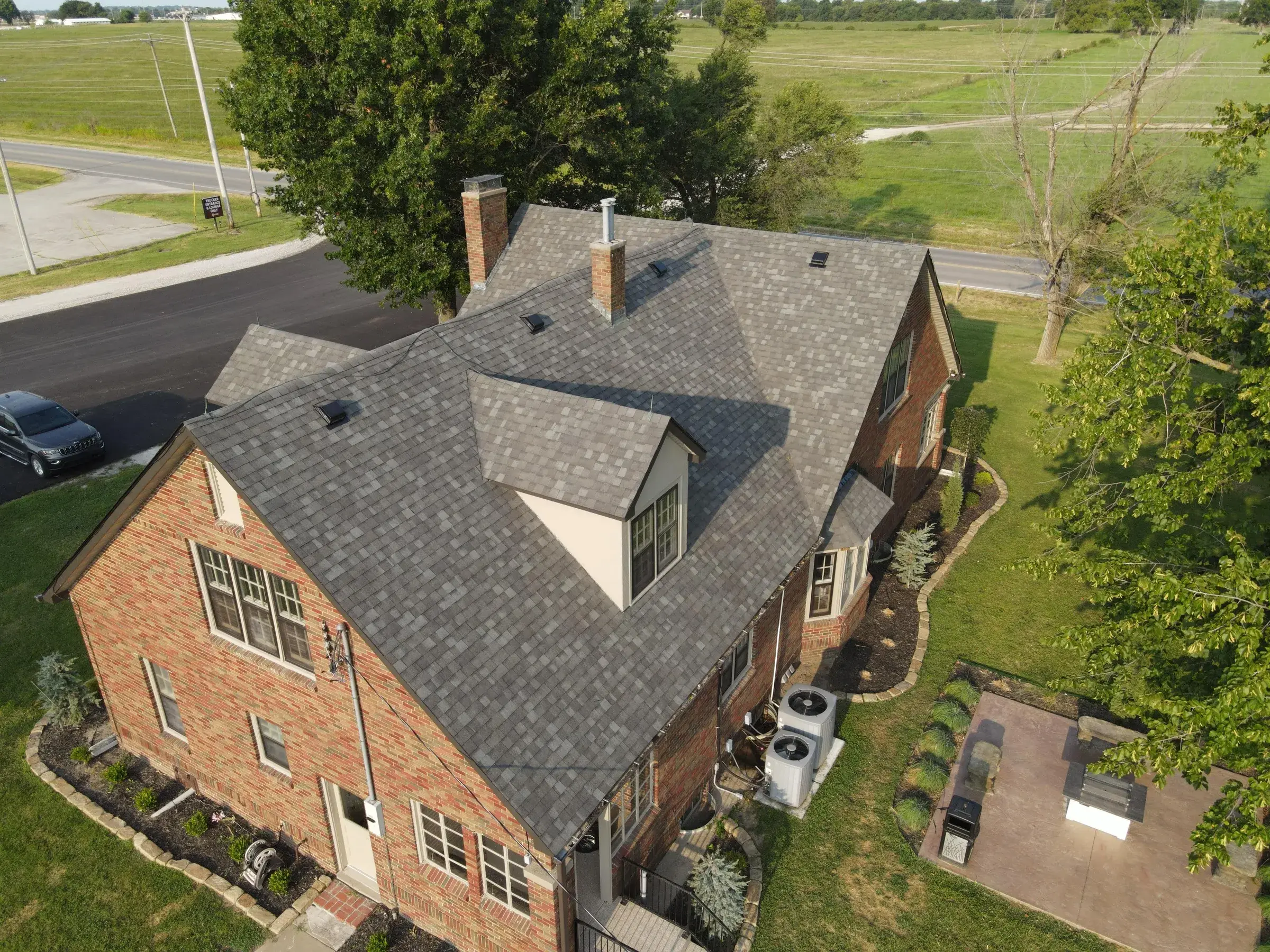
Protect Your Property with a Free Roof Inspection
Tell us what you're seeing. We'll arrange an inspection, explain the findings, and provide clear next steps without pressure.
- • A real look at the roof, not a sales visit
- • Photos of whatever we find, and what it means
- • A written quote if you want one — and an honest “you don’t need us yet” if that’s the answer