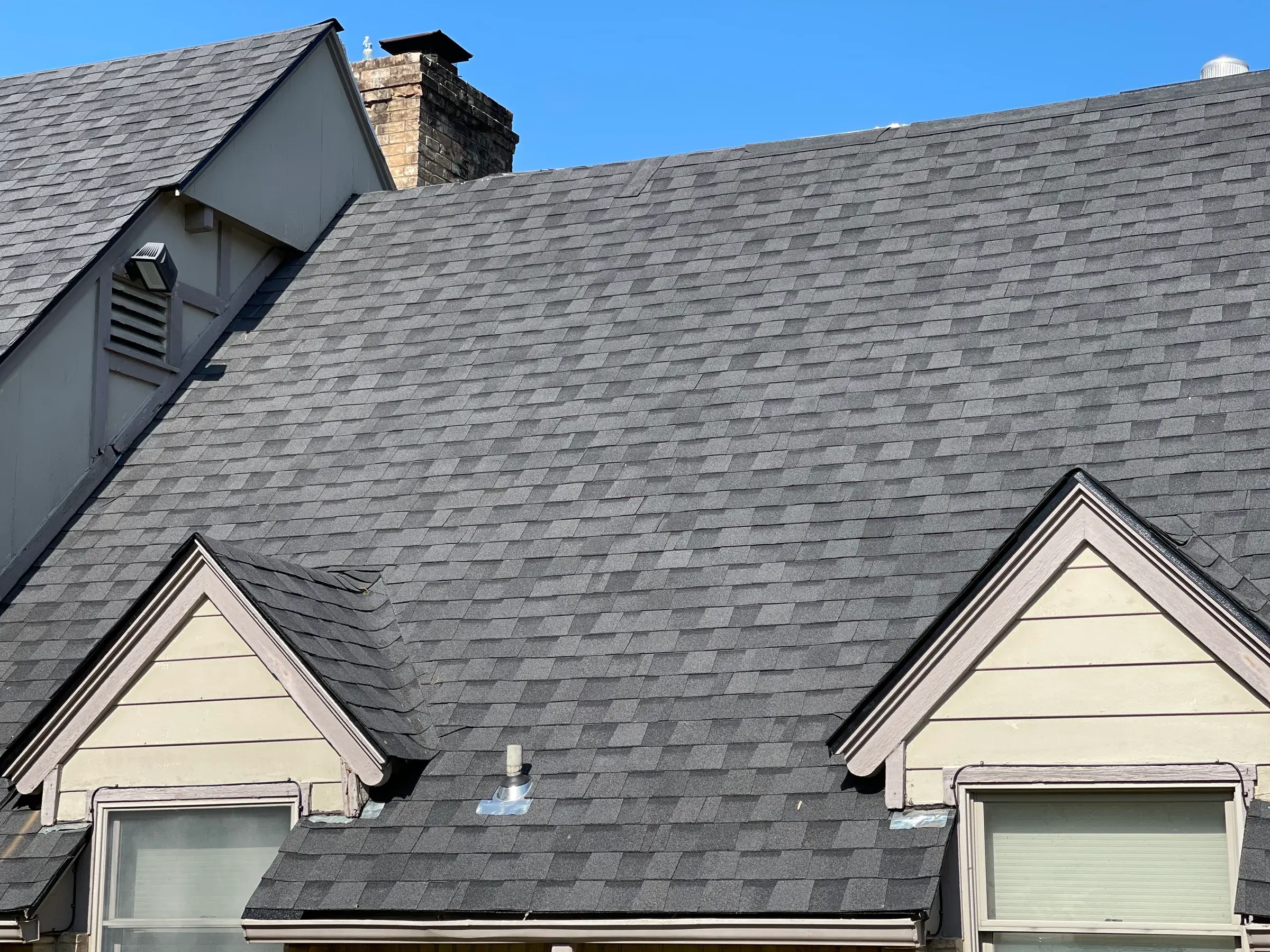
Roof Repair in Miami, Oklahoma
When a roof in Miami fails, it usually fails in one place first — a lifted shingle, a cracked boot, a flashing joint that opened up after a hard freeze. We repair the failure point instead of selling you a roof you may not need yet, and we tell you plainly when a repair is only buying time.
You have a stain on the ceiling, or a shingle in the front yard, and you want to know one thing: is this a small fix, or the start of a much bigger number? This page is the triage. What fails on Miami roofs, how we tell a repairable roof from a finished one, and when we'll tell you a repair is only buying time.
Roof Repair in Miami, OK: What We Actually Fix
Water almost never comes through the middle of a shingle field. It comes in where the roof stops being a plain roof and becomes a joint: a plumbing vent, a wall intersection, a valley, a chimney, a lifted tab, a nail that worked its way back out.
So the first job on any repair call is finding the real entry point, which is often nowhere near the stain on your ceiling. Water lands on the decking, runs down the slope of a rafter, and drops off wherever the wood ends. A leak can show up eight feet from the hole that caused it.
Common repairs we make on Miami and Ottawa County homes:
- Wind-lifted, cracked, or missing shingles
- Split or hardened pipe boots around plumbing vents
- Step flashing and counterflashing at walls and chimneys
- Worn or debris-packed valley metal
- Loose or blown ridge and hip caps
- Nail pops and backed-out fasteners
- Drip edge that has pulled away from the eave
- Small sections of soft decking under the failure point
- Flashing around skylights, box vents, and turbines
The Five Repairs We Make Most Often in Ottawa County
Pipe boots. That is the rubber collar sealing around your plumbing vent stack. We sit under roughly 62% annual sunshine and 57 days a year above 90 degrees, with an August daily high that normals out at 91.5. That ultraviolet load hardens the rubber until it splits at the neck of the collar. It is one of the cheapest repairs on the roof and one of the most common sources of a ceiling stain.
Wind-lifted shingles. Asphalt shingles are not just nailed down. Each one has a sealant strip that the sun softens so it bonds to the shingle below. Once wind breaks that bond, the tab flaps, the nail hole slowly elongates, and the shingle stops holding water even though it is still on the roof.
Step flashing — the row of L-shaped metal pieces that tie a roof slope into a wall, one piece per shingle course, woven in as the roof goes up. Done right, it lasts. When someone sealed that roof-to-wall line with a bead of caulk instead, the caulk cracks and you get a leak that looks like a wall problem.
Nail pops. Miami gets 89 nights a year below freezing. Wood decking swells and shrinks through that cycle, and with daily thermal movement on top of it, nails walk upward until the head tents or punctures the shingle above. First a small bump. Then a rust ring. Then water.
Valley and debris wear. This one splits along the county. East Ottawa County is Ozark Plains — rockier, wooded, rolling — so valleys pack with leaves and hold moisture against the shingle until granules strip and the decking softens. West of that you are in the Neosho Lowlands, flat prairie and farmland with nothing to slow the wind, and the failures skew toward lifted tabs and ridge caps.
Repair or Replace? How We Decide (and How You Can Check)
Nobody should sell you a roof on a hunch. Here is the framework we actually use, and you can run most of it yourself from the ground and the attic.
- Age. Where the roof sits in its service life changes everything downstream.
- Extent. Damage in one or two spots is a repair. The same damage on three slopes is a pattern, and patterns mean the system is failing, not a section.
- Decking. If the wood under the shingles is soft, a surface repair is cosmetic.
- Match. If the shingle line is gone, the repair carries a permanent cosmetic cost you have to be willing to accept.
- Storm posture. If a storm is plausibly involved, the damage should be documented before anyone works on it.
Here is the honest version. A repair on a 22-year-old roof is not wrong. It is a decision to buy two or three more years, made with your eyes open. Median home value in Miami is around $123,300, and stretching a roof to a better year is a rational thing for a homeowner to do. What is not rational is paying repair money three times and then paying for the roof anyway. We give you both numbers and you decide.
What a Repair Visit Looks Like, Start to Finish
- You tell us what you see and roughly when it started. Wet only in a driving rain from the south is a different problem from wet every time.
- We check the ground and the gutters. Granule piles at the downspout base tell us how much life is left in the field.
- We go in the attic and work backward to the source, rather than straight up from the stain.
- We get on the roof and inspect all of it, not just the spot you called about. We lift tabs by hand to test whether the sealant strip is still bonded, feel the decking underfoot for soft spots, and check every penetration and wall line.
- We document what we find with photos and walk you through them.
- You get a written estimate for the work we would perform. If replacement is the honest answer, that number comes alongside the repair number.
- We make the repair, haul the debris, and run a magnet over the drive and the yard for nails.
- If a storm is involved and you ask us to, we can meet your adjuster on site. Your insurer decides coverage.
Why NE Oklahoma Roofs Fail at the Details, Not the Field
The field of your roof is one material doing one job. The details are three or four materials fastened together and asked to move as one. Asphalt, galvanized metal, wood decking, and rubber all expand and contract at different rates, and Northeast Oklahoma gives them a brutal range to do it in: 57 days above 90 degrees, five days above 100, and 89 nights below freezing every year. Miami's record high is 116. The record low is 28 below.
That is why flashing opens before shingles wear out. Hail matters too — Ottawa County averages four to five days a year with hail larger than three-quarters of an inch. People expect hail to bruise the field, but the first thing that actually leaks is often a soft aluminum vent cap or a boot already brittle from the sun.
Matching Shingles on an Older Miami Roof
This is the part most repair conversations skip. Shingle lines get discontinued and reformulated. If your roof went on 15 to 25 years ago, there is a real chance the exact product is not made anymore, and the closest current match may sit a shade off.
Even a perfect product match is a new shingle sitting next to two decades of Oklahoma sun. It will look newer. That is not a defect — that is the rest of your roof telling the truth about its age.
The trick when it matters
When a repair lands on a slope you see from the street, we can sometimes pull matching shingles off a hidden slope, use those originals for the visible repair, and put the new shingles on the back of the house or over the garage. It takes longer. It also means the front of your home does not wear a patch. Ask us before we start.
One more thing worth doing: check the garage rafters and the crawl space. Homeowners leave leftover bundles behind constantly, and a bundle of the original shingle is the best match money cannot buy.
What We Won't Repair — and Why We'll Tell You
Some repairs are not repairs. They are a way to take your money and move the leak twelve feet.
- A brittle field. If shingles around the damage crack when they are lifted, walking that slope to fix one spot creates twenty new ones.
- Wide areas of soft or delaminated decking. That is a decking job, not a shingle job.
- A repair stacked on a bad install. If the flashing was caulked instead of woven in, patching the patch only delays the same leak.
- A chimney that needs counterflashing cut into the mortar joint. We are not adding a fourth layer of roof cement to it.
Repairs on Rentals, Duplexes and NEO Student Housing
Roughly a third of households here rent, and NEO A&M College — here since 1919 — keeps a steady rental market near campus. Repair work on a rental has a particular problem: the tenant does not report the stain the day it appears. They report it when it drips on something. By then the decking has been wet a while.
Two things help if you own rental property here. Get the roof looked at between tenants, when nobody has to be worked around. And tell tenants to report a ceiling spot the size of a quarter, because that is the repair-sized version of a problem that gets expensive later.
The same logic covers the second homes around Grand Lake. About 13% of Ottawa County's 13,701 housing units sit vacant, and many are lake places. A boot that splits in July can run into a closed-up house until somebody opens the door in October. Manufactured homes are their own category — around 12% of housing units here — and they fail at seams, fasteners, and sealant rather than at shingles. Tell us what you have when you call and we will say plainly whether it is work we do.
Roof Repair questions
Can you repair just one section of my roof?
Usually yes. If the damage is isolated — a few wind-lifted shingles, a failed pipe boot, an opened flashing joint — a sectional repair is the right call and we'll say so. The limits are shingle availability and the condition of the surrounding field; if the shingles around the repair are already brittle, working on them creates new damage.
How do I know if I need a repair or a full replacement?
The rough test is age plus extent. A roof under about 15 years old with damage in one or two spots is a repair candidate. A roof with granule loss across the whole field, curling at multiple slopes, or soft decking is telling you the system is done, not the section. We inspect and give you both numbers so you can decide.
Will a repair match the rest of my roof?
Sometimes exactly, sometimes close. Shingle lines get discontinued and existing shingles weather in the Oklahoma sun, so a new shingle rarely looks identical on day one. We'll show you the closest available match before we start and let you decide whether the cosmetic difference is acceptable.
Do you repair roofs you didn't install?
Yes. Most of the repair work we do in Miami is on roofs installed by someone else, sometimes decades ago. We do inspect the existing workmanship first, because a repair on top of a bad install often just moves the leak.
Should I file insurance for a small repair?
That depends on your deductible and the cause. If the repair cost is at or below your deductible, filing usually doesn't help you. If a storm caused it and the damage is widespread, a claim may be appropriate — we can document what we find, but the coverage decision belongs to you and your carrier.
Can you repair a roof in winter?
Yes, with caveats. Asphalt shingles need warmth to seal, so a cold-weather repair may need hand-sealing and won't bond fully until temperatures come back up. For active leaks in a January freeze we'd rather stabilize now and finish properly later than leave water in your attic.
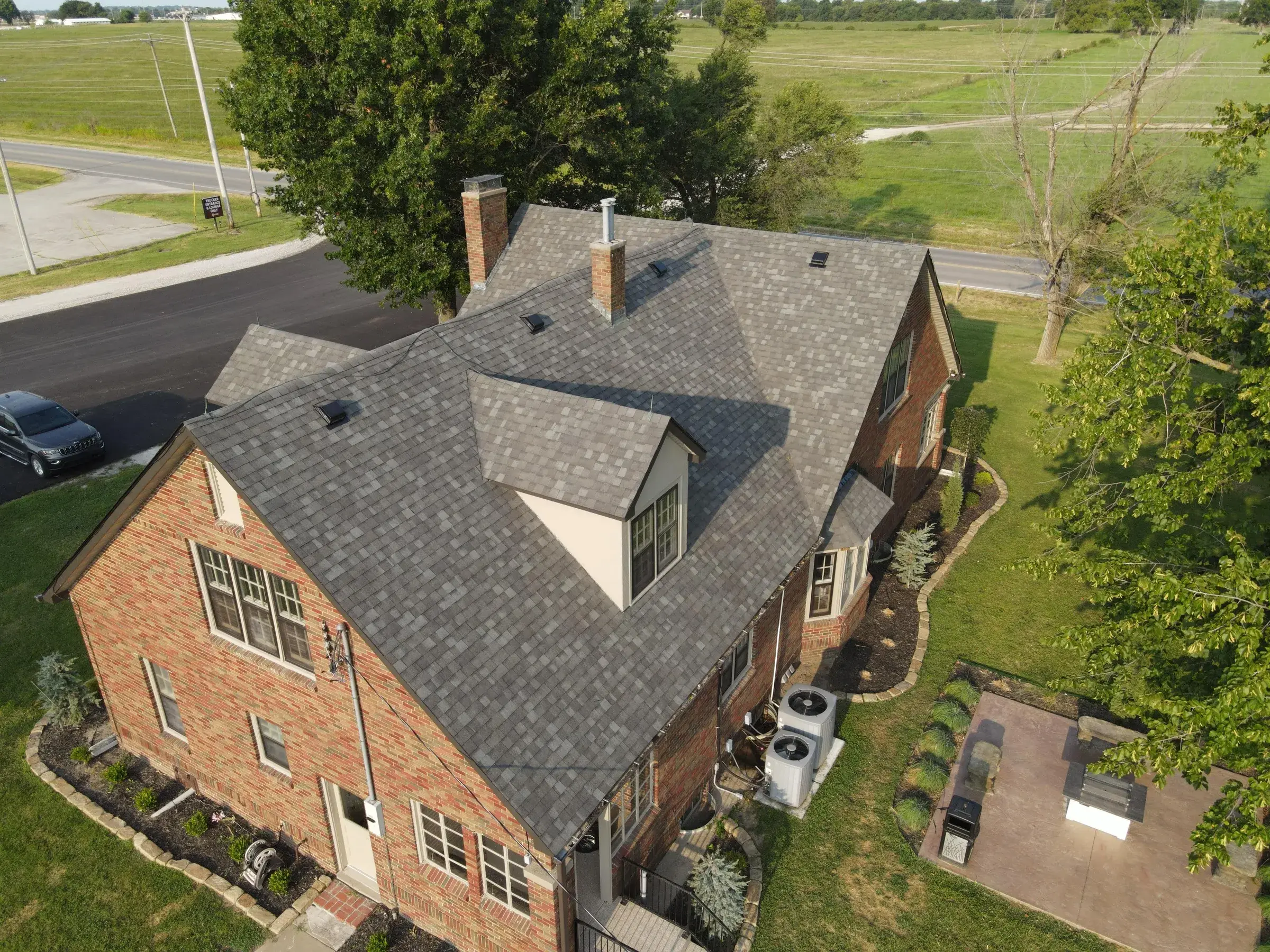
Protect Your Property with a Free Roof Inspection
Tell us what you're seeing. We'll arrange an inspection, explain the findings, and provide clear next steps without pressure.
- • A real look at the roof, not a sales visit
- • Photos of whatever we find, and what it means
- • A written quote if you want one — and an honest “you don’t need us yet” if that’s the answer