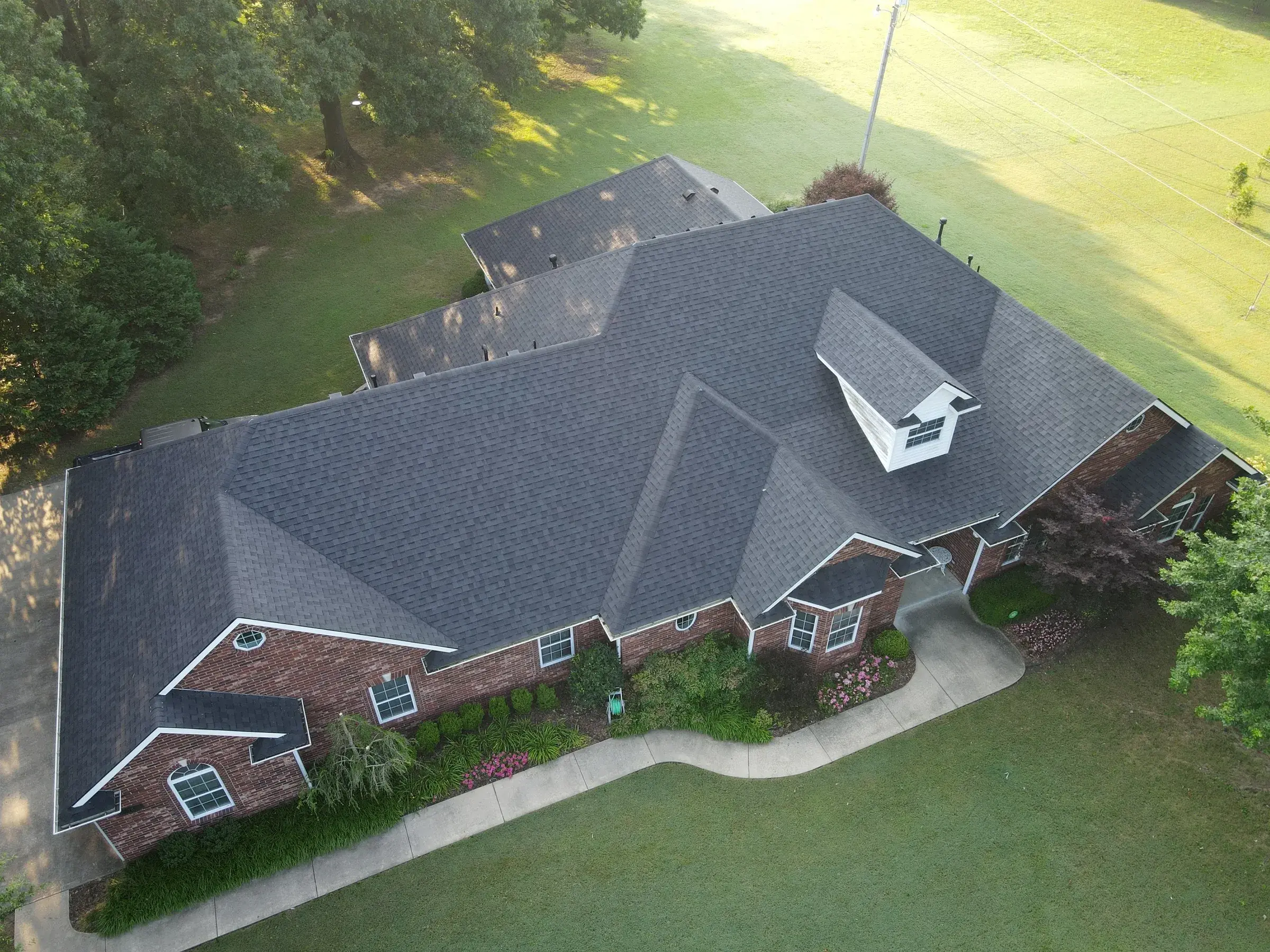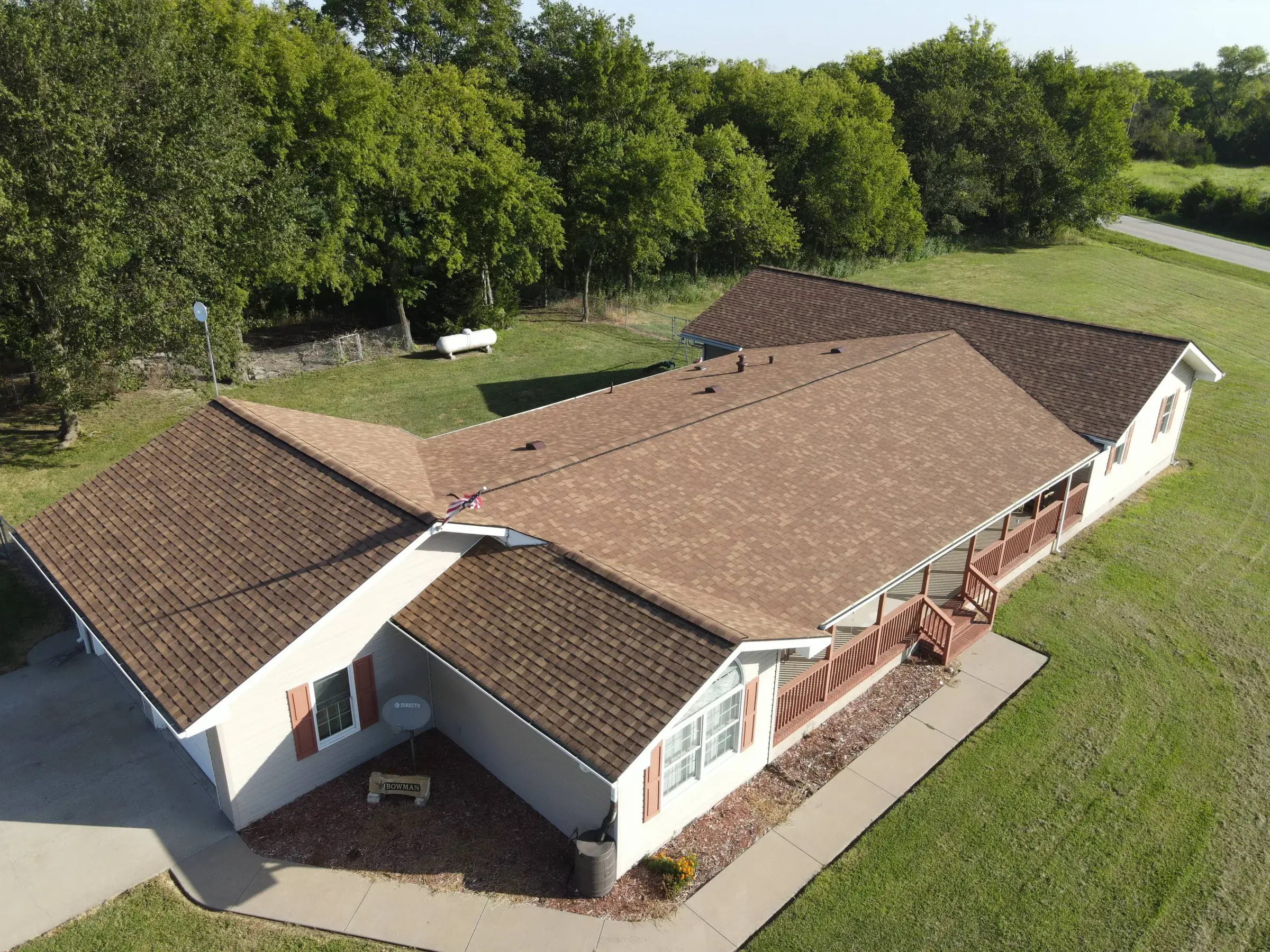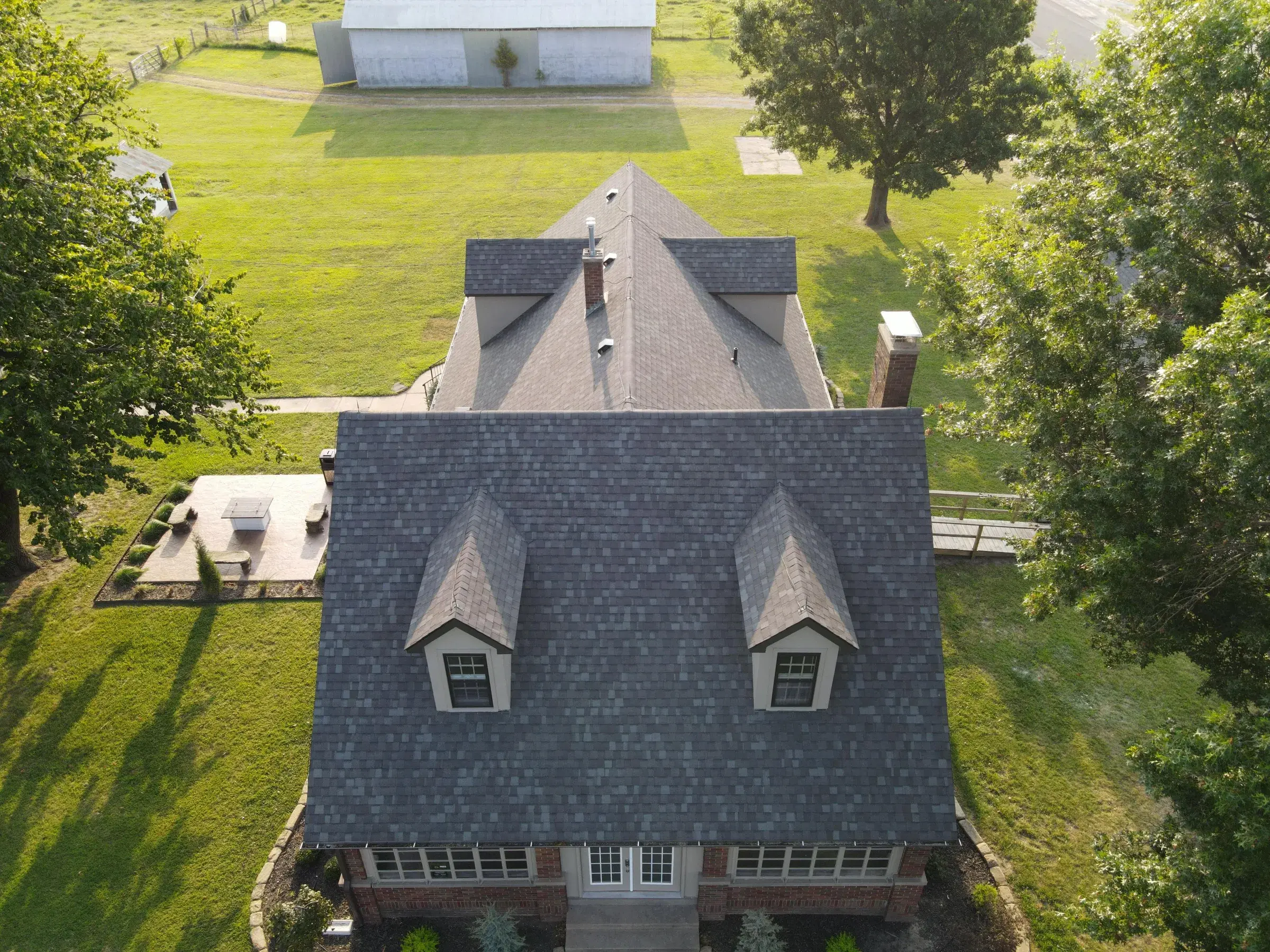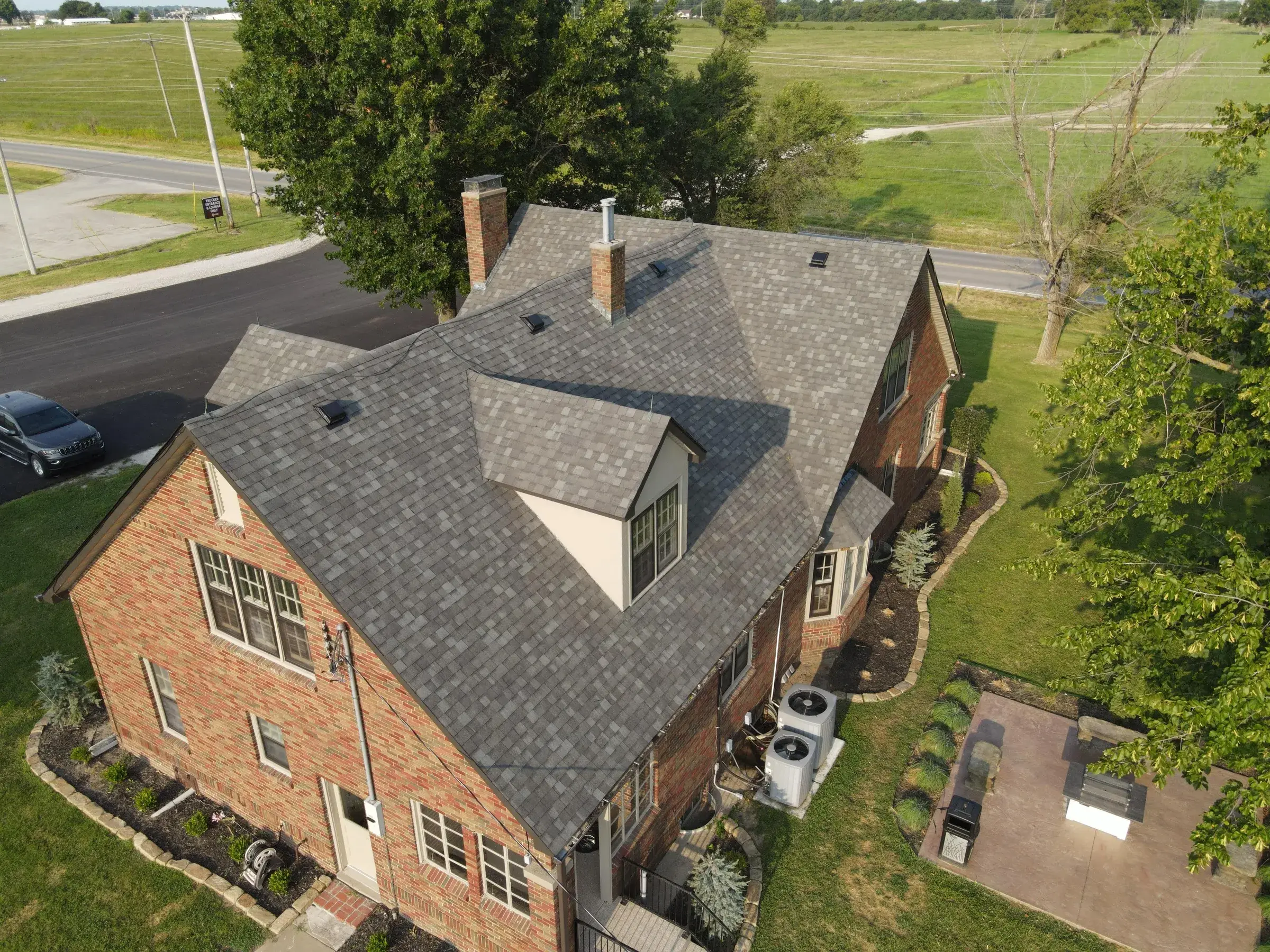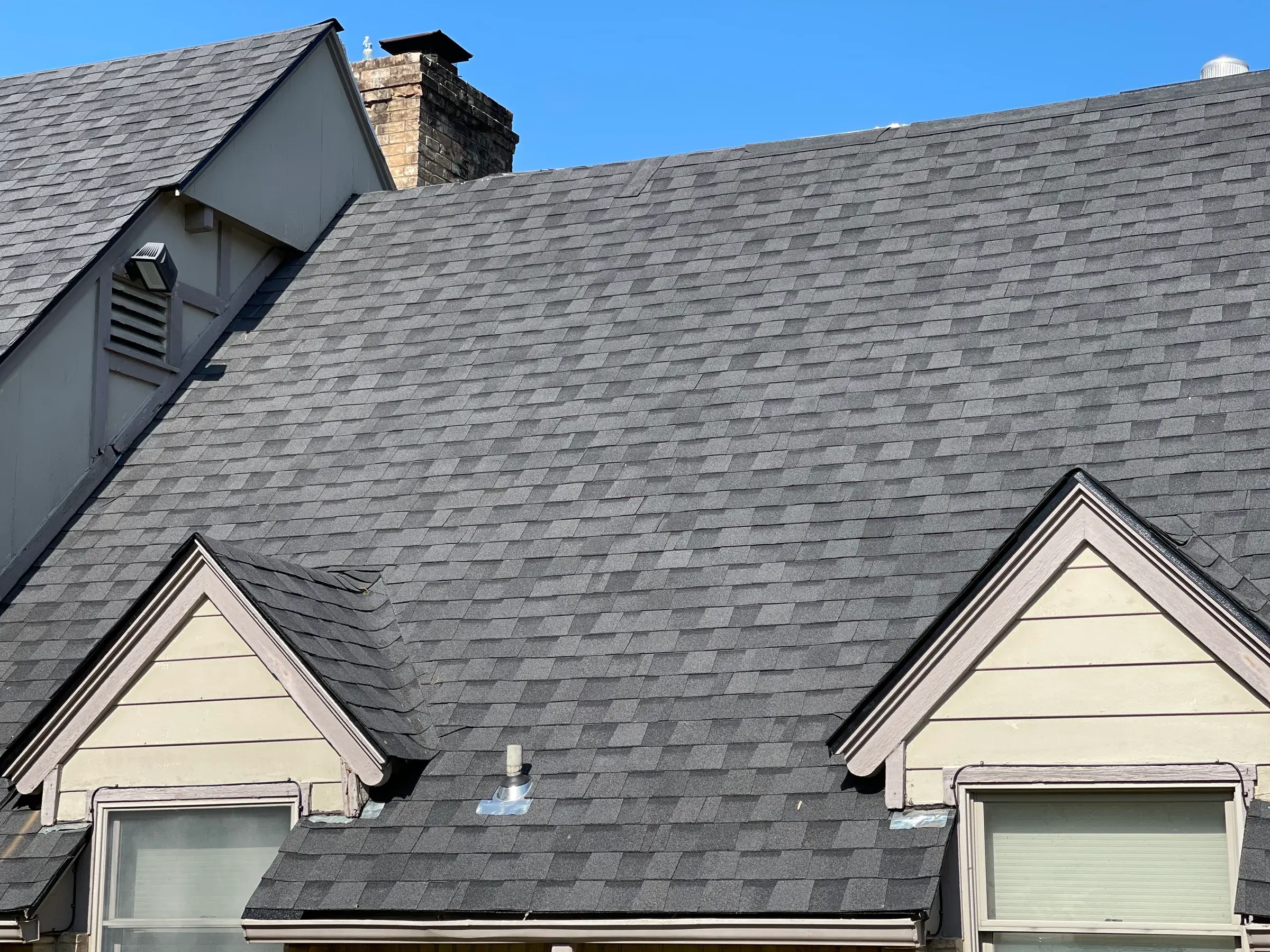
Roof replacement cost is driven by six things: roof size in squares, pitch and stories (which set labor and safety cost), number of existing layers to tear off, deck repair discovered after tear-off, the count of penetrations and flashing details, and material grade. Any quote given without a measurement is a guess, not an estimate.
Why No Honest Contractor Quotes a Roof Over the Phone
Two houses on the same block in Miami can show the same square footage on the county record and price thousands of dollars apart. One is a simple gable, low slope, two plumbing vents, one layer of shingles. The other has three valleys, a chimney, a dormer, a skylight, a steep back slope and two layers to come off. Same house size. Completely different roof.
So when someone gives you a number over the phone, one of two things is happening. Either they are quoting the cheapest possible version of your roof and will find the rest later as change orders, or they are padding high enough to cover the worst case and hoping you don't shop it. Neither is an estimate. An estimate comes from a measurement.
That measurement is not a mystery, and it is not proprietary. It is a set of numbers you are entitled to see: how many squares, what pitch, how many layers, how many penetrations, what the deck looks like. Every one of those numbers has a reason attached to it. This article walks through all six drivers so you can read your own estimate instead of just reacting to the total at the bottom.
A note before the money talk: replacement is not always the right answer. If your roof is eight years old with hail bruising on one slope, the honest conversation is about [repair versus replacement](/blog/roof-repair-vs-replacement-oklahoma) before anyone starts counting squares. Our [roof inspections](/services/roof-inspections) are free and include the measurement, so nothing below requires you to spend a dollar to find out.
| Cost driver | Why it moves the price | What to ask the contractor |
|---|---|---|
| Roofing squares (roof size) | Every material and labor unit is priced per square. This is the multiplier on the whole job. | How did you measure — tape on the roof, or an aerial report? Can I see the diagram? |
| Pitch, stories and access | Steep and tall means staging, fall protection, and slower material handling. Same squares, more hours. | Is fall protection and staging in this price, or does it become a change order? |
| Existing layers and tear-off | Each layer is another pass of labor and another ton of weight going to the landfill. | How many layers did you count, and where did you physically check? |
| Deck repair | Nobody can see the deck until the shingles are off. It is priced as a unit rate, not a guess. | What's the price per sheet or per board, and do I approve it before it's installed? |
| Penetrations, flashing, valleys, chimneys | This is detail labor and new metal. It is also where two bids quietly stop being the same job. | Are pipe boots and step flashing replaced new, or reused? |
| Material grade, underlayment, ventilation | Shingle line, underlayment type and vent balance change both cost and how long the roof lasts. | What's the exact product name, and what intake ventilation are we adding? |
Cost Driver 1: Roofing Squares — How Roof Size Is Actually Measured
A roofing square is 100 square feet of roof surface. That's the unit the whole trade prices in, and it's the unit the National Roofing Contractors Association's estimating guidance is built around. Shingles, underlayment, nails, labor, disposal — all of it gets quoted per square. Get the square count wrong and every other line on the estimate is wrong with it.
The first mistake homeowners make is using the house footprint. A 2,000 square foot house does not have a 2,000 square foot roof. The roof is bigger, because it's sloped, and because it hangs past the walls at the eaves and rakes. It's also bigger than you think if the house has an attached garage, a porch, a carport or an addition with its own slope.
The squares conversion, and the waste factor
Once the roof surface area is measured, the conversion itself is simple arithmetic. What isn't obvious is that the contractor orders more than the measured amount. Shingles get cut at hips, valleys and rakes, and the offcuts go in the trailer. That's the waste factor.
| Measured roof surface (sq ft) | Squares | Ordered at 10% waste | Ordered at 15% waste |
|---|---|---|---|
| 1,000 | 10 | 11 | 11.5 |
| 1,500 | 15 | 16.5 | 17.25 |
| 2,000 | 20 | 22 | 23 |
| 2,500 | 25 | 27.5 | 28.75 |
| 3,000 | 30 | 33 | 34.5 |
| 3,500 | 35 | 38.5 | 40.25 |
Ten percent is a common allowance on a simple gable with clean rakes. Fifteen or more shows up on a cut-up roof with multiple hips and valleys, because every valley means a diagonal cut on every course. Neither number is a rule — it's a judgment call, and you're allowed to ask which one they used and why. A contractor who can't answer that hasn't estimated your roof; he's estimated a roof.
One more thing worth knowing: most architectural shingles come three bundles to the square, and the wrapper says so. If you ever want to sanity-check what showed up in your driveway against what you paid for, count bundles and divide by three.
If only one slope is damaged, the square count is the conversation. A slope-by-slope measurement is what tells you whether [a partial replacement makes sense](/blog/partial-roof-replacement-when-it-makes-sense) or whether you're just delaying the whole job by a few years.
Cost Driver 2: Pitch, Stories, and Access (Where Labor Cost Hides)
Pitch is the rise in inches for every 12 inches of horizontal run. A 6/12 roof climbs six inches for every foot you move sideways. It matters twice over: it makes the roof physically bigger than the footprint underneath it, and past a certain point it changes how the crew has to work.
| Pitch | Area multiplier | Practical effect |
|---|---|---|
| 3/12 | 1.03 | Walkable. Standard footing, standard labor. |
| 4/12 | 1.05 | Walkable. Most common residential slope around here. |
| 6/12 | 1.12 | The edge of comfortable. Some crews start staging here. |
| 8/12 | 1.20 | Roof jacks and planks typically required. Slower everything. |
| 10/12 | 1.30 | Full staging. Material can't be stacked on the slope. |
| 12/12 | 1.41 | The roof surface is over 40% larger than the footprint beneath it. |
Read that multiplier column again. A 12/12 roof over a 1,500 square foot footprint is not 15 squares — it's over 21 before you add overhangs. That alone is a five-figure swing in material and labor on the same size house.
Stories stack on top of pitch. A second story means longer ladders, more trips, a taller dump trailer throw, and fall protection that has to be anchored and moved as the crew works. None of that shows up in a phone quote and all of it shows up in hours.
Access is the quiet one. Ottawa County genuinely splits in two. East of Miami you're into the Ozark Plains — rockier, rolling, and wooded, which means mature trees over the driveway and nowhere to set a trailer without hand-carrying tear-off forty feet. West is the Neosho Lowlands, flat and open, where a truck backs right to the eave. Same roof, different day of labor. Ask whether the crew can get equipment to the house, because if they can't, somebody is paying for the extra hands.
Cost Driver 3: Tear-Off — Layers, Disposal, and Landfill Fees
Tear-off is priced two ways at once: the labor to remove the old roof, and the cost to make it disappear. Both scale with layers. Two layers is not slightly more work than one — it's a second full pass across the entire roof with a shovel, and roughly double the tonnage into the trailer. Disposal is billed by weight. That's a real, itemizable number, and it belongs on your estimate as its own line.
Which brings up the oldest cost-cutting pitch in roofing: leave the old shingles and go over the top. It's cheaper today. It's also the thing Oklahoma specifically wrote into its code. Oklahoma amended IRC section R908.3.1.1 to require tear-off rather than a shingle-over in defined conditions — an unusual, state-specific amendment, and one worth knowing about before you accept the lower bid.
The other thing tear-off drags along with it is the permit. The City of Miami requires a permit for new roofs and re-shingles. We pull it. If a bid doesn't mention a permit at all, that's a question, not a savings.
When a contractor tells you how many layers you have, ask where he checked. The honest answer involves a specific place — the rake edge, the gutter line, a lifted shingle at a corner — not "looks like one."
Cost Driver 4: Deck Repair — The Line Item Nobody Can Price in Advance
The deck is the wood under the shingles. Sheathing, sheets or planks, nailed to the rafters. It is completely invisible until the old roof comes off, and it is the single most common reason a final invoice differs from an estimate.
This is not a scam. It's physics. No one can see through shingles. What separates a straight estimate from a bad one is whether the contractor tells you the price of deck repair before he finds it, or after.
The correct structure is a unit rate. So many dollars per sheet of decking, so many dollars per linear foot of plank, stated in writing, on the estimate, before work begins. Then the number of units is discovered, photographed, and approved. What you should never accept is "we'll take care of it" or a deck line with no rate attached.
Oklahoma is hard on decking for reasons that have nothing to do with age. The Oklahoma Climatological Survey's 1991–2020 normals record 89 nights a year below freezing in this area. Water that gets into sheathing through a failed boot or a hail fracture freezes, expands, thaws, and does it again — dozens of times a winter. That's freeze-thaw, and it delaminates plywood and splits planks from the inside. Then summer bakes it: 57 days a year above 90°F, with an August daily high normal of 91.5°F. Wet wood plus that heat cycle is how a deck goes soft without a single visible leak downstairs. There are [signs of decking damage](/blog/roof-decking-damage-signs) you can spot from the attic before tear-off day, and it's worth ten minutes with a flashlight.
Cost Driver 5: Penetrations, Flashing, Valleys, and Chimneys
Field shingles are the easy part of a roof. The price — and the leaks — live at the edges and the holes.
Count your penetrations. Plumbing vents, furnace flue, bath fans, kitchen exhaust, the dryer vent, satellite mounts, any skylight. Each one needs a new boot or new flashing and hand labor to cut it in. A roof with eleven penetrations costs more to detail than the same squares with four, every time.
The words to know before you read a bid
- Step flashing — the L-shaped metal pieces that tie a roof slope into a wall, woven one per shingle course. Reused step flashing is the classic hidden shortcut. It should be new.
- Counterflashing — the metal cut into the chimney mortar joint that laps over the base flashing. Cut and sealed into the mortar is right. A bead of caulk smeared on the brick is not.
- Pipe boot — the rubber or lead collar around a plumbing vent. Rubber boots crack from UV before the shingles wear out, which matters in a place with roughly 62% annual sunshine.
- Valley — where two slopes meet and dump water. Open metal valleys use a metal channel; closed-cut valleys run shingles across. They cost differently and they are not interchangeable.
- Drip edge — the metal at the eaves and rakes that sends water into the gutter instead of behind it.
Here's the practical use of that list. Two estimates for the same house can both say "replace roof" and mean different work, because one includes new step flashing, new counterflashing, new boots and new drip edge, and the other reuses whatever's up there. That is not a small difference. It is most of the difference. Ask the question in plain words: what metal on this roof is new, and what is staying?
Cost Driver 6: Material Grade, Underlayment, and Ventilation
Shingle grade is the part homeowners already expect to matter. Three-tab is the flat, thin, entry product. Architectural (laminated) shingles are thicker and heavier. Impact-resistant shingles are tested to UL 2218 and rated Class 1 through Class 4, Class 4 being the top.
Hail is the reason anyone in Ottawa County asks about Class 4. The Oklahoma Climatological Survey puts this area at four to five days a year with hail larger than three-quarters of an inch. That's the real number, and it's the only hail number worth trusting — ignore anyone quoting you a storm frequency they can't source.
On the insurance side, be careful what you're told. Oklahoma does not mandate that insurers give a discount for impact-resistant shingles — there's no such requirement in state insurance law. Some carriers offer one anyway. The only way to know is to call your insurer and ask whether they offer an impact-resistant credit and what they require to grant it. Nobody selling you shingles can promise that number.
Underlayment and ventilation: the two lines people skim past
Underlayment is what goes between the deck and the shingles. Felt is the traditional option; synthetic underlayments are lighter, tear less, and hold up better if the roof sits exposed. Ice-and-water barrier at the eaves and in valleys is a separate product and a separate cost. Oklahoma's code does not specify an ice barrier requirement for this area, so treat it as an option to discuss on your particular roof — especially at valleys and low-slope tie-ins — not as something a contractor can claim the state forces you to buy.
Ventilation is the one that decides whether the roof lives out its rated life. It works as a pair: intake at the soffit, exhaust at the ridge. Exhaust with no intake pulls air from inside the house instead of from outside, which is worse than nothing. Given 57 days a year over 90°F, an unvented attic in Miami turns into an oven that ages shingles from underneath. If a bid adds ridge vent and says nothing about intake, it's incomplete.
On material pricing generally: the U.S. Bureau of Labor Statistics publishes a Producer Price Index covering asphalt shingles and roofing materials, and it moves. We're not going to quote you an index figure, because whatever it read this quarter isn't what your job costs. The practical takeaway is narrower — ask how long the quoted price holds, and get the answer in writing on the estimate.
What Should Appear on a Legitimate Written Estimate
Oklahoma's Roofing Contractor Registration Act, at 59 O.S. § 1151.21, sets contract and disclosure requirements for roofing work in this state. The Oklahoma Insurance Department's consumer materials make the same point in plainer language: get the scope in writing, understand it, and don't sign what you can't read. Here is what a real one looks like.
| Line item | What it means | Red flag if missing or vague |
|---|---|---|
| Squares and a measurement diagram | The measured roof area the whole price is built on | No square count means no measurement. Everything below it is invented. |
| Waste factor used | How much extra material is ordered for cuts | A total with no waste figure can't be compared to another bid's total. |
| Pitch and story count | The labor and staging basis | Steep-slope charges appear later as a surprise. |
| Number of existing layers | How many passes of tear-off and how much tonnage | The classic mid-job change order. |
| Tear-off and disposal | Removal labor plus dump weight | Bundling disposal into "labor" hides a real, comparable number. |
| Decking unit rate | Dollars per sheet or per linear foot of plank | No rate means the price is set after they have your roof open. |
| Underlayment product name | Felt vs. synthetic, and where ice-and-water goes | "Underlayment" alone could mean the cheapest felt made. |
| Shingle manufacturer, line and color | The exact product, not a category | "Architectural shingle" is not a product. It's a shelf. |
| Flashing scope | Which metal is new: step, counter, drip edge, boots, valleys | Silence here almost always means reuse. |
| Ventilation plan | Exhaust and intake, both named | Ridge vent with no intake is a half-installed system. |
| Permit | Who pulls it and whether it's in the price | Miami requires one for new roofs and re-shingles. |
| Payment schedule | What's due when, and what triggers each payment | A large deposit before material delivery deserves a hard question. |
Ten things your written estimate must contain before you sign
- Total roofing squares, with the measurement diagram attached
- The waste factor applied, stated as a percentage
- Roof pitch and number of stories
- Number of existing layers to be removed
- Tear-off and disposal as their own line, not folded into labor
- A decking repair unit rate in dollars per sheet or per foot, plus your written approval before it's installed
- Exact shingle manufacturer, product line and color — and the underlayment product by name
- A flashing scope naming what is new: step flashing, counterflashing, drip edge, pipe boots, valley metal
- The ventilation plan, listing exhaust and intake separately
- Permit responsibility, payment schedule, price expiration date, and the contractor's Oklahoma registration
If you want a longer version of this conversation, we keep a list of [questions to ask a roofing contractor in Oklahoma](/blog/questions-to-ask-roofing-contractor-oklahoma) that covers the ones people forget until it's too late to ask.
How to Compare Two Bids That Are $4,000 Apart
A gap that size is almost never mysterious. It's usually two or three specific line items, and once you line the bids up side by side, they fall out fast. Most of the time the gap is one of these: a different square count, a shingle-over instead of a tear-off, reused flashing, a cheaper shingle line, no decking rate, or no permit.
Print this and fill it in with both bids in front of you.
| What to compare | Bid A | Bid B | Why the difference matters |
|---|---|---|---|
| Squares (measured) | ____ | ____ | If these don't match, one contractor measured and one guessed. |
| Waste factor % | ____ | ____ | A lower waste % makes a total look better and leaves the crew short. |
| Tear-off or shingle-over? | ____ | ____ | Not the same job. Check Oklahoma's tear-off amendment for your situation. |
| Layers counted | ____ | ____ | A missed second layer is a four-figure change order. |
| Disposal included? | ____ | ____ | If it's not priced, it's coming. |
| Decking rate per sheet | ____ | ____ | No rate = a blank check written after your roof is open. |
| Shingle product name | ____ | ____ | Compare the actual product, not the word "architectural". |
| Underlayment product name | ____ | ____ | Felt and synthetic are not the same line item. |
| Step flashing: new or reused? | ____ | ____ | Reused flashing is the most common invisible shortcut. |
| Counterflashing at chimney | ____ | ____ | Cut into mortar, or caulked to the brick? |
| Pipe boots: new or reused? | ____ | ____ | Rubber boots crack from UV before shingles wear out. |
| Drip edge included? | ____ | ____ | Without it, water runs behind the gutter. |
| Intake ventilation added? | ____ | ____ | Ridge vent alone is half a system. |
| Permit pulled by whom? | ____ | ____ | Miami requires one for new roofs and re-shingles. |
| Price expiration date | ____ | ____ | Material prices move. Know how long the number holds. |
| CIB registration verified? | ____ | ____ | verifyroofing.cib.ok.gov. One minute, no cost. |
Work down the rows. By the time you hit the flashing questions, the $4,000 usually has a name.
Why Oklahoma Estimates Often Include an Allowance for Decking
You'll see a decking allowance on a lot of estimates in this part of the state, and it isn't padding. It's an honest answer to a genuinely unknowable number, and there are local reasons it shows up more here than in some markets.
Hail is the first. Four to five days a year of hail over three-quarters of an inch, per the Oklahoma Climatological Survey, means impact energy hitting sheathing repeatedly over a roof's life. Freeze-thaw is the second — 89 nights a year below freezing working on whatever moisture got in. The third is the housing stock itself. Ottawa County has 13,701 housing units, 76.7% of them detached single-family homes, and older homes here may have plank decking rather than sheet goods. Planks split, cup and pull nails differently than plywood does, and you find out on tear-off day.
There's a fourth reason that's specific to this corner of Oklahoma. Roughly 13% of the county's housing units sit vacant, and a good share of that is seasonal — second homes around Grand Lake o' the Cherokees. A slow leak in a house nobody sleeps in for eight months does not announce itself with a stain on the living room ceiling. It just quietly eats the deck. If your home is seasonal, assume the deck deserves a closer look, not a lighter one.
And manufactured housing — 12.2% of the county's units — is its own conversation entirely, because the roof structure, the deck and the fastening are not what's on a stick-built house. Any estimate that treats them the same hasn't looked.
So what does a fair allowance look like? Three things. A stated unit rate. A stated assumption — "this price assumes the deck is sound; repairs beyond that are billed at the rate above." And a promise that you see photographs of every damaged sheet before it's covered up. An allowance built that way protects you. An allowance with no rate attached protects nobody but the contractor.
If you want the real number for your roof instead of a range from the internet, the measurement is the whole thing. We're at 111 S Main St in [Miami](/locations/miami-ok), and the inspection and the quote are free — we'll measure the roof, count the layers and penetrations, photograph what we find, and give you a written estimate with every line above on it, whether you go with us or use it to check somebody else's. Call (209) 758-8550, or read more about how we handle a [roof replacement](/services/roof-replacement) from tear-off to final walk.
Questions people ask about this
Why won't a roofer just give me a price over the phone?
Because the two numbers that drive the price the most — your pitch and your existing layer count — cannot be seen from a phone call or a satellite image. A phone number is either a low anchor that grows through change orders, or a padded worst-case guess. A real estimate starts with squares measured off the actual roof, a layer count checked at the rake edge or gutter line, and a penetration count. That takes a ladder, not a conversation.
My house is 2,000 square feet. How many squares is my roof?
More than 20, and possibly a lot more. Roof area isn't house footprint. A sloped roof is larger than the floor beneath it — a 6/12 pitch multiplies the footprint by about 1.12, and a 12/12 by about 1.41. On top of that, you add eave and rake overhangs, plus any attached garage, porch or carport with its own slope. Then the contractor orders roughly 10% to 15% above the measurement for cutting waste. That's why the diagram matters more than the tax record.
What is a decking allowance, and can it balloon on me?
A decking allowance is how a contractor handles a cost nobody can see until the shingles come off. It's legitimate — but only if it's structured right. It needs a written unit rate (dollars per sheet or per linear foot of plank), a stated assumption about what the price already covers, and your approval plus photographs before any damaged wood is covered up. An allowance with no rate attached is not an allowance; it's a blank check signed after your roof is open.
Will Class 4 impact-resistant shingles lower my insurance in Oklahoma?
Maybe, but no contractor can promise it. Oklahoma does not require insurers to give a discount for impact-resistant shingles — there's no such mandate in state insurance law, so treat "required by law" as a sales line. Some carriers do offer a credit voluntarily. The only reliable move is to call your own insurer, ask whether they offer an impact-resistant credit, and ask what documentation they need. Given that the Oklahoma Climatological Survey records four to five hail days a year over three-quarters of an inch here, the shingles may be worth considering regardless of what your carrier says.
How do I check that a roofing contractor is legitimate in Oklahoma?
Use the Construction Industries Board's public tool at verifyroofing.cib.ok.gov. Oklahoma requires roofing contractors to register with the CIB, and that registration requires liability insurance of at least $500,000 for residential work — so the tool verifies something real. Don't rely on "licensed and bonded" on a truck door: Oklahoma, Kansas and Arkansas issue registrations rather than licences, Missouri has no state roofing licence at all, and none of these states requires a surety bond. Check the registration yourself, for every bidder.