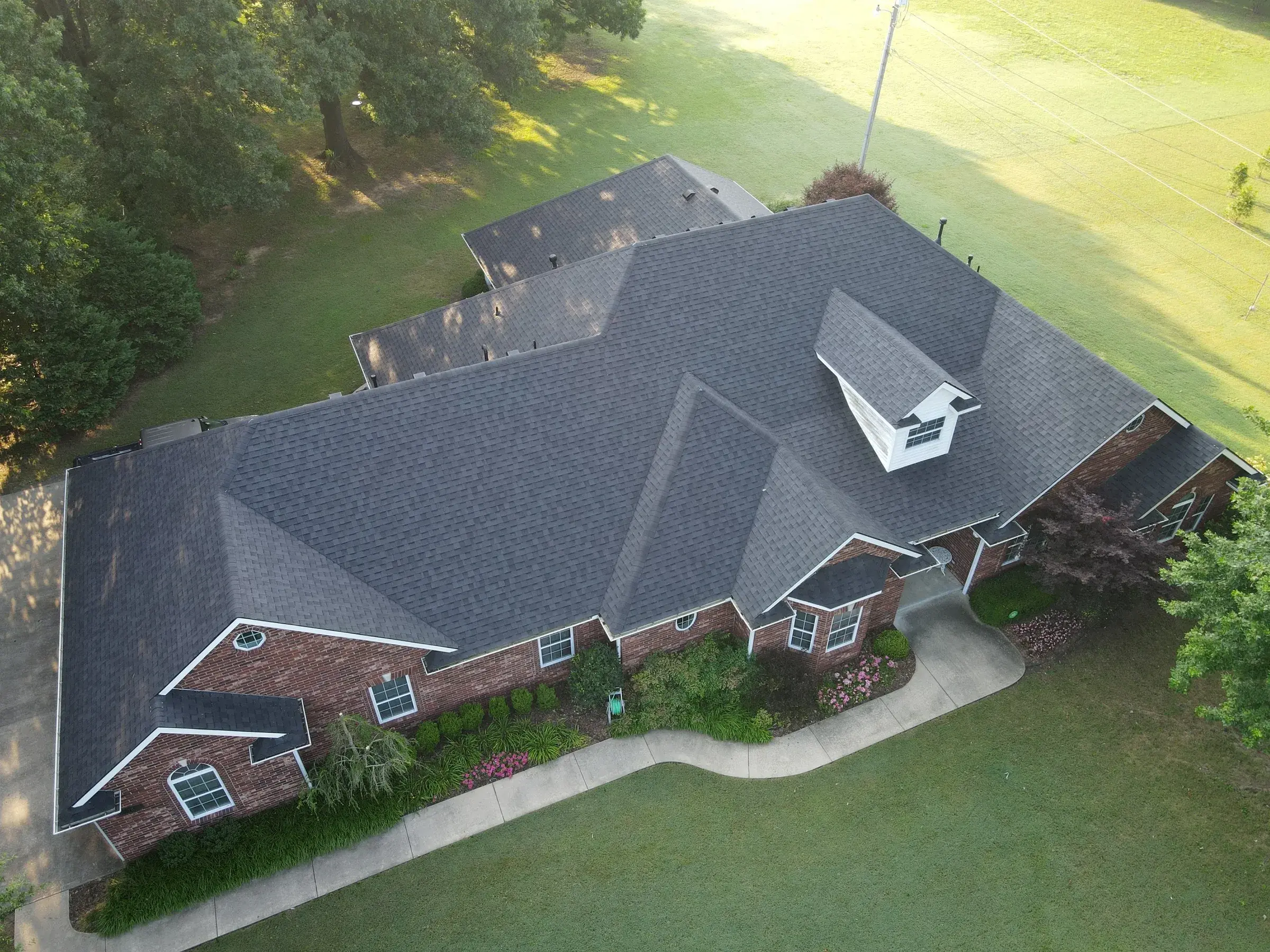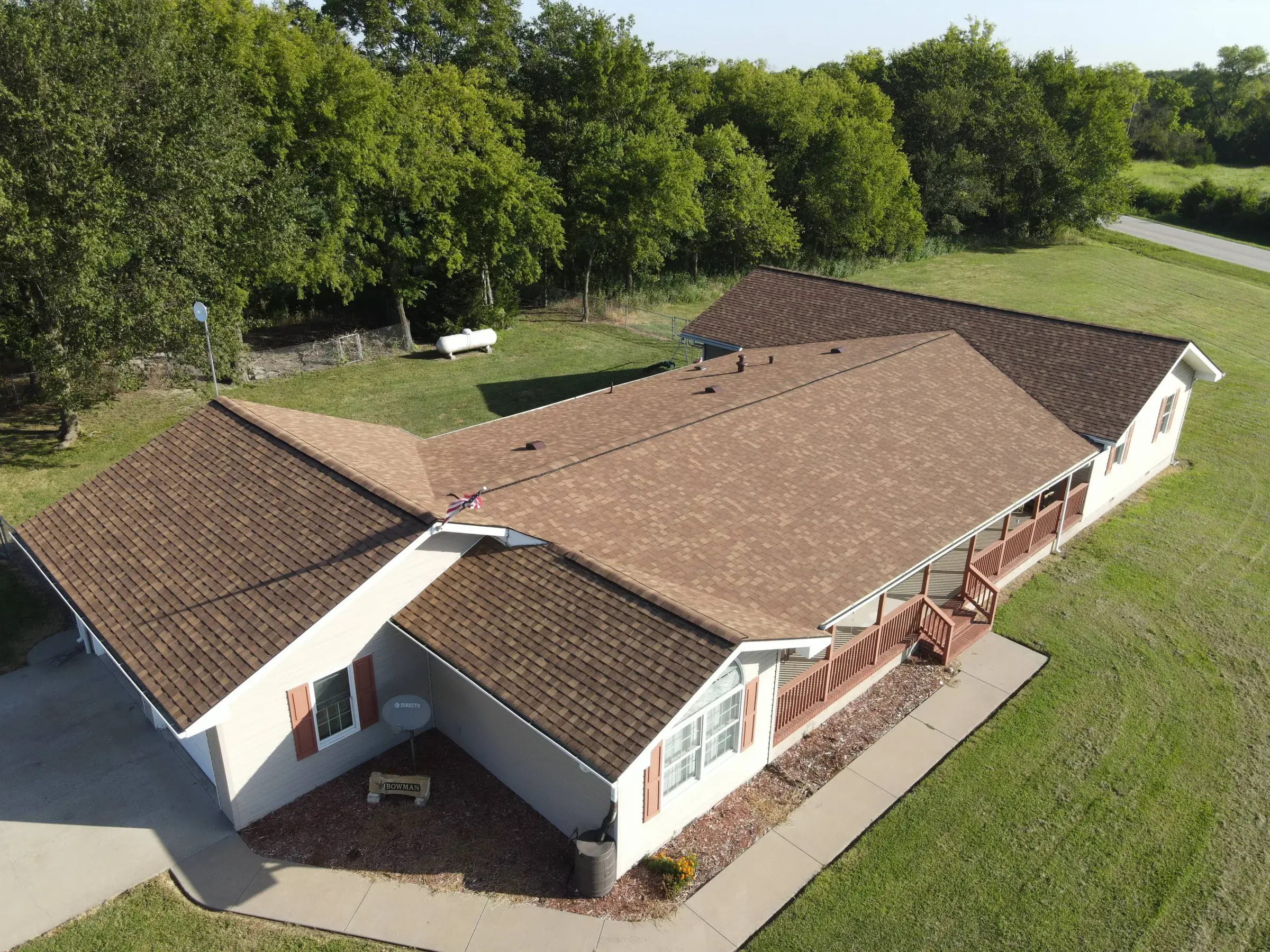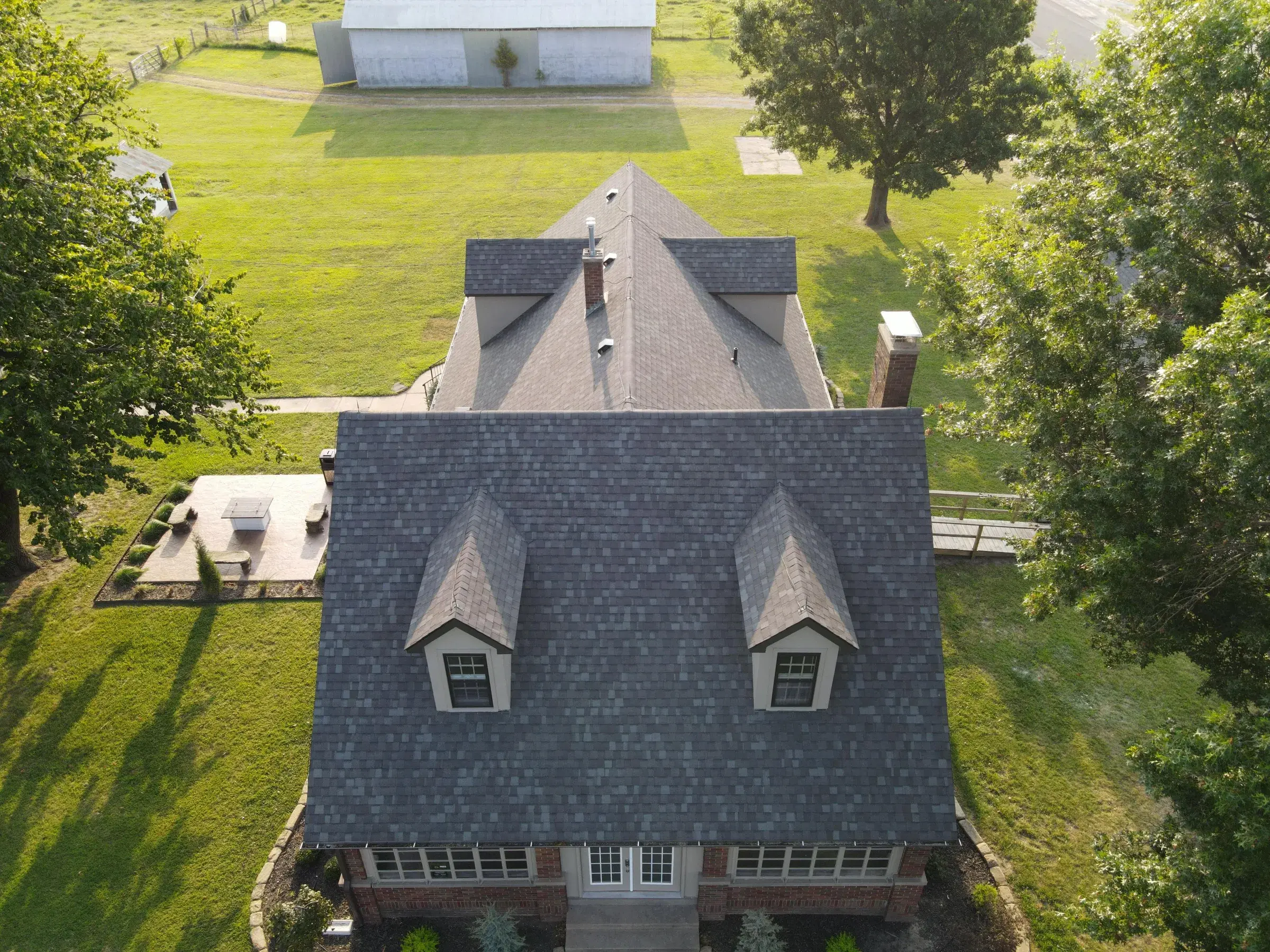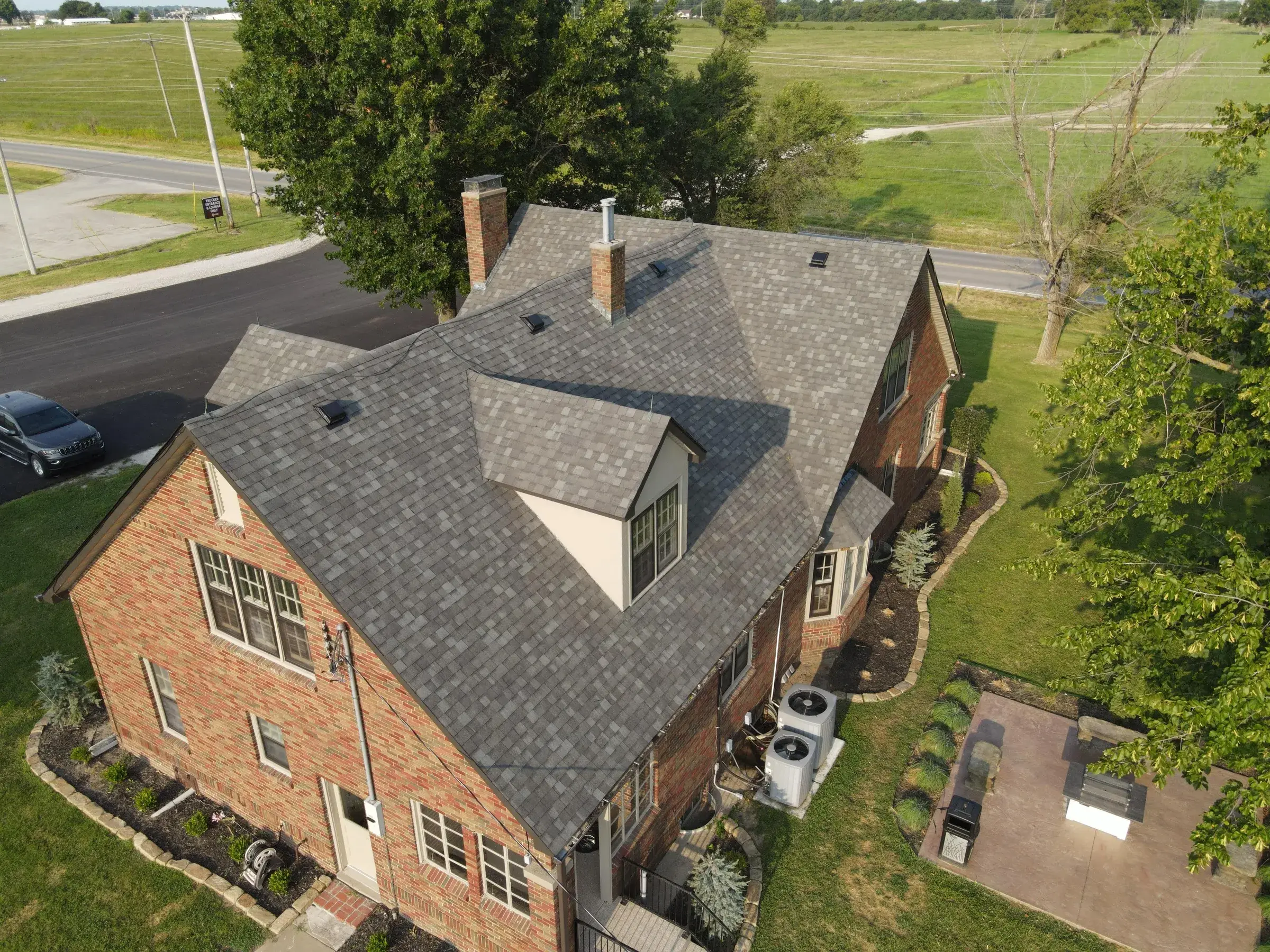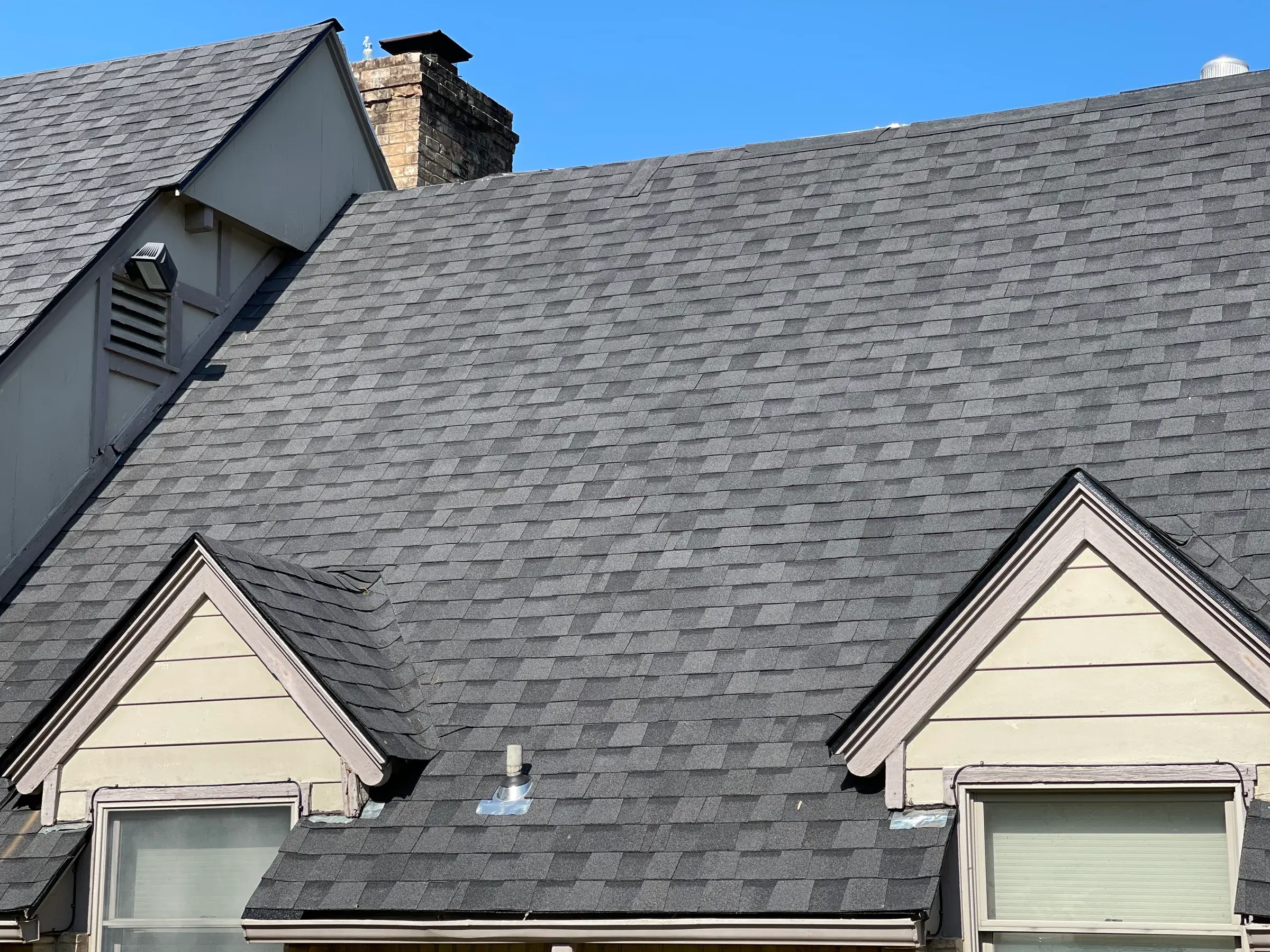
A roof replacement runs in a set order: inspection, written estimate, signed contract, permitting, material delivery, tear-off, deck inspection and repair, dry-in with underlayment, shingle and flashing installation, cleanup, and final walkthrough. The two stages homeowners should watch hardest are deck repair — which is unpriceable until tear-off — and dry-in.
The Nine Stages, End to End
The order of a roof replacement is not a matter of preference. It is a dependency chain. You cannot price deck repair before tear-off, because nobody can see the deck. You cannot lay underlayment on a deck that still has shingles on it. You cannot flash a wall properly after the shingles are already run up to it. The NRCA Roofing Manual lays out the steep-slope assembly sequence for exactly this reason: each layer depends on the one under it being finished and correct.
So when a homeowner asks whether a step is being skipped, the honest answer is usually that a step was reordered — and reordering is what causes the failures. Here is the full arc.
- Inspection — the roof and, where accessible, the attic underside are examined and photographed.
- Written estimate — a line-item scope of work, including a per-sheet price for deck replacement.
- Contract — signed, with the specific contents Oklahoma law requires.
- Permitting — pulled where the local building office requires one.
- Material delivery and staging — shingles, underlayment, flashing, and the dumpster land on site.
- Tear-off — old covering removed down to the deck, in sections that can be dried in the same day.
- Deck inspection and repair — the only stage whose cost is genuinely unknown beforehand.
- Dry-in — underlayment, drip edge, and valley protection go on. The roof is watertight again.
- Installation — starter, field shingles, flashing, ventilation, and ridge.
Cleanup and the final walkthrough close the project. Cleanup is not a stage that happens at the end — it runs continuously — but the walkthrough is a discrete event, and it is the last moment you have real leverage.
The table below is the whole project on one screen. The last two columns are the ones worth reading twice.
| Stage | What happens | Typical duration | What can go wrong | What to verify |
|---|---|---|---|---|
| 1. Inspection | Roof surface, flashing, penetrations, and (where accessible) attic underside examined and photographed | 30–60 minutes on site, depending on roof size, pitch, and attic access | Inspection done from the driveway or from a drone only; no attic look; no photos left behind | You receive a photo report you can keep, whether or not you hire anyone |
| 2. Written estimate | Line-item scope: squares, layers to remove, underlayment type, drip edge, valley method, boots, ventilation, deck unit price | Same day to several days, depending on scope and complexity | A single lump-sum number with no line items, and no price named for deck replacement | A per-sheet or per-board price for deck replacement appears in writing before you sign |
| 3. Contract | Scope, price, and the disclosures the Oklahoma Roofing Contractor Registration Act requires | However long you need to read it | Missing workers' compensation statement; missing registration number; blank scope | Registration number present; workers' comp statement present; contractor listed at verifyroofing.cib.ok.gov |
| 4. Permitting | Permit pulled where the local building office requires one for a re-roof | Depends entirely on your local building office | Nobody pulls it, and the homeowner finds out at resale | Ask in writing who is pulling the permit — the answer should be the contractor |
| 5. Delivery and staging | Materials delivered, loaded to roof or stacked on ground; dumpster and drive protection set | Same day as tear-off or the day before | Bundles stacked in one pile over a single rafter bay; dumpster wheels sinking into the drive | Bundles spread across the roof, not concentrated; plywood under dumpster wheels and jack stands |
| 6. Tear-off | Old covering, old underlayment, old flashing, and old nails removed down to bare deck | Half a day to a full day on most single-family homes, depending on size, pitch, and layer count | More roof opened than the crew can dry in before dark or before weather | Only the sections that will be dried in today are opened today |
| 7. Deck inspection and repair | Delaminated, rotted, or under-supported sheathing identified and replaced | Genuinely unknown until the deck is exposed | Verbal change order, price named after the work is done | Photos of every sheet replaced, and a count that matches the unit price already in your contract |
| 8. Dry-in | Underlayment, drip edge, and valley protection installed; roof is watertight again | Follows tear-off the same day, section by section | Deck left bare overnight; underlayment fastened too sparsely and lifted by wind | The roof is dried in before the crew leaves — every day, not just the last day |
| 9. Installation | Starter course, field shingles, step and counter flashing, pipe boots, ventilation, ridge cap | One to three days on most single-family homes, depending on size, complexity, and weather | Old step flashing reused; caulk substituted for metal; ridge cap cut from field shingles | New flashing at every wall and chimney; manufactured ridge cap, not cut-up field shingles |
| Cleanup and walkthrough | Magnet sweep, gutter clearing, debris haul-off, and a documented final walk | Cleanup runs continuously; walkthrough the day work completes | Walkthrough happens by phone, or after final payment has already cleared | You walk the property before the last payment, with the completed checklist in hand |
Stage 1–2: Inspection and the Written Estimate
An inspection that never touches the roof is not an inspection. A real one gets on the surface where the pitch and condition make that safe, checks the flashing at every wall and penetration, and — this is the part most people never see happen — looks at the deck from underneath in the attic. Staining on the underside of sheathing tells you things the shingles never will. Our [roof inspections](/services/roof-inspections) are free, and you keep the photo report either way.
In this corner of Oklahoma the inspector is looking for a specific damage signature. The Oklahoma Climatological Survey's 1991–2020 normals put Ottawa County at four to five days a year with hail larger than three-quarters of an inch. Hail bruising is a soft, dark spot where the granules are knocked away and the mat underneath is fractured — you feel it before you see it. It is not the same as blistering, which is a manufacturing or heat artifact and has crisp, sharp edges. Confusing the two is the single most common reading error on an Oklahoma roof.
What a written estimate actually has to say
A number is not an estimate. An estimate is a scope. It should name the squares, how many existing layers come off, which underlayment goes down, whether drip edge is included at eaves and rakes, how the valleys are being built, whether the pipe boots are new, what happens to ventilation, and — critically — a unit price for deck replacement.
That last line is the one that separates a real estimate from a placeholder. Nobody can tell you how many sheets of decking are bad while the shingles are still on. But everybody can tell you what one sheet will cost. If the price per sheet is agreed before tear-off, Stage 7 becomes arithmetic. If it is not, Stage 7 becomes a negotiation while your roof is open. We cover what drives the total in [roof replacement cost in Oklahoma](/blog/roof-replacement-cost-oklahoma).
If insurance is involved, the estimate is still just an estimate: it is the written price for the work we would perform. We document the damage with a photo report, we can meet your adjuster on site if you ask, and we will help you understand the process. Your insurer decides coverage under your policy — that decision is theirs and your policy's, not ours.
Stage 3: The Contract — What Oklahoma Law Requires It to Contain
Oklahoma regulates roofing contractors under the Oklahoma Roofing Contractor Registration Act, 59 O.S. § 1151.1 and following. It is a registration scheme, not a licence, and no state in our service footprint — Oklahoma, Kansas, Missouri, or Arkansas — requires a roofing surety bond. Anyone telling you they are "licensed and bonded" in Oklahoma is describing something that does not exist. What does exist is worth knowing, because almost nobody explains it.
The Act requires a written contract (§ 1151.21). It requires that the contract include a statement that all individuals performing work under it are covered by workers' compensation insurance (§ 1151.22(A)); if an affidavit of exemption is being used instead, that affidavit must be attached to the contract. It requires the contractor's Oklahoma registration number (§ 1151.17(C)), and it requires registration information to be posted at the job site (§ 1151.17(D)).
You can check any of it yourself. The Oklahoma Construction Industries Board runs a public verification tool at verifyroofing.cib.ok.gov. Type in a company name. Registration requires liability insurance of at least $500,000 for residential work, so a contractor who is not listed there is not carrying what the state requires them to carry. That search takes about fifteen seconds and it is the most useful fifteen seconds in this entire article. If you want the longer version, see [questions to ask a roofing contractor in Oklahoma](/blog/questions-to-ask-roofing-contractor-oklahoma).
Stage 4: Permitting and Local Approvals
Permit requirements for re-roofing are set locally, not by the state. What triggers a permit, what it costs, and whether an inspection is required at the end all depend on which building office has jurisdiction over your address — and in a county that borders both Kansas and Missouri, that answer changes across short distances. Confirm it with your building official, or read our breakdown in [roofing permits and approvals around Miami, OK](/blog/roofing-permits-and-approvals-miami-ok).
The part that matters procedurally is simpler: the contractor should pull it, not you. Where a permit is required, we pull it. A homeowner who pulls their own permit for a contractor's work has quietly taken on a role they did not intend to take on, and it can surface years later at closing when a buyer's title work turns up unpermitted work on the house.
Stage 5: Material Delivery and Staging
Materials usually arrive the day before tear-off or the same morning. If they are boom-loaded onto the roof, they should be spread out along the ridge and across multiple rafter bays — not dumped in one tower. A pallet of shingles is a real load, and concentrating it over a single bay on a 1970s-era truss is how you find out what that truss thinks about it.
Ground staging has its own rules. Bundles stay flat and stacked, not stood on edge, and not baking in the open for weeks — the Oklahoma Climatological Survey puts the normal August daily maximum in Miami at 91.5°F, with 57 days a year above 90°F, and shingles left in that for an extended stretch will start to sag and stick. Dumpster wheels and jack stands go on plywood, or they will print themselves into your driveway.
Wind matters more on the west side of Ottawa County than the east. The Neosho Lowlands west of Miami are open prairie with long wind fetch and nothing to break it; the Ozark Plains to the east are rockier, wooded, and more sheltered. On the west side, loose underlayment rolls and stacked bundles need to be weighted down at the end of the day, not just set down. On the east side, the tree cover that shelters the site is the same tree cover that drops limbs on the staged material.
Your side of staging — cars, patio furniture, wall hangings, pets — is a separate list, and we keep it separate on purpose. It is in [how to prepare for roof replacement day](/blog/how-to-prepare-for-roof-replacement-day).
Stage 6: Tear-Off — Controlled Demolition, Not Chaos
Tear-off means everything comes off: the shingles, the old underlayment, the old flashing, and the nails. Not most of the nails. Old fasteners left proud of the deck telegraph through new shingles and become visible ridges across the field in about two summers.
Oklahoma has a code amendment here that is worth knowing, because it is one of the few genuinely Oklahoma-specific roofing code provisions in the book. The state amended IRC R908.3.1.1 to require tear-off rather than shingle-over in defined conditions. The general roof assembly requirements live in Chapter 9 of the International Residential Code as adopted in the current Oklahoma residential code — and the adopted edition changes, so confirm the current one with your building official rather than trusting any date printed in an article.
Good tear-off is quiet in a specific way: tarps down the slopes before the first shovel, gutters protected, landscape covered, magnets running through the yard during the day rather than only at the end. And crucially, the crew opens only what it can dry in. Two thousand square feet of exposed deck at 4 p.m. with a line of storms on radar is not a schedule problem. It is an interior-damage problem.
One more thing that should be visible from the ground: fall protection. OSHA's residential fall protection requirements apply to this work. Harnesses and anchors on a steep-slope tear-off are not optional equipment, and their absence tells you something about how the rest of the job is being run.
Stage 7: Deck Inspection and Repair — The Stage That Changes the Price
This is the only stage in the project with a genuinely unknown cost, and it is unknown for an honest reason: the deck was under the shingles until forty minutes ago.
Miami's housing stock skews old. The town was platted in 1891 as a planned community and its population peaked in 1980, which means a large share of the 13,701 housing units in Ottawa County — 76.7% of them detached single-family — predate modern sheathing practice. On those homes you often find 1x6 plank decking with gaps between the boards rather than a continuous panel. Plank decking is not automatically bad. But gapped planks will not hold a shingle nail reliably at the gap, and a roof over spaced planks generally needs an overlay of proper sheathing before anything else goes down. That is a real cost, and it cannot be known from the driveway.
What you are looking for at this stage: delaminated OSB (the layers separating, usually feels spongy underfoot), rot around penetrations and in valleys where water sat, and any sheathing that flexes under a boot. Our guide to [roof decking damage signs](/blog/roof-decking-damage-signs) covers what those look like.
Stage 8: Dry-In — The Most Important Hour of the Project
Dry-in is the moment the roof becomes watertight again with underlayment, drip edge, and valley protection — before a single shingle goes on. The Asphalt Roofing Manufacturers Association's technical guidance treats underlayment as a working part of the assembly, not a placeholder: it is the secondary water barrier that does its job on the day wind-driven rain gets past the shingles, which on an Oklahoma roof is a matter of when.
Drip edge — the L-shaped metal that runs along the eaves and rakes and directs water off the deck and into the gutter instead of behind it — is required at both locations for asphalt shingle roofs under IRC Chapter 9 as adopted here. It is cheap. It is also one of the first things omitted on a price-driven job, and its absence rots the fascia from behind where you cannot see it.
On ice barrier, be careful what you are told. Oklahoma leaves that cell of the code table blank — it is not a state code requirement, and any contractor telling you the law demands it is wrong. That said, the Oklahoma Climatological Survey counts 89 nights a year below 32°F in this area. Freeze-thaw at the eave is a real mechanism here even without a code mandate. It is a reasonable thing to ask for and a reasonable thing to decline. It is not a legal requirement, and you should treat anyone who says otherwise with suspicion.
Stage 9: Installation, Flashing, Ventilation, and Ridge
Now the shingles go on, and the sequence is the whole thing.
Starter, field, and fasteners
A starter course goes at the eaves and at the rakes — a purpose-made strip whose sealant line grabs the first shingle from underneath. Cut-up field shingles used as starter put the sealant in the wrong place, and the first real wind event on the west county prairie finds that out.
Fastening is where most premature failures are born. Every shingle has a nail line printed on it, and the manufacturer's spec sheet states how many fasteners are required and whether high-wind application calls for more. A nail driven above the line holds nothing. A nail overdriven through the mat holds nothing. Neither is visible from the ground once the course above is laid, which is exactly why it happens.
Flashing is metal, not caulk
Step flashing — the L-shaped pieces of metal woven shingle-by-shingle into the joint where a roof plane meets a wall — is replaced on a re-roof, not reused. Old step flashing has old nail holes in old positions and has already spent a decade flexing. The same goes for chimney counter flashing and skylight kits. A bead of sealant smeared where flashing should be is not a repair; it is a five-year clock. If you see caulk at a wall line on a brand-new roof, ask what is under it.
Ventilation, and why it gets skipped
Ventilation is a system with two halves: intake low at the soffit, exhaust high at the ridge. Exhaust without intake pulls conditioned air out of your house instead of hot air out of your attic. And mixing exhaust types — a ridge vent plus a powered turbine plus an open gable vent on the same attic — makes the ridge vent an intake and short-circuits the whole thing. In a climate with 57 days a year above 90°F and roughly 62% annual sunshine loading the deck, attic temperature is not a footnote. If your current setup is a patchwork of whatever previous owners added, [roof ventilation work](/services/roof-ventilation-repair) is the right time to fix it — the deck is open and it will never be cheaper.
Ridge cap closes it out. Manufactured ridge cap, made for the purpose. Not field shingles cut into thirds and bent over the peak, which crack at the fold the first hard freeze.
Cleanup and the Final Walkthrough
Cleanup is continuous, not terminal. Magnets run through the yard and drive daily, not once on the last afternoon. Gutters get cleared of nails and shed granules — a full season of shingle granules sitting in a gutter is a clog waiting for the next downpour.
The walkthrough is the last stage and the one homeowners most often give away. Do it on site, in daylight, before final payment. Here is what to cover.
Final walkthrough checklist
- Walk the full perimeter with a magnet and run it over the drive, the yard, and any garden beds
- Look up the roofline from all four sides — courses should run straight, with no waves, humps, or telegraphing nails
- Check every wall and chimney intersection for new metal flashing; look for caulk used in place of metal
- Confirm pipe boots are new, not the old ones re-set
- Confirm ridge cap is manufactured cap, not cut field shingles
- Check gutters for nails and granule buildup, and that downspouts still drain
- Confirm drip edge is present at both eaves and rakes
- Look in the attic with a flashlight for daylight at penetrations and for any new debris on the insulation
- Get the photo count of replaced deck sheets and check it against the unit price in your contract
- Confirm intake and exhaust ventilation match what the contract said, and that no conflicting exhaust types were left in place
- Confirm the dumpster and all leftover material are gone or scheduled with a date
- Ask for the final invoice to be itemised the same way the estimate was, so the two can be compared line for line
What Commonly Goes Wrong at Each Stage
Across all nine stages, the failures cluster into a short list. They are not exotic. They are the same handful, over and over.
- The deck price that appears too late. No unit price in the contract, then a number after the deck is already covered. This is the most common dispute in the trade and it is entirely preventable at Stage 2.
- More roof open than can be closed. Tear-off scope driven by crew scheduling rather than by the weather window, with the deck left bare overnight and tarps doing work they were never designed to do.
- Reused flashing. Old step flashing put back because pulling it means disturbing siding. It is faster. It is also the leak you will call about in year four.
- Ventilation left alone. The deck is open, the ridge is accessible, and nobody touches an intake-starved attic because it was not in the scope. It should have been in the scope.
- Nothing pulled, nothing posted. No permit where one was required, and no registration information posted at the job site as § 1151.17(D) requires. Both are quiet at the time and loud later.
- The walkthrough that never happened. Final payment cleared, crew gone, and the punch list becomes a phone call instead of a conversation on your driveway.
None of this requires you to become a roofer. It requires you to know the order, ask for the deck unit price in writing, look up the registration number at verifyroofing.cib.ok.gov, and refuse to let the deck sit open overnight. Those four things filter out most of what goes wrong.
If you are weighing a [roof replacement](/services/roof-replacement) anywhere around [Miami and Ottawa County](/locations/miami-ok), the inspection and the written estimate are free, and you keep the photo report whether you hire us or not. Call (209) 758-8550 when you want a look at it.
Questions people ask about this
How long does a full roof replacement take from start to finish?
On most single-family homes, the physical work runs roughly two to four days — a half day to a full day of tear-off, then one to three days of installation — but that depends heavily on roof size, pitch, complexity, how many existing layers come off, and weather. The full project arc from first inspection to final walkthrough usually spans longer, because permitting timelines and material delivery sit between the contract and the first shovel. Anyone naming an exact day count before seeing your roof is guessing.
Can a crew leave my roof torn off overnight?
It should not happen as a plan. The standard sequence is that whatever gets opened in a day gets dried in that same day with underlayment, drip edge, and valley protection — the Asphalt Roofing Manufacturers Association treats underlayment as the assembly's secondary water barrier, not a temporary cover. Tarps over a bare deck are an emergency measure, not overnight storage. If more roof is being opened at 3 p.m. than can be closed before dark, that is the problem to raise, not the weather forecast.
Why can't the estimate tell me what deck repair will cost?
Because nobody can see the deck until the shingles come off. Delaminated sheathing, rot around penetrations, and gapped plank decking are all invisible from the surface. What a good estimate can and should do is name the price per sheet or per board before you sign, so that when the deck is exposed the cost becomes a count times a number you already agreed to — not a negotiation held while your roof is open.
What does Oklahoma law require my roofing contract to contain?
The Oklahoma Roofing Contractor Registration Act requires a written contract (59 O.S. § 1151.21) and requires that it include a statement that everyone performing work under it is covered by workers' compensation insurance (§ 1151.22(A)); if an affidavit of exemption is used instead, it must be attached to the contract. The contractor's Oklahoma registration number is required (§ 1151.17(C)), and registration information must be posted at the job site (§ 1151.17(D)). You can verify any registration yourself at verifyroofing.cib.ok.gov — registration requires at least $500,000 in liability insurance for residential work.
Do I need a permit to replace my roof, and who pulls it?
Permit requirements for re-roofing are set locally rather than by the state, so what triggers a permit and whether a final inspection is required depends on which building office covers your address. Confirm it with your building official. Whoever the requirement falls to, the contractor should be the one pulling it — where a permit is required on our work, we pull it. A homeowner who pulls the permit for someone else's work takes on a role that can surface years later at resale.