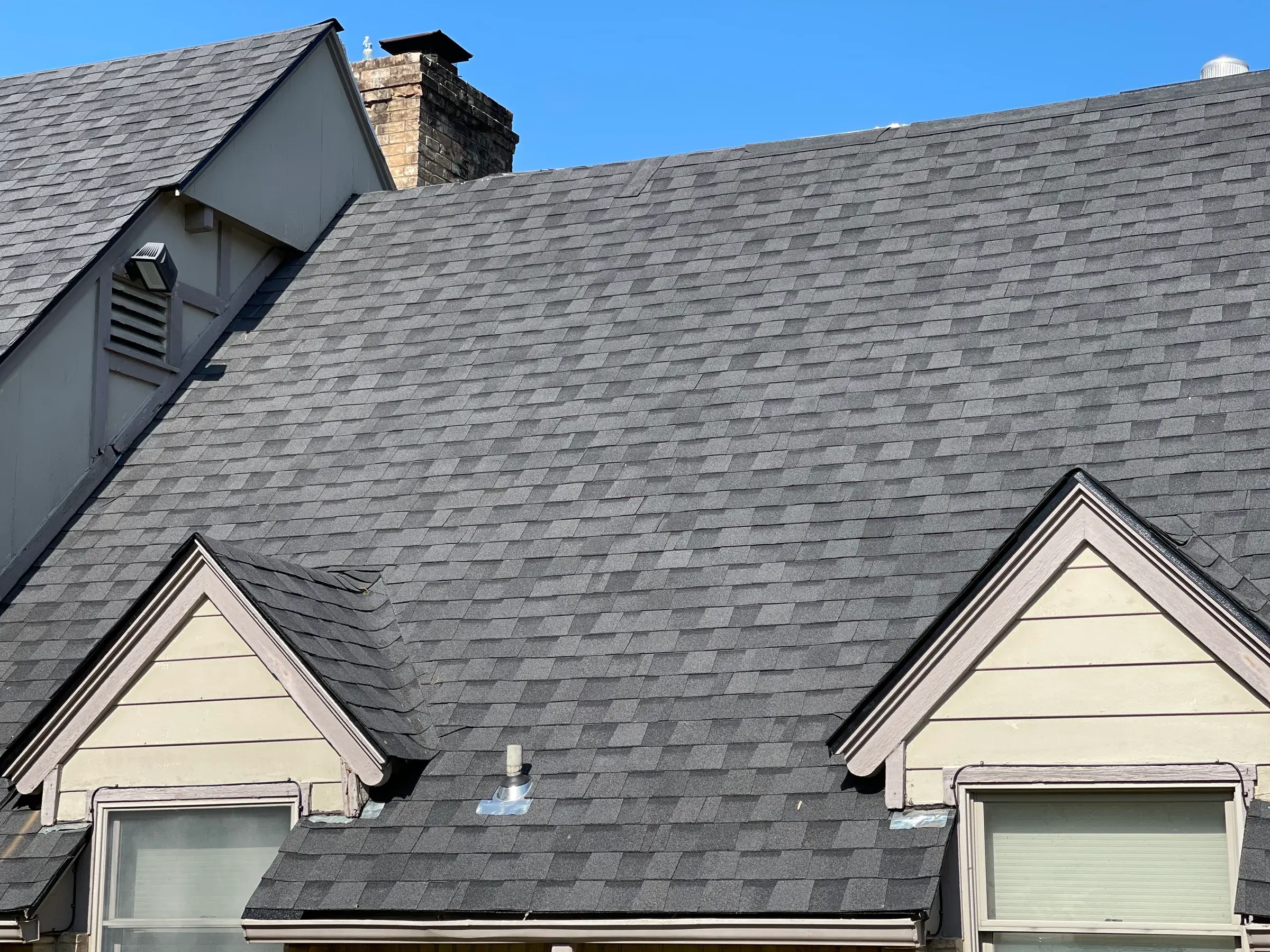
Start with verification, not conversation: ask for the contractor's Oklahoma roofing contractor registration number and confirm it yourself with the Construction Industries Board. Then ask for certificates of liability and workers' compensation insurance, a written contract meeting Oklahoma's requirements, a physical local address, and a clear scope. Anyone who resists any of these has answered the question.
Why Oklahoma's Rules Change the Vetting Conversation
Most "questions to ask your roofer" lists are written for nowhere in particular. Check reviews. Get three bids. Trust your gut. None of that is wrong, exactly. It's just weightless — there isn't a single thing on that list a contractor can be penalized for failing. Oklahoma hands you much better tools, and almost nobody uses them.
The Oklahoma Roofing Contractor Registration Act, 59 O.S. §§ 1151.1 through 1151.30, is a real statute with real teeth. It sets out who may contract for roofing work in this state, how much liability insurance they must carry, what has to be inside the written contract, when you're allowed to walk away from that contract, and what a roofer may never advertise. Every question below traces back to a line in it. That's the difference between a question a contractor can talk around and a question whose answer either exists or doesn't.
This matters more in Ottawa County than in most of the state, because we sit up against two state lines. Miami is a short drive from Kansas and from Missouri. The Oklahoma Climatological Survey records four to five days a year here with hail larger than three quarters of an inch, and after any one of them the trucks rolling down Main Street may represent three states and four companies nobody in town has heard of. The Oklahoma Insurance Department publishes consumer alerts about exactly this pattern of post-storm door-knocking, and the Oklahoma Attorney General's Consumer Protection Unit keeps standing home repair fraud guidance for the same reason. Neither agency can vet a contractor for you. These questions can.
Question 1: What Is Your Oklahoma Roofing Contractor Registration Number?
Ask this first. Before price, before materials, before when they can start. It is the cheapest question you will ever ask and it sorts the field faster than anything else on this page.
Under § 1151.3(A) of the Act, a person or business must be registered with the Oklahoma Construction Industries Board — the CIB — to contract for roofing work in this state. Being unregistered is not a paperwork technicality. Section 1151.3(B) allows a civil penalty of up to $5,000 against a business entity that advertises or acts as a roofing contractor without a valid registration. Other violations of that section are a misdemeanor carrying a fine of up to $500 per violation under § 1151.3(C), with a parallel administrative fine of up to $500 under § 1151.3(D).
Here's the part people miss: the number shouldn't require a phone call to the office or a rummage through the truck. Section 1151.17(C) requires a roofing contractor to display the registration number on contracts, bids, and advertisements. If it isn't already printed on the estimate that was just handed to you, that absence is itself an answer.
How to Verify That Number Yourself (and Why "Licensed" Is the Wrong Word Here)
A number is a claim until you check it. The CIB runs a public verification page at verifyroofing.cib.ok.gov. You can search by company name or by registration number and see whether the registration is current and in good standing. It takes under a minute, it's free, and you don't have to tell the contractor you did it.
Now the wording, because it's the single most common error in this market. Oklahoma does not license roofing contractors. It registers them. Section 1151.2(14) defines the status as a registration, and § 1151.19 is explicit that registration under the Act is in addition to, not in lieu of, any licensure otherwise required — a municipal license, say, or a license from another board covering a different trade. So when a roofing yard sign in Oklahoma says "licensed and bonded," that phrase is doing no work at all. There is no state roofing license to hold, and the Act requires no surety bond of any kind. What it requires is registration and insurance. A contractor who uses the word "licensed" about Oklahoma roofing either doesn't know the framework he operates under, or is counting on you not to.
Question 2: Can I See Your Certificates of Insurance?
Ask for certificates of insurance — the actual documents, sent from the insurer or the agent. Not a photo on a phone. Not a card in a folder. A certificate that arrives in your inbox from an agency is a very different object from a JPEG.
Section 1151.5 sets the floors, and they are specific numbers, not vibes. General liability coverage of not less than $500,000 for residential roofing work. Not less than $1,000,000 for commercial roofing work. The Construction Industries Board must be named as the certificate holder on the policy. Workers' compensation coverage is required as provided by law.
That certificate-holder requirement is the detail worth understanding, because it's what makes the CIB lookup meaningful. The Board is named on the policy, which means the Board hears about a lapse. So a registration showing as in good standing on the CIB site is, in practice, a live insurance check — not a snapshot from whenever the contractor last filed paperwork.
Two coverages, two entirely different risks to you. Liability covers damage the crew does to your property — the ladder through the window, the truck in the flowerbed. Workers' compensation covers the person who falls. Roofing is one of the more dangerous trades in the country, and where there's no workers' comp, an injured worker's path to recovery can run straight through the homeowner's policy. Ask for both. Ask that they come from the agent.
| Requirement | What the law says | Statute |
|---|---|---|
| Registration required | A person or business must be registered with the Oklahoma Construction Industries Board to contract for roofing work in the state | 59 O.S. § 1151.3(A) |
| Penalty — unregistered entity | Civil penalty up to $5,000 against a business entity advertising or acting as a roofing contractor without valid registration | § 1151.3(B) |
| Penalty — other violations | Misdemeanor, fine up to $500 per violation; administrative fine up to $500 | § 1151.3(C), § 1151.3(D) |
| Liability insurance — residential | Not less than $500,000 | § 1151.5 |
| Liability insurance — commercial | Not less than $1,000,000 | § 1151.5 |
| Certificate holder | The Construction Industries Board must be named as certificate holder on the policy | § 1151.5 |
| Workers' compensation | Required as provided by law | § 1151.5 |
| Registration number display | Must appear on contracts, bids, and advertisements | § 1151.17(C) |
| Registration is not a license | Registration under the Act is in addition to, not in lieu of, any licensure otherwise required | § 1151.2(14), § 1151.19 |
| Written contract | Failing to provide a written contract containing § 1151.21's requirements is grounds for action against the registration | § 1151.7(12) |
| Pre-contract statement | Before entering into the contract, the contractor must furnish the insured a statement of the cancellation right, with a notice of cancellation form | § 1151.21(B) |
| Cancellation after a denial | The insured may cancel within 72 hours of receiving the insurer's written notice that all or part of the claim is not a covered loss | § 1151.21(A) |
| Return of your money | On cancellation, the contractor must tender back payments, deposits, or down payments | § 1151.21(C) |
| Registration falls out of good standing | 30-day period to cure, and the homeowner has the option to cancel the contract | § 1151.5(I) |
| Deductibles | A contractor may not advertise or promise to pay, waive, absorb, or rebate any part of an insurance deductible, directly or indirectly | § 1151.30 |
Question 3: Where Is Your Physical Address?
This is a soft question with a hard purpose. What you're really asking is: where will this company be in three years, when a shingle lifts and I need someone to answer the phone?
A local phone number is not an address — numbers are bought by the hundred and forwarded anywhere. A P.O. box is not an address. A magnet on a truck door is not an address. After a hail day, this market fills with outfits that are entirely real in the legal sense — registered, insured, capable of installing a roof — and gone in the practical sense by spring, because the address behind them was a motel room in Joplin. The roof might even be fine. But if it isn't, the workmanship conversation happens with an empty lot.
So ask for a street address, then look it up. Ours is 111 S Main St in Miami, on the stretch of Main Street that carried Route 66 through town. One office, no branches, and you can find us on the map or in the doorway. That isn't a virtue by itself — it's simply a fact you can verify, which is the entire point of asking.
Question 4: Will Everything Be in a Written Contract?
Ask it plainly: will everything we've discussed be written into the contract before I sign it?
There's a specific kind of trouble that begins with a good conversation and a thin piece of paper. The roofer says he'll replace the pipe boots, re-flash the chimney, haul off the debris and run a magnet across the yard for nails. The contract says "reroof house — $X." None of those promises have technically vanished. They've just been converted into a memory contest that you will lose, because he does this every day and you do it twice in a lifetime.
Oklahoma treats the written contract as an obligation rather than a courtesy. Section 1151.7(12) makes failing to provide a written contract containing the requirements of § 1151.21 grounds for action against a contractor's registration. Which means a roofer who shrugs at putting things in writing is shrugging at the registration that lets him work at all. That's a useful thing to know about someone before you hand them a deposit.
What Oklahoma Law Requires a Roofing Contract to Contain
There are two layers to this: what the Act itself demands, and what any competent scope should specify whether a statute names it or not. Start with the Act.
- The registration number, displayed on the contract and on the bid — § 1151.17(C).
- The requirements of § 1151.21 — the insurance-related cancellation provisions covered further down this page — contained in the written contract itself, per § 1151.7(12).
- If the work will be paid from insurance proceeds: before entering into the contract, the contractor must furnish you a statement explaining your right to cancel, together with a notice of cancellation form (§ 1151.21(B)). Read that carefully. It's a duty that attaches before signature, not at signature. You are supposed to have this in your hands while you're still deciding.
Then come the scope items no statute names but which quietly decide how your roof performs: tear-off versus layover, the underlayment and where any ice-and-water-type membrane goes, drip edge, valley method, flashing replacement (step flashing — the L-shaped metal pieces that tie a roof plane into a wall — is where most chimney and dormer leaks begin), ventilation, the per-sheet decking price, debris haul-off, the magnet sweep, and who pulls the permit.
Two of those deserve a sentence each. On tear-off: Oklahoma amended section R908.3.1.1 of the residential code so that existing roof coverings must be removed rather than shingled over in defined conditions — an Oklahoma-specific change worth asking your contractor to walk you through, especially if a bid quietly assumes a layover to come in cheaper. On permits: the City of Miami requires one for a new roof and for a re-shingle. We pull it on our jobs. If a contractor tells you a reroof needs no permit here, that's worth reading up on before you sign, and it's worth asking what else he's guessed at.
Question 5: What Happens If You Find Bad Decking?
Ask it in these words: if you tear the shingles off and find rotten decking, what happens, and what does it cost per sheet?
Nobody can see the decking — the plywood or board sheathing under the shingles — until the old roof is off. So any bid promising zero surprises is a bid that will be revised on the day. That part is normal and honest. What isn't normal is discovering the price of that revision after your roof is already open and your house has no cover on it. That is the worst negotiating position a homeowner can occupy, and everyone in this trade knows it.
A good answer gives you a per-sheet price in writing before you sign, plus a commitment that you'll be shown the bad decking — a photo, or a look from the ladder — before it gets replaced. It's worth asking here, because the eastern half of Ottawa County sits in the Ozark Plains, where roofs are shaded, wooded, and hold moisture longer than the open prairie out west. Soft decking is not exotic here. A free inspection before tear-off can't x-ray a deck, but a thorough one will tell you where the soft spots are likely to be, and a good inspection report should show you why. If you want a sense of how these line items move a total, we lay it out in our breakdown of what a roof replacement costs in Oklahoma.
Question 6: Who Is Actually on My Roof — Employees or Subcontractors?
Ask who will physically be standing on your roof, and ask who carries the workers' compensation coverage for those specific people.
There's no morally correct answer here. Plenty of excellent roofs are installed by subcontracted crews and plenty of poor ones by direct employees. This isn't a purity test — it's an insurance question with a name attached to it. If the crew is subcontracted, ask whether that subcontractor carries its own workers' comp and liability, and ask to see those certificates too, not only the certificates of the company whose name is on your contract. Coverage for the business you signed with does not automatically extend to a crew that business hired. That gap is exactly where homeowners get hurt, and it is invisible until someone falls.
Then ask a follow-up: who is on site running the job, and how do I reach that person during the day? A crew with nobody present who can make a decision isn't a scandal. But it's a problem that becomes yours at two in the afternoon when something has to be decided and the only number you have rings an office forty miles away.
The Deductible Question: What Oklahoma Law Says
Ask this one, and then listen very carefully to the answer — because Oklahoma has already answered it, and the contractor's response tells you everything about how he regards rules he finds inconvenient.
If your roof is going through an insurance claim, your policy carries a deductible. It is your share of the loss. Under 59 O.S. § 1151.30, a roofing contractor may not advertise or promise to pay, waive, absorb, or rebate all or any part of that deductible, directly or indirectly. The same section makes it unlawful to offer an insured anything of value in exchange for the roofing work — which is why "we'll knock a thousand off if you let us put a sign in your yard," and "we pay for referrals," and "leave us a review and we'll discount it" aren't clever workarounds. They're the same violation wearing different hats. The Legislature amended § 1151.30 in 2025 through HB 1257, effective November 1, 2025.
So what does a straight answer sound like? Something like: "Your deductible is yours. It'll be written into the contract as your responsibility, and I can't negotiate it." What you don't want is the wink — "we'll work with you," "don't worry about the deductible," "we can make that disappear in the paperwork." Understand what's being proposed there. Padding an estimate so the insurer covers your share isn't a discount to you. It's a false statement to an insurance company, submitted with your name and signature attached to it. The contractor drives away either way.
While we're on claims, here's the honest scope of what a roofer can do for you. We can document the damage in a photo report, give you a written estimate for the work we would perform, meet your adjuster on the roof if you ask us to, and help you understand how the process runs. Your insurer decides what your policy covers — nobody in a truck decides that. And anyone offering to handle, fight, negotiate, or maximize your claim for compensation is describing public adjusting, which in Oklahoma requires a license from the Oklahoma Insurance Department under 36 O.S. §§ 6202(4) and 6220(E). A signed authorization from you doesn't cure that. It's a misdemeanor, and it's more common in this market than it should be.
Your Right to Cancel: The Provisions Most Homeowners Never Hear About
Almost nobody knows these exist. They are the most useful thing in the entire Act for a homeowner, and they exist precisely because the driveway-signing problem is real and the Legislature knew it.
If your claim is denied, you have 72 hours
Section 1151.21(A) says that if you've contracted for roofing goods or services to be paid from insurance proceeds, you may cancel that contract within 72 hours after you receive written notice from your insurer that all or any part of the claim is not a covered loss. Picture the trap it's built for: someone signs in the driveway on the morning the adjuster is scheduled, the claim comes back denied a week later, and they believe they're now locked into paying out of pocket for a roof they only agreed to because insurance was covering it. You are not locked in. The clock starts when the insurer's written notice reaches you.
Section 1151.21(B) places a duty on the contractor before your contract even exists: before entering into it, he must furnish you a statement explaining that cancellation right, along with a notice of cancellation form. And § 1151.7(12) requires § 1151.21's requirements to appear in the written contract itself. If a roofer hands you a contract with none of that in it, you've learned something useful about how many of these he's done properly — or about what he's hoping you won't notice.
Section 1151.21(C) closes the loop. If you cancel, the contractor must tender back the payments, deposits, or down payments you've made. Exercising the right doesn't cost you your deposit. That's the whole design.
If the registration stops being in good standing
Section 1151.5(I) handles a quieter failure. If a contractor's registration ceases to be in good standing after you've signed — most often because the insurance sitting behind that registration lapsed — the Act provides a 30-day period to cure the problem and gives you the option to cancel the contract. That option is unconditional on your side. It's also a good argument for checking verifyroofing.cib.ok.gov a second time, the week before the crew is due, and not only on the day you signed.
Below is the whole thing condensed. The first table is for reading. The checklist under it is for printing and carrying to the driveway conversation, where the answers actually get given.
| The question | What a good answer sounds like | What a bad answer sounds like |
|---|---|---|
| "What's your Oklahoma roofing contractor registration number?" | Says it from memory, or points to it already printed on the bid. | "We're licensed and bonded." / "I'd have to check with the office on that." |
| "Can I see your certificates of insurance?" | Has the agent email you certificates for liability and workers' comp. | A photo on a phone. Or: "Roofers don't really need workers' comp." |
| "Where is your office?" | A street address you can pull up on a map. | A P.O. box, a cell number, or "we're working out of the truck right now." |
| "Will the whole scope be in the written contract?" | Yes — and hands you one with scope, price, and the § 1151.21 language in it. | "We'll sort the details out as we go." Or a one-line contract. |
| "What if you find bad decking?" | A per-sheet price in writing before signing, plus photos before anything is replaced. | "We'll deal with it if it comes up." |
| "Who's on my roof, and who carries their workers' comp?" | Explains the crew arrangement and produces the subcontractor's certificate if there is one. | Gets irritated by the question. Or: "They're all covered, don't worry about it." |
| "Who pulls the permit?" | "We do, and it's included in the price." | "A reroof doesn't need a permit around here." |
| "What about my deductible?" | "It's yours to pay. The contract says so, and I can't change that." | Any version at all of "we'll take care of it." |
Printable 12-question vetting checklist
- What is your Oklahoma roofing contractor registration number? ______________________
- Does that number come back current and in good standing at verifyroofing.cib.ok.gov, under the same business name as on the estimate? ______________________
- Liability certificate received from the agent — limit at least $500,000 residential, and is the Construction Industries Board named as certificate holder? ______________________
- Workers' compensation certificate received — and if the crew is subcontracted, the subcontractor's certificate too? ______________________
- What is your physical street address, and did I look it up? ______________________
- Will the full scope — tear-off, underlayment, drip edge, valleys, flashing, ventilation, haul-off, magnet sweep — be written into the contract before I sign? ______________________
- Is the registration number printed on the bid and on the contract, as § 1151.17(C) requires? ______________________
- Did I receive the § 1151.21(B) cancellation statement and the notice of cancellation form BEFORE signing, not at signing? ______________________
- What is the price per sheet for replacement decking, in writing, and will I be shown photos before it's replaced? ______________________
- Who is physically on my roof, and who is the on-site contact I can reach during the day? ______________________
- Who pulls the City of Miami permit, and is it included in the quoted price? ______________________
- What is the deposit, what is the payment schedule, and what happens to my money if I cancel under § 1151.21? ______________________
One last thought. Every question on that list is answerable in a minute by anyone who has nothing to hide, and every one of them is uncomfortable for someone who does. That asymmetry is the whole tool. You don't need to know roofing to use it — you just need to ask, and watch what happens to the person's face. If you're in Miami, Commerce, Quapaw, Wyandotte or anywhere across Ottawa County and you'd like a roof looked at, we do free inspections and free written quotes, and we'll answer every question on this page before you have to ask it. We're at 111 S Main St in Miami — (209) 758-8550.
Questions people ask about this
Do roofing contractors have to be licensed in Oklahoma?
No — Oklahoma registers roofing contractors rather than licensing them, and the distinction is written into the statute. Section 1151.2(14) of the Oklahoma Roofing Contractor Registration Act defines the status as a registration, and § 1151.19 states that registration is in addition to, not in lieu of, any licensure otherwise required, such as a municipal license. This is why "licensed and bonded" is a meaningless phrase for Oklahoma roofing: there is no state roofing license to hold, and the Act requires no surety bond at all. Ask for the registration number and verify it at verifyroofing.cib.ok.gov.
How do I check a roofing contractor's registration in Oklahoma?
Use the Construction Industries Board's public verification page at verifyroofing.cib.ok.gov. You can search by business name or by registration number, and you should confirm three things: that a record exists, that the name matches the business that will appear on your contract, and that the status shows current and in good standing. Ask the contractor for the number directly first — under § 1151.17(C) it must already appear on contracts, bids, and advertisements, so it shouldn't take a phone call to produce.
Can an Oklahoma roofing contractor pay or waive my insurance deductible?
No. Under 59 O.S. § 1151.30 it is unlawful for a roofing contractor to advertise or promise to pay, waive, absorb, or rebate all or any part of an insurance deductible, directly or indirectly, and it is equally unlawful to offer an insured anything of value in exchange for the work — which covers yard-sign credits, referral payments, and review incentives. The Legislature amended this section in 2025 through HB 1257, effective November 1, 2025. If a contractor offers, treat the offer itself as the warning.
What insurance is an Oklahoma roofing contractor required to carry?
Section 1151.5 of the Act sets specific floors: general liability coverage of not less than $500,000 for residential roofing work and not less than $1,000,000 for commercial work, with the Construction Industries Board named as the certificate holder on the policy, plus workers' compensation coverage as provided by law. Ask for the certificates to be sent to you by the agent rather than shown as a photo. Because the CIB is named on the policy, a registration that shows as in good standing is effectively a live insurance check.
Can I cancel a roofing contract if my insurance claim gets denied?
Yes. Section 1151.21(A) lets you cancel a contract for roofing goods or services to be paid from insurance proceeds within 72 hours after you receive written notice from your insurer that all or any part of the claim is not a covered loss. The contractor is also required by § 1151.21(B) to furnish you a statement about that right, along with a notice of cancellation form, before entering into the contract — not at signing. And under § 1151.21(C), if you cancel, the contractor must tender back your payments, deposits, or down payments.