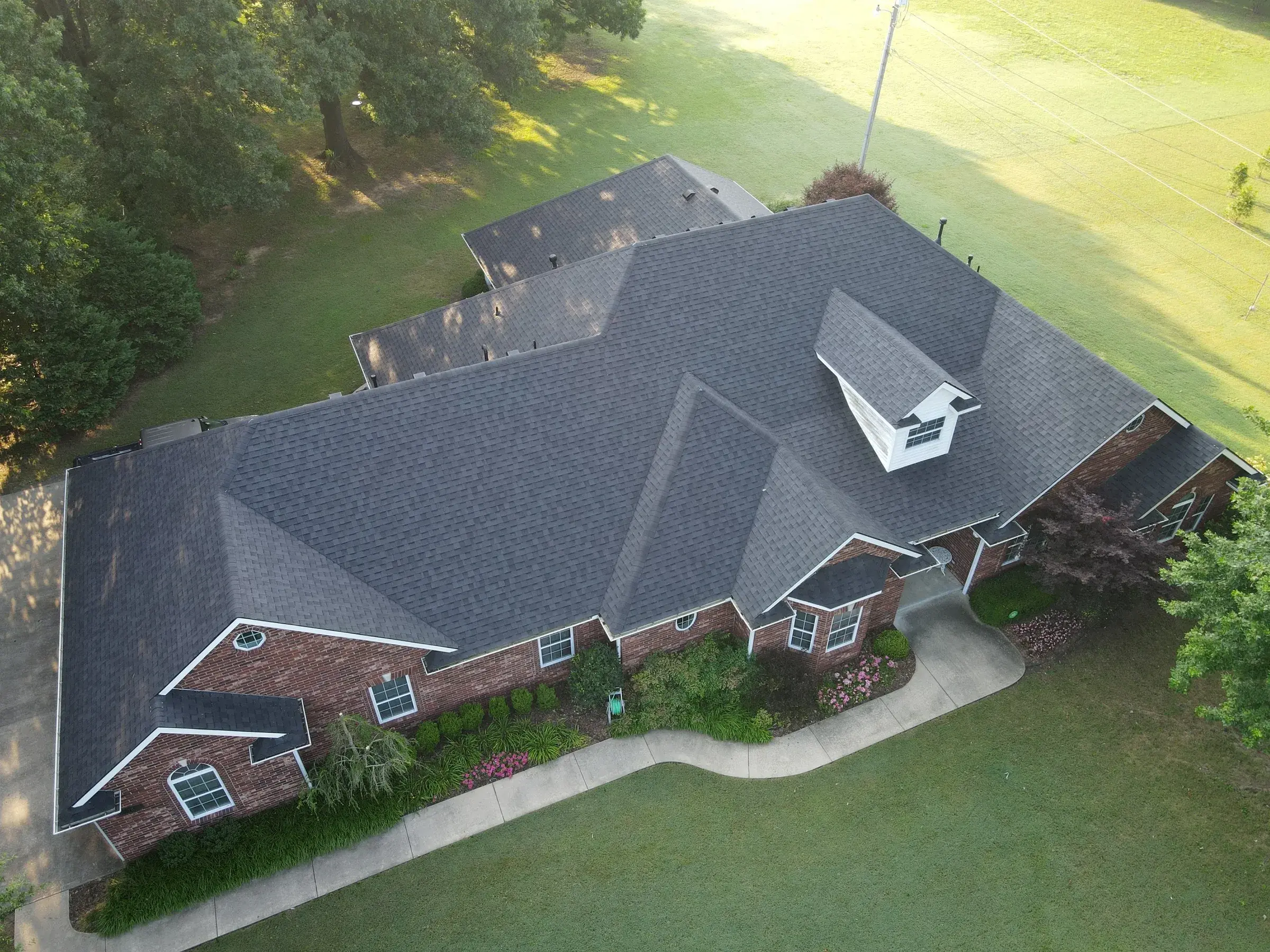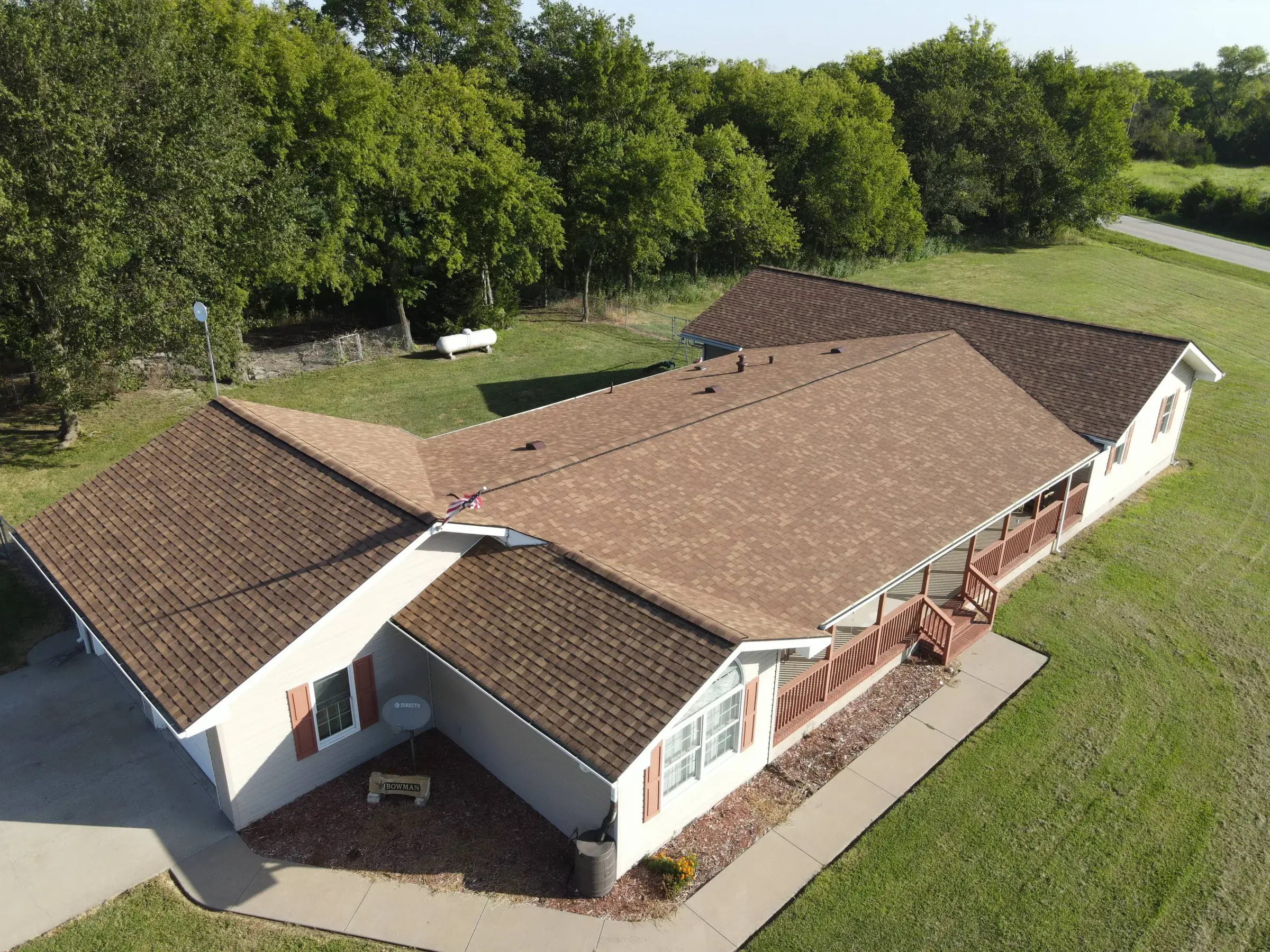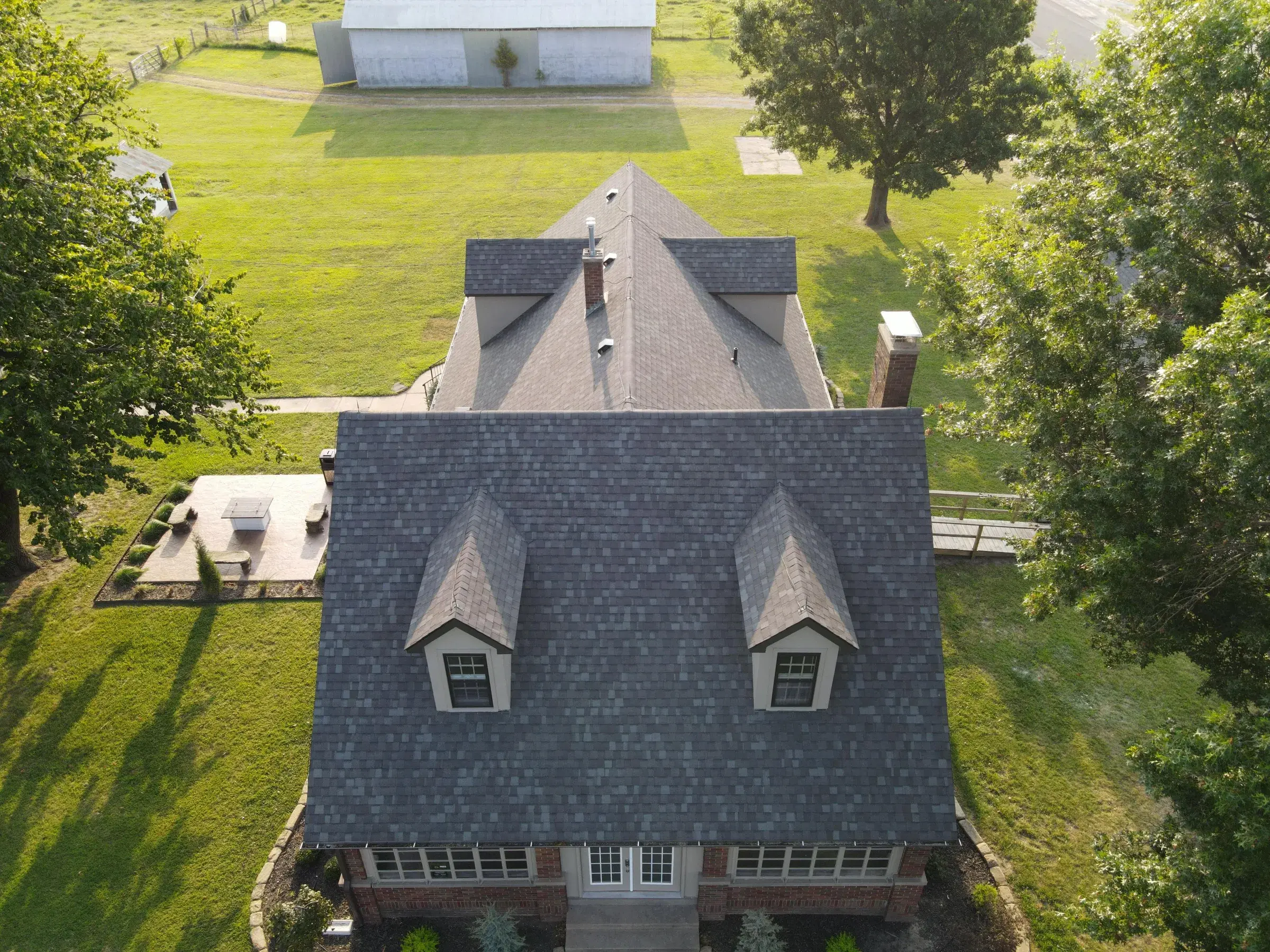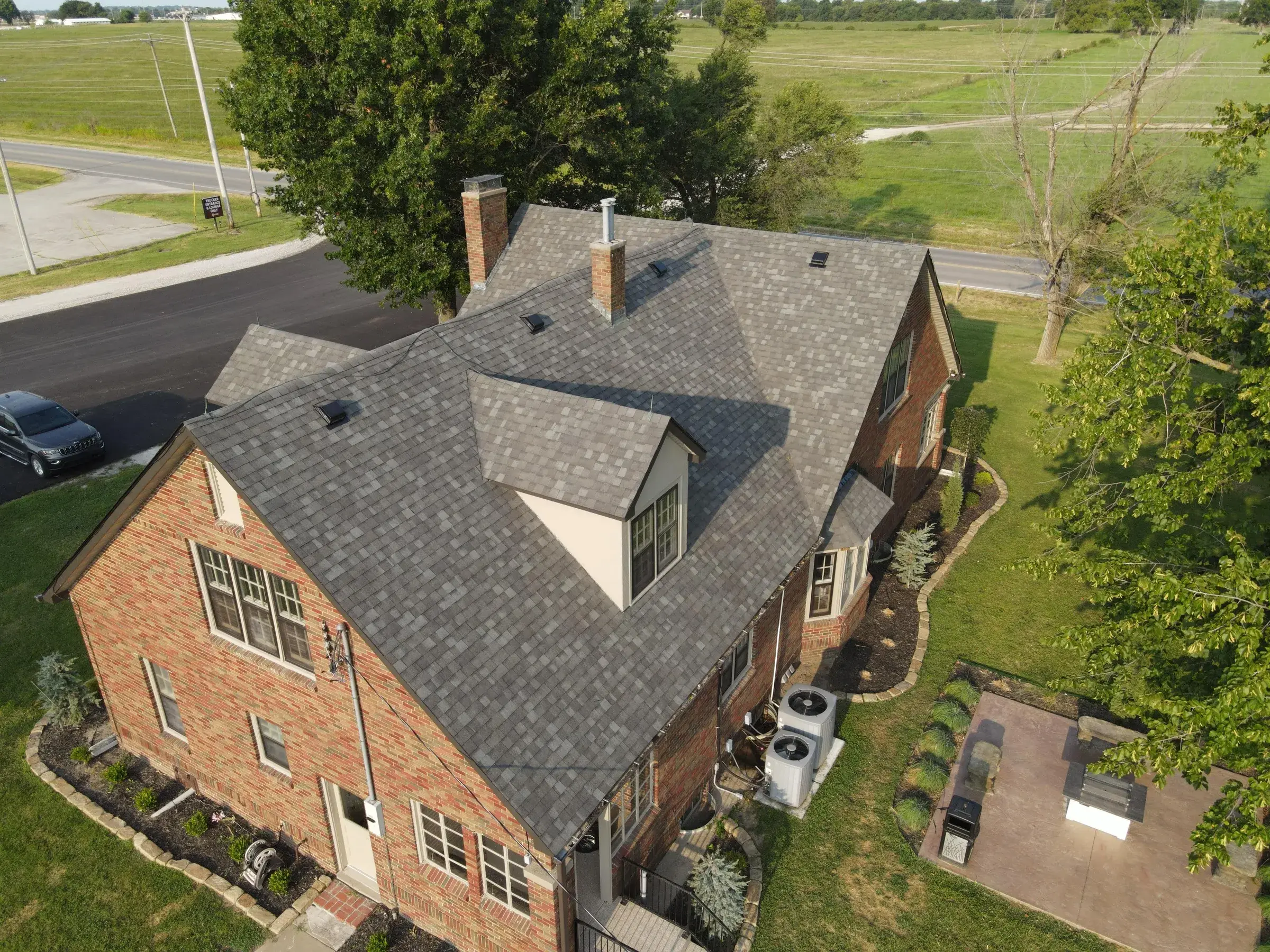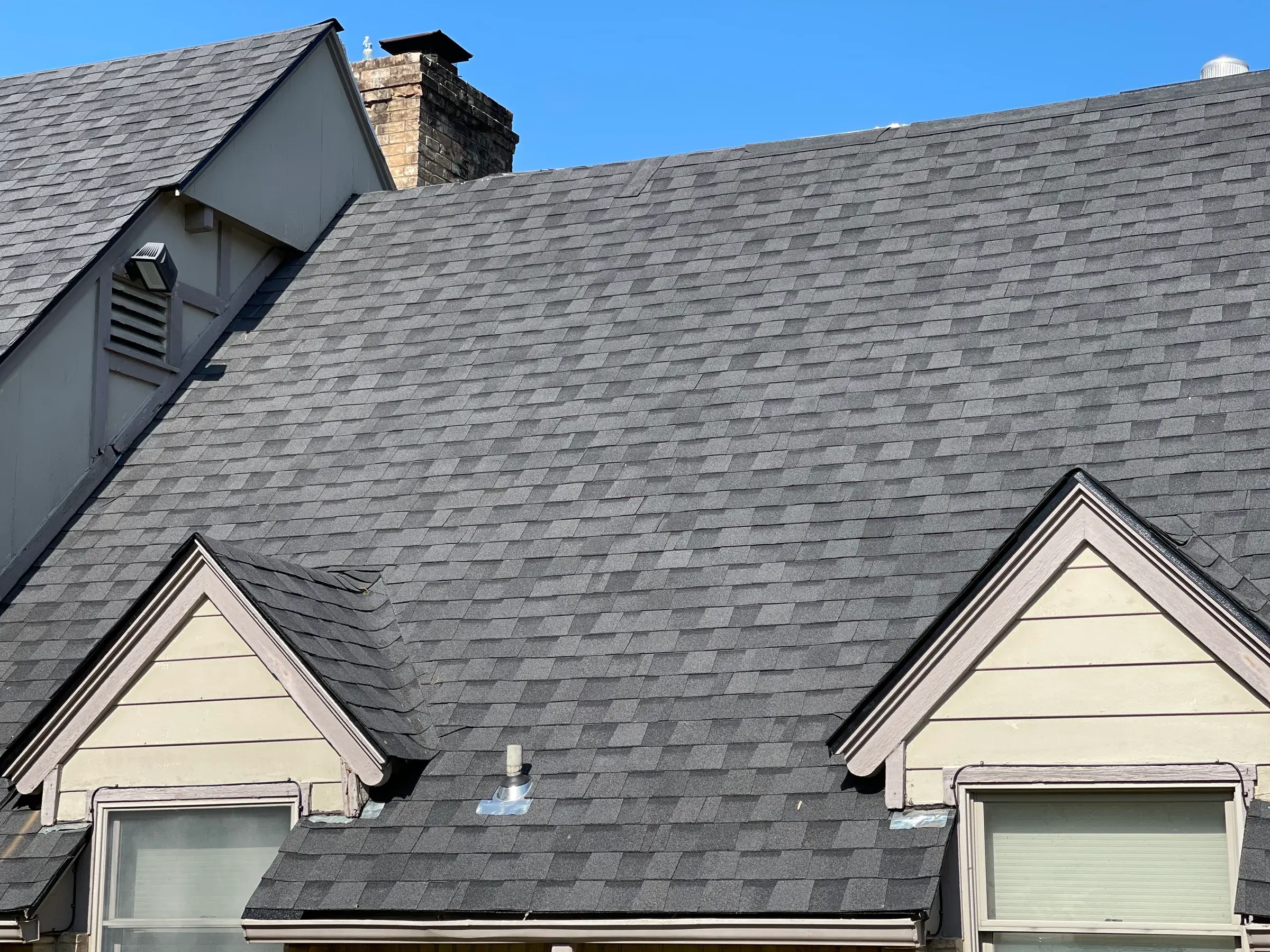
Partial replacement works best when damage is confined to one clearly bounded slope, the rest of the roof has substantial life left, and the slope terminates at a ridge or hip rather than mid-plane. It fails when shingles cannot be matched, when the roof is already mid-life, or when the tie-in would land in a valley.
What "Partial Replacement" Actually Means (Slope, Section, and Repair Are Different Things)
Three different jobs get called "partial" in this market, and only one of them is really partial replacement.
A repair swaps out shingles or flashing inside a roof plane that stays otherwise intact. A partial replacement tears one or more complete roof planes down to the deck and rebuilds them. A full replacement takes every plane. The trouble starts with the word "section," because a section that isn't a whole plane is not a partial replacement at all — it's an oversized repair with a manufactured seam sitting in the middle of it.
A plane, in roofing terms, is one flat face of the roof. It's bounded by a ridge at the top, hips or rakes on the sides, and an eave at the bottom. Those boundaries matter more than anything else in this article, because they're the only places a new roof can stop without inventing a new weak point.
| Job | What comes off | Where it stops | What it leaves you with |
|---|---|---|---|
| Repair | A handful of shingles, a flashing, a vent boot | Wherever the damage ends, inside the plane | A patched area inside an aging plane; no structural seam |
| Partial replacement | One or more complete planes, down to the deck | A ridge, hip, rake, or eave | A new plane with a permanent tie-in at the boundary |
| "Section" replacement | An area someone drew a box around | Mid-slope, mid-plane, or through a valley | A seam in the worst possible place. Avoid this one. |
| Full replacement | Every plane | Nowhere — the whole roof | One age, one lot of shingles, no tie-ins |
If you're still upstream of this decision — not sure whether you're even in replacement territory — the honest starting point is [roof repair vs. replacement in Oklahoma](/blog/roof-repair-vs-replacement-oklahoma), not this page. Partial replacement is a middle path for people who already know one plane is finished.
The Case For: Three Situations Where Partial Is the Right Call
Partial replacement has a bad reputation it only half deserves. There are real situations where replacing one slope is the correct engineering answer and a full tear-off is waste.
1. Storm damage genuinely landed on one plane
Hail rides the wind. It doesn't fall straight down onto every face of your roof equally. A driven hail event out of the southwest can bruise a southwest-facing plane badly while the north plane behind the ridge takes almost nothing — the ridge shadows it. The Oklahoma Climatological Survey's normals put this area at roughly four to five days a year with hail larger than three-quarters of an inch, which is enough exposure that directional, single-plane damage shows up regularly on Ottawa County roofs.
Geography sharpens it. West of Miami, the Neosho Lowlands are flat and open — long wind fetch, nothing to break the approach, so the windward plane takes the full angle. East toward the Ozark Plains it's rockier and wooded, and there the single-plane problem is more often a shaded north face holding moisture and moss while the sunny side stays fine. Different causes, same shape of answer.
2. The rest of the roof is young
This is the whole ballgame. If the untouched planes are three or four years into their life, replacing them throws away most of what you paid for. And a young roof is the only roof where shingle matching is even plausible — more on that below. Partial replacement is a young-roof move. It is almost never a mid-life-roof move.
3. One plane was always different
Older homes grow. An addition, an enclosed porch, a bumped-out bedroom — each often arrived with its own roof plane, its own shingle, and its own install date. Ottawa County's housing stock is 76.7% detached single-family per the Census Bureau's American Community Survey, much of it built long enough ago to have been added onto at least once. When a plane is already a different age and a different product, replacing just that plane isn't creating a mismatch. The mismatch already exists. You're only fixing the failing half of it.
Problem 1: You Cannot Match a Weathered Shingle
This is the objection people wave off and then regret from the driveway.
Asphalt shingle color doesn't come from the asphalt. It comes from the mineral granules pressed into the surface, and the Asphalt Roofing Manufacturers Association is direct in its technical guidance that granule color varies between production runs. Two bundles of the same product, same color name, different lot, can read differently on a roof. That's before anything weathers.
Then Oklahoma goes to work on the shingles you already have. The Oklahoma Climatological Survey's 1991–2020 normals put Miami at about 62% of possible annual sunshine, 57 days a year above 90°F, and an August daily-high normal of 91.5°F. That's a sustained UV and heat load. Granules shed, the exposed color lightens, and the surface goes flat. A south or west plane that's been baking here for eight summers has moved. The bundle at the supply house has not.
Three practical consequences:
- The product line may simply be discontinued. Manufacturers retire colors and profiles constantly, and a roof installed a decade ago may have no current equivalent at all.
- Even a perfect product match will not be a perfect color match, because the old shingles have weathered and the new ones haven't. On a roof with two planes visible from the same spot, you will see it.
- Matching gets easier the newer the roof is — which is exactly why partial replacement belongs on young roofs and stops making sense on mid-life ones.
One thing worth checking before you assume the worst: if you have leftover bundles from the original installation sitting in a garage or a barn, say so early. Stored shingles from the original lot are the single best matching asset anyone can have, and they're surprisingly common on homes where the original roofer over-ordered.
Problem 2: The Tie-In Seam Is Permanent
A tie-in is the joint where new roofing meets old roofing. Done at a ridge, it's a non-event — the new plane runs to the top, the old plane runs to the top, and a new ridge cap covers the joint the same way it would on a full roof. Done anywhere else, it's a detail you now own for the life of the roof.
Here's why mid-plane tie-ins are hard. To lace new shingles into existing courses, the installer has to lift the old shingles above the seam, break their factory sealant bond, slide new material underneath, and nail through. Two things fight back. First, the old shingles are brittle — lifting an eight-year-old shingle in cool weather cracks it, and you've now damaged the roof you were trying to save. Second, that broken sealant strip has to re-adhere, and it often won't, which means the installer has to hand-seal it with roof cement instead. Hand-sealing is a maintenance item, not a permanent bond.
Then the seam has to survive Oklahoma's temperature swing. The Climatological Survey counts about 89 nights a year below freezing here, against 57 days above 90°F. That's a lot of expansion and contraction, and at a tie-in you have two shingles of different ages and different flexibility moving against each other across the same joint, season after season. The National Roofing Contractors Association's guidance on tie-in detailing exists precisely because this joint is where partial reroofs fail — not in the field of the new shingles.
Problem 3: Cost Per Square Is Higher Than a Full Roof
Roofing is priced by the square — 100 square feet of roof area. People assume that replacing a third of the roof costs a third as much. It doesn't, and the reason is that most of what you're paying for doesn't scale with area.
| Cost driver | Full roof | One slope | Why it doesn't scale down |
|---|---|---|---|
| Mobilization | Once | Once | Crew travel, setup, staging, ladders, safety, and cleanup are the same whether you're doing 8 squares or 30. |
| Dumpster / disposal | Sized to the job | Minimum size | Disposal comes in minimum increments. A small tear-off still books a container and still pays a minimum. |
| Permit | Once | Once | The City of Miami requires a permit for new roofs and re-shingles. We pull it. It costs the same for one slope. |
| Material waste factor | Spread across the roof | Concentrated | Hip and rake cuts generate waste. On a small area that waste is a much larger share of what you buy — bundles come in fixed counts. |
| Tie-in labor | None | Real | A full roof has no tie-in. A partial has to detail one, by hand, carefully. |
| Future mobilization | None | Guaranteed | When the remaining planes go, you pay setup, dumpster, and permit a second time. |
Run the arithmetic honestly. If a partial costs meaningfully more per square than a full roof and buys you a seam plus a second mobilization later, the only thing justifying it is the remaining life on the planes you're keeping. When that remaining life is long, the math works. When it's short, you're paying a premium to defer a bill by a few years — and paying setup twice. The variables that drive those numbers here are broken down in [roof replacement cost in Oklahoma](/blog/roof-replacement-cost-oklahoma).
Where the Boundary Must Land: Ridges, Hips, and Why Never Mid-Slope
If you take one thing from this article, take this. The viability of a partial replacement is decided almost entirely by where the new roofing is allowed to stop.
| Boundary | Verdict | What's actually going on |
|---|---|---|
| Ridge — new plane runs to the peak | Acceptable | The ridge cap covers the joint. This is the cleanest tie-in there is, and it's how a partial should be designed if it can be. |
| Hip line — new plane runs to the hip | Acceptable | Hip cap covers the joint, same principle as the ridge. Standard detail. |
| Rake / gable end | Acceptable | It's the natural edge of the plane. Nothing is being invented. |
| Eave | Acceptable | It's the bottom. Water is leaving anyway. |
| Valley center | Do not do this | A valley carries the water off two planes at once. It's the highest-volume, highest-velocity spot on the roof, and valley material needs to be continuous. A seam here is the worst decision available. |
| Mid-slope, horizontal line across the plane | Do not do this | Water runs downhill across the joint for the life of the roof. You're relying on hand-sealed, broken-bond shingles to stop it. |
| Through a penetration (pipe boot, chimney, skylight) | Do not do this | Two details fighting each other in the same square foot. Move the boundary or replace the whole plane. |
| A wall line with step flashing | Conditional | Workable only if the step flashing — the L-shaped metal that ties the roof into a wall — is replaced as part of the job, not reused. Reused step flashing is a leak on a timer. |
Simple roofs make good candidates. A straightforward gable with two planes and a clean ridge is close to an ideal partial. Complicated hip-and-valley roofs with dormers usually aren't, because there's often no place for the new work to stop that isn't a valley or the middle of something.
Warranty and Manufacturer Considerations to Ask About
Here's the part where you should be skeptical of anyone who answers quickly — including us.
The controlling authority on a partial replacement is the manufacturer's own installation instructions for the specific product going on your roof. Not general practice. Not what a salesperson says. The printed instructions for that shingle. Warranty implications for tying new material into existing material vary by manufacturer, and the only place to settle the question is that manufacturer's written terms for the product you're actually buying. Nobody should be telling you a partial reroof "voids" or "preserves" your coverage as a general rule, because there is no general rule.
What to actually ask for, in writing:
- The manufacturer's published installation instructions for the product being installed, and confirmation that the proposed tie-in follows them.
- The manufacturer's written warranty terms for the product, so you can read what they say about installation over or against existing roofing yourself.
- A clear statement of who stands behind the workmanship at the tie-in specifically, since that's the joint most likely to need attention.
- Whether the product is still in production, and whether the existing planes are still covered by anything from their original installation.
Partial Replacement and Insurance Claims: Matching and Line-of-Sight
This is where partial replacement stops being a roofing question and becomes a policy question.
When damage hits one plane, carriers evaluate whether the repaired area can be brought to a reasonably uniform appearance with what's available — the idea usually discussed as "matching" or "line of sight." Outcomes vary. They vary by the specific language in your policy, by whether the original product can still be sourced, and by the adjuster's determination on your particular loss. The Oklahoma Insurance Department publishes consumer guidance on claim scope and repair-versus-replace questions, and that department — not a contractor — is the right place to take a question about how your policy is supposed to work. Nobody can tell you in advance what your carrier will decide, and you should be wary of anyone who tries.
What we can do is narrow and concrete. We document the damage with a photo report. We provide a written estimate for the work we would perform. We can meet your adjuster on site if you ask us to. We'll help you understand the process. Your insurer decides coverage under your policy — that determination is theirs, and representing your interests in it is licensed public adjusting work, which is a different job than roofing. That's the scope of our [insurance claim assistance](/services/insurance-claim-assistance), and it's deliberately drawn that way.
How to Decide: A Short Framework
Three questions, in this order. If the first one fails, the other two don't matter.
- Can the boundary land on a ridge, hip, rake, or eave? If the only place for the new work to stop is a valley or the middle of a plane, partial is off the table. Stop here.
- How much life is left on the planes you're keeping? Long life makes the cost premium worth paying. Mid-life doesn't. This is the question that quietly decides most of these jobs.
- Can the shingle be matched well enough for how the roof is actually seen? A hidden back slope has a different answer than a plane facing Main Street.
| What it gives you | What it actually costs you | When this tips the decision | |
|---|---|---|---|
| Money | A smaller bill today than a full tear-off | Higher cost per square, and a second mobilization later | Worth it when the kept planes have long life left; not worth it when they don't |
| Material life | You keep the good planes instead of landfilling them | Your roof now has two ages, and they'll need attention at two different times | Strongly in favor when the rest of the roof is only a few years old |
| Appearance | Damage is gone | Color mismatch you'll see from the driveway; ARMA notes granule color varies by production run even before weathering | Decisive on street-facing planes; near-irrelevant on a hidden back slope |
| Durability | A brand-new plane where the damage was | A permanent tie-in seam, and hand-sealed joints that are maintenance items | Fine at a ridge or hip. Disqualifying anywhere else. |
| Timing | Defers the full replacement | The full replacement still arrives, and setup and disposal get paid twice | Makes sense when the deferral is long. Poor value when it's two or three years. |
Questions to Put to Your Contractor Before Agreeing to Partial
Print this. Ask all five. The answers separate a considered recommendation from a shortcut.
Five questions to ask before agreeing to a partial reroof
- Where exactly does the new roofing stop, and is that boundary a ridge, a hip, a rake, or an eave? Ask them to walk you around the house and point at it. If they can't point at it, or the answer is "about here" in the middle of a slope, you have your answer.
- How many years of life do you estimate on the planes you're leaving, and what did you look at to say so? A real answer names conditions — granule loss, mat exposure, sealant bond, flashing condition. "They look fine" is not an answer.
- Have you physically matched the shingle, and can I see the old one next to the new one? Not a photo of a color chart. A shingle pulled off my roof, next to the bundle you intend to install, outside in daylight.
- What do the manufacturer's written installation instructions say about this specific tie-in, and what do their written warranty terms say about it? Ask for the documents. If they can't produce them, they haven't checked them.
- What's your Oklahoma registration number? Oklahoma requires it on your contracts and estimates under 59 O.S. § 1151.17(C), and you can verify any roofing contractor yourself at verifyroofing.cib.ok.gov. Registration requires liability insurance of at least $500,000 for residential work — which is exactly why storm-chasers dislike this question.
Partial replacement is a legitimate tool with a narrow window: a clean boundary, a young roof underneath, and a matching problem you can live with. Outside that window, it's a premium you pay for a seam. If you're weighing one slope against the whole roof on a home in [Miami](/locations/miami-ok) or anywhere across northeast Oklahoma, a [free roof inspection](/services/roof-inspections) will tell you which planes are actually finished and where a boundary could honestly land — and we'll say so plainly whether that points toward a [repair](/services/roof-repair), a partial, or a [full replacement](/services/roof-replacement). Call (209) 758-8550 and we'll come look.
Questions people ask about this
Is a partial roof replacement just a shortcut contractors use to win the job?
Sometimes, but not always. It's a legitimate approach when damage is confined to one complete plane, that plane terminates at a ridge or hip, and the rest of the roof is young enough that replacing it would waste real life. It becomes a shortcut when someone proposes stopping the new roofing mid-slope or through a valley, or recommends it on a mid-life roof where you'd pay a premium per square to defer the full bill by only a few years. The tell is the boundary: ask them to physically point at where the new roofing stops.
Will the new shingles match my existing roof?
Not exactly, and you should plan around that rather than hope. The Asphalt Roofing Manufacturers Association notes that shingle color comes from mineral granules whose color varies between production runs, so even the identical product from a different lot can read differently. On top of that, your existing shingles have weathered — the Oklahoma Climatological Survey puts Miami at roughly 62% of possible annual sunshine and 57 days a year above 90°F, which fades and flattens exposed granules over time. Matching is realistic on a three-year-old roof and largely unrealistic on a ten-year-old one. Leftover bundles from the original installation, if you have them, are the best matching asset available.
Can the tie-in seam land anywhere on the roof?
No, and this is the single most important constraint. A tie-in should land at a ridge, hip, rake, or eave, where cap shingles or a natural edge cover the joint. It must never land in a valley — a valley carries water off two planes at once and its material needs to be continuous — and it should not cross a plane mid-slope or run through a pipe boot, chimney, or skylight. The National Roofing Contractors Association's tie-in guidance exists because that joint, not the new shingles, is where partial reroofs fail.
Will my insurance company pay to replace the whole roof if the shingles can't be matched?
That depends on your specific policy language and the adjuster's determination on your loss, and nobody can predict it for you in advance. Carriers do evaluate matching and line-of-sight questions, but outcomes vary case to case. The Oklahoma Insurance Department publishes consumer guidance on claim scope and repair-versus-replace questions and is the right place to take questions about how your policy works. What a roofer can properly do is document the damage with a photo report, provide a written estimate for the work they would perform, and meet your adjuster on site if you ask — your insurer decides coverage.
Does a partial replacement void my manufacturer's warranty?
There is no universal answer, and anyone who gives you one quickly is guessing. Warranty implications for tying new material into existing material vary by manufacturer, and the only authority is that manufacturer's written terms for the specific product going on your roof, read alongside their published installation instructions. Ask for both documents before you sign, and confirm in writing that the proposed tie-in follows the instructions. If a contractor can't produce the paperwork, they haven't checked it.