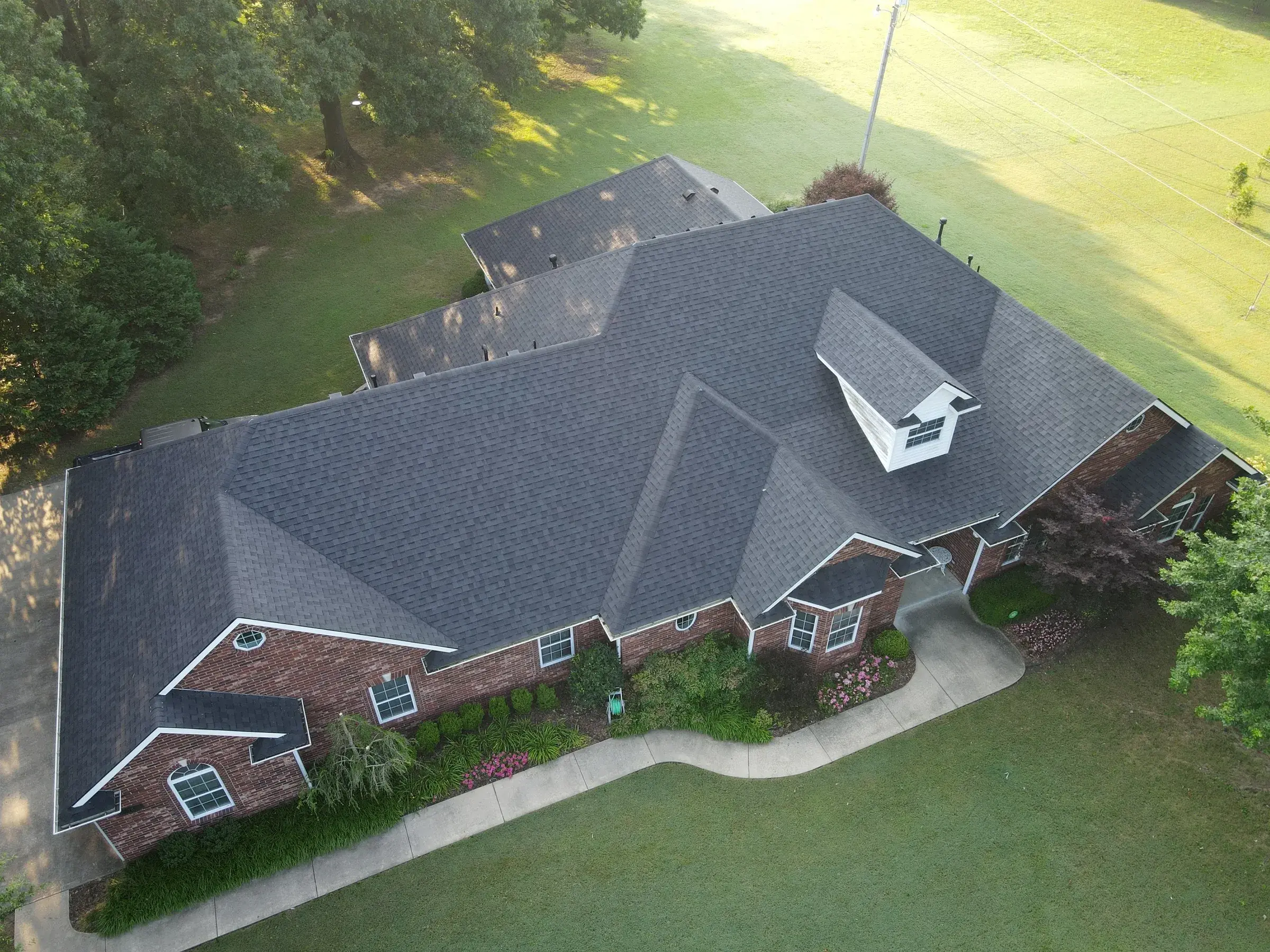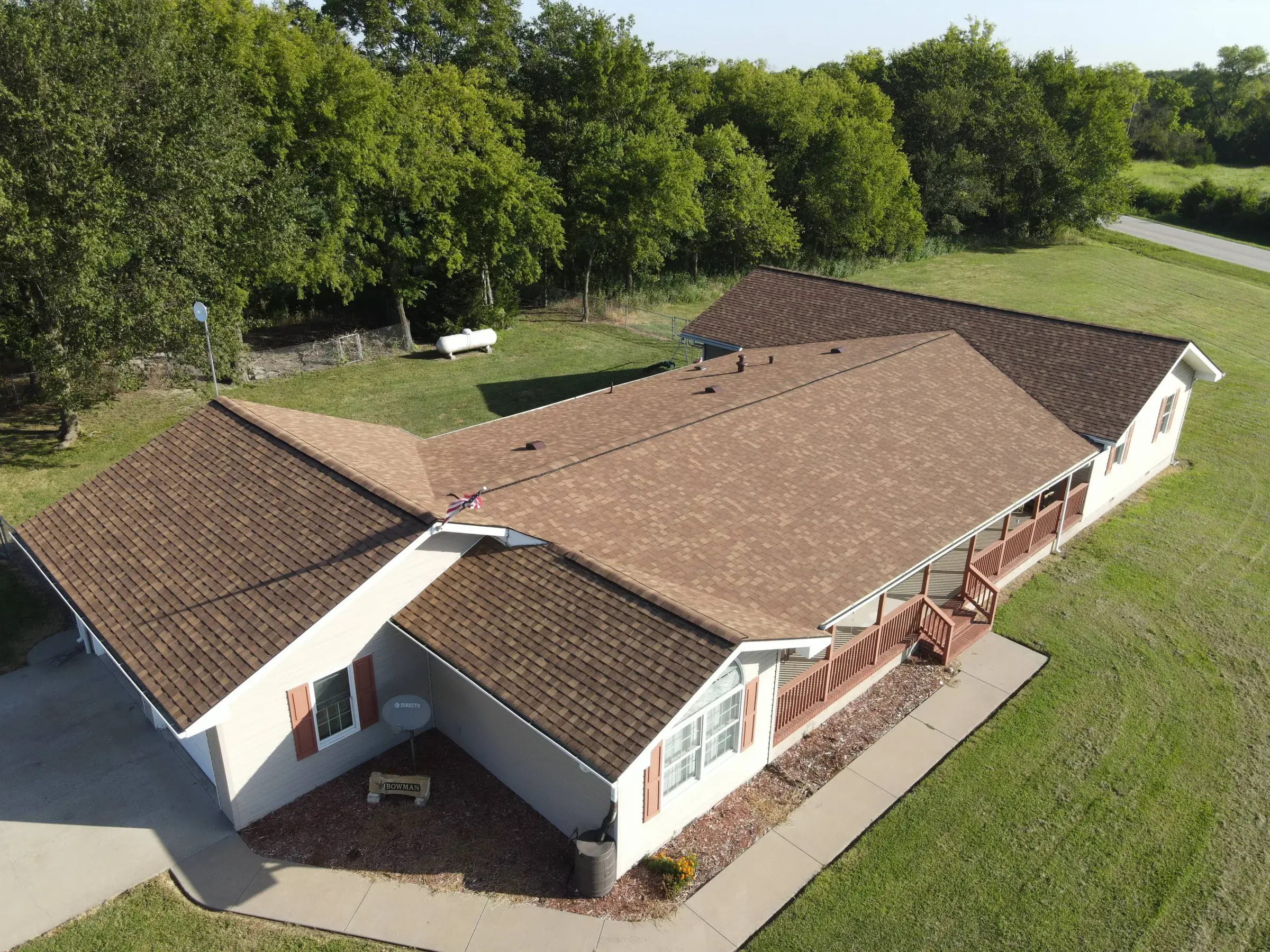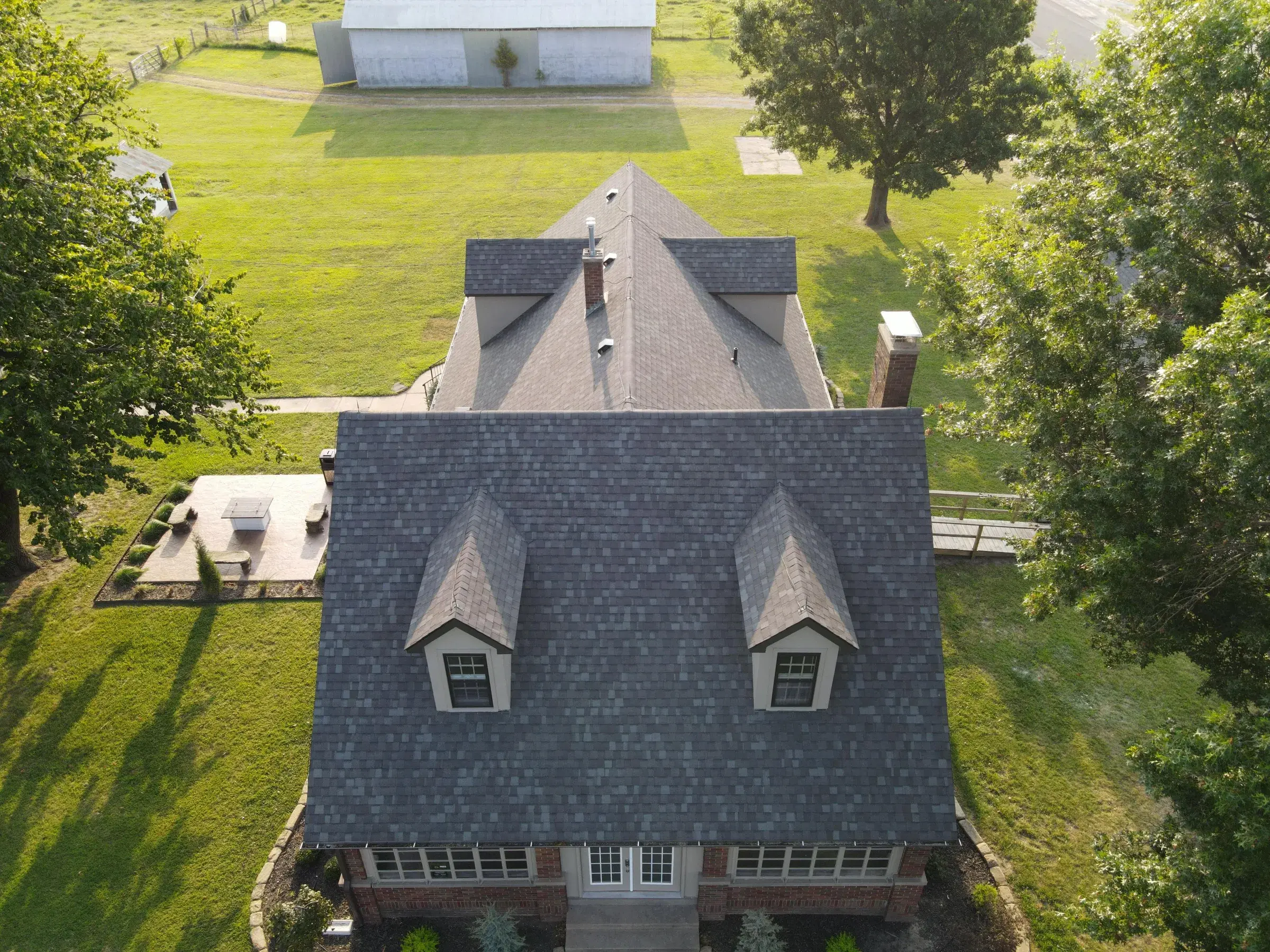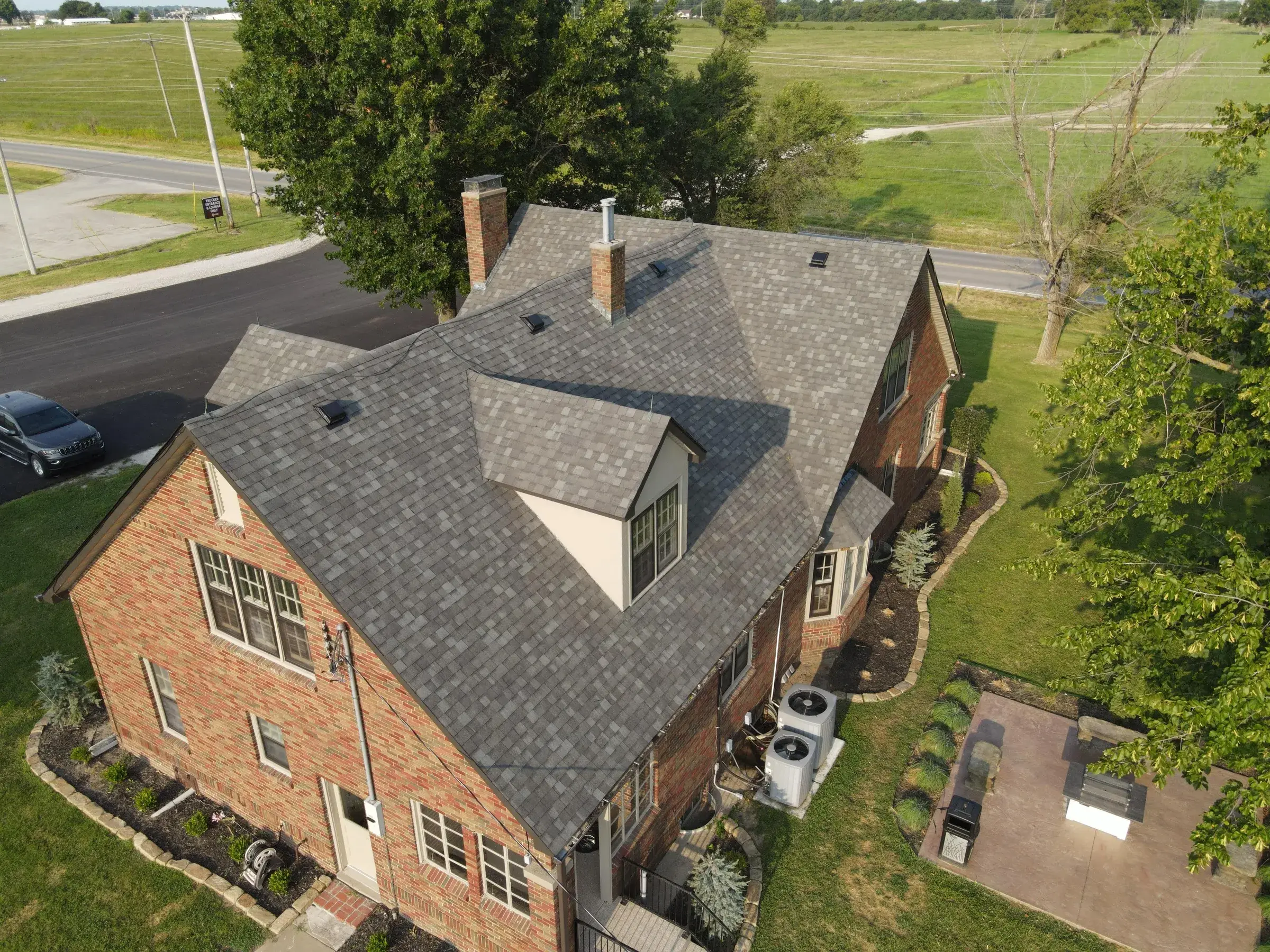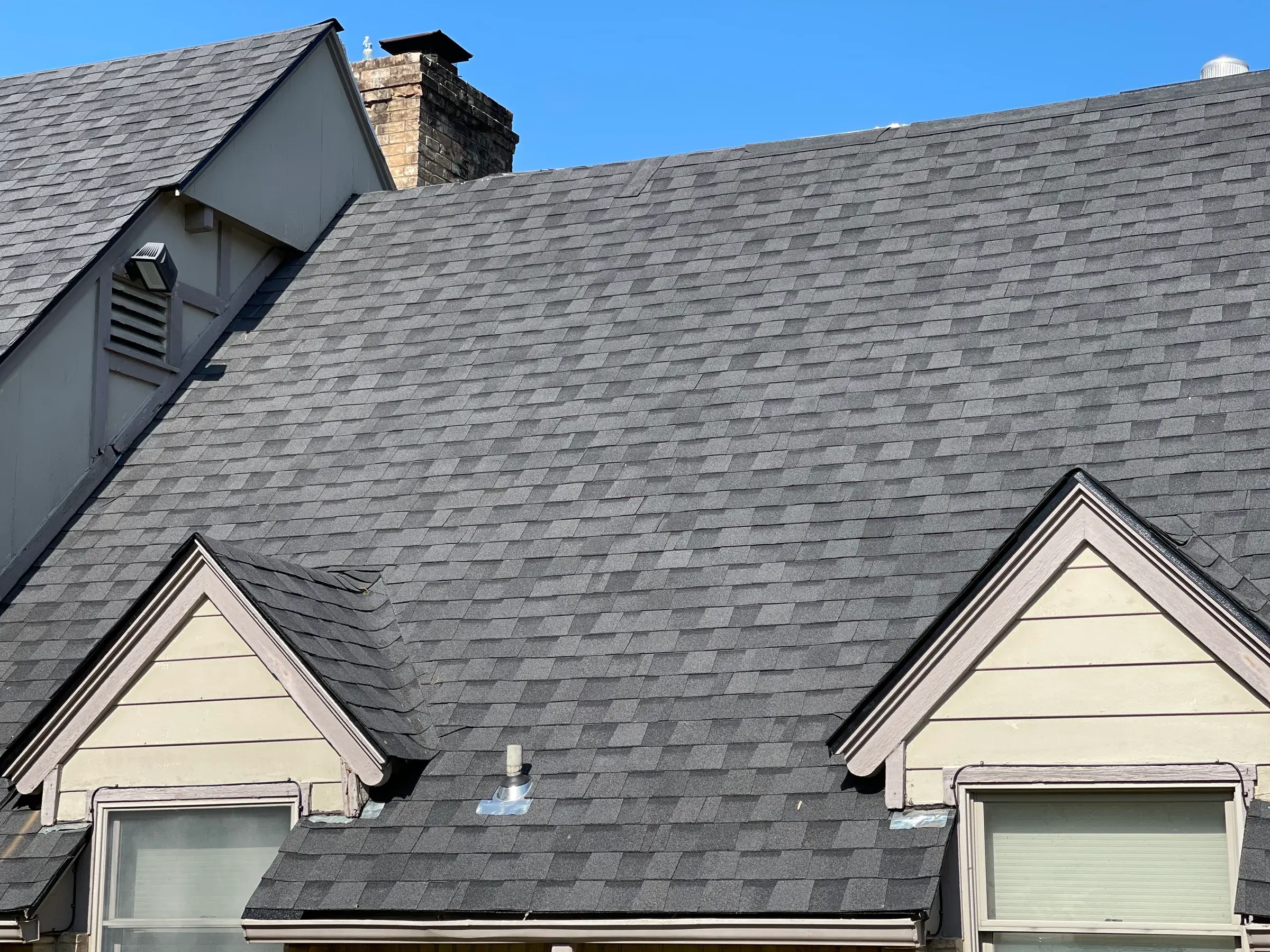
A storm chaser is an out-of-area crew that arrives after a hail or wind event, works from a rented address or a truck, and is gone before problems surface. A local roofer has a verifiable Oklahoma address, a current Construction Industries Board roofing registration you can look up, and someone to call in year three.
Why NE Oklahoma gets a wave of out-of-area crews after severe weather
Storm crews don't pick towns at random. They follow the reports. The NOAA Storm Prediction Center publishes severe weather reports publicly and continuously, and a hail swath shows up on a map within hours of the storm that made it. By the time your gutters have stopped dripping, a crew three states away can already know your county's name.
Ottawa County is a good target for the same reasons it's a hard place to own a roof. The Oklahoma Climatological Survey's 1991-2020 normals put this area at four to five days a year with hail larger than three-quarters of an inch. That isn't a headline number. It's a grind — a few chances a year, every year, on the same roof.
The ground helps too. The west half of the county is Neosho Lowlands: flat prairie and farmland with nothing standing between an open wind fetch and your ridge cap. The east half runs up into the Ozark Plains — rockier, wooded, rolling, more tree debris and more shade holding moisture on north slopes. A storm crossing the county does different damage on each side. Both sides make the drive worth it.
Then there are the borders. Ottawa County touches Kansas and Missouri both. A crew can work a single storm track across three state lines inside an hour's drive — which also means three different sets of rules, and a salesman who learned his pitch in Kansas may repeat it word for word at your door where it isn't legal. That comes up again below, and it matters more than it sounds.
The housing stock finishes the math. Census ACS figures for 2020-2024 count 13,701 housing units in Ottawa County: 76.7% detached single-family, another 12.2% mobile or manufactured, median home value $123,300. That's a lot of asphalt shingle spread across a county of 30,285 people. Roughly 13% of those units sit vacant much of the year — Grand Lake second homes whose owners aren't there to answer a door knock, and aren't there to see who ends up on the roof.
Not every out-of-town crew is a bad actor — what actually separates them
Worth saying plainly, because the honest version is more useful than the scare version. A serious hail event can damage more roofs in one afternoon than every contractor in Ottawa County could replace in a season. When that happens, out-of-area help isn't a scam. It's arithmetic. Some traveling companies register properly in Oklahoma, carry the insurance the state requires, write real contracts, and do good work.
So the license plate isn't the test. Plenty of local outfits are sloppy. Some traveling ones are careful. The test is what you can verify today and who exists in year three.
| What to check | Local roofer | Out-of-area storm crew |
|---|---|---|
| Address | A street address in Oklahoma you could drive to — and the same address appears on the registration, the estimate, and the contract | A PO box, a month-to-month suite, a hotel, or a cell number with an unfamiliar area code |
| State registration | Current and searchable at verifyroofing.cib.ok.gov under the exact name on your contract | Missing, expired, registered to a different entity, or "in process" |
| Registration number display | On the truck, the estimate, the contract, and the job sign — because 59 O.S. §1151.17(C) requires it | Nowhere on anything. Or a number that returns no record |
| Contract | Written and itemized, handed to you along with the pre-contract statement §1151.21(B) requires, with time to read it | A one-page "authorization" signed on a clipboard, sometimes carrying a cancellation penalty |
| Insurance talk | Photo documentation, a written estimate, and meeting your adjuster on site if you ask | "We'll handle the claim," "we'll get it approved," deductible offers |
| Warranty service | The same number rings, and the drive back to your house is short | Company name changes, the phone goes dead, or the crew is working another state |
| References | Addresses in Ottawa County from more than two years ago | Only jobs from the current storm cycle |
| Permit | Pulls the City of Miami permit for a new roof or re-shingle | Skips it, or asks you to pull a "homeowner permit" yourself |
Read the right-hand column again. Almost none of it is about roofing skill. It's about paperwork and permanence — the two things a crew that plans to leave can't fake for long.
Verify the registration: how to use the Oklahoma CIB roofing lookup in two minutes
Oklahoma requires roofing contractors to register with the Construction Industries Board under the Roofing Contractor Registration Act, 59 O.S. §§1151.1 through 1151.30. Registration is not a license and it is not a quality rating — the CIB does not inspect anyone's flashing work. What it creates is a public record: a name, an address, a status, an expiration date, and an insurance requirement standing behind all of it. Anyone can search it, free, at verifyroofing.cib.ok.gov.
Under §1151.5, a residential roofing registration requires commercial general liability coverage of at least $500,000 — $1 million for commercial work — with the Construction Industries Board itself listed as certificate holder, plus workers' compensation coverage. The certificate-holder detail is the part nobody explains: it means the state gets told if the policy lapses. That's why a registration in good standing is worth something even though no inspector ever looked at the roofer's work.
Here's a phrase you'll hear that isn't true: "licensed and bonded." Oklahoma doesn't license roofers, it registers them, and the statute requires liability insurance rather than a surety bond. Kansas and Arkansas run registration systems of their own. Missouri has no statewide roofing license at all. A contractor who tells you confidently that he's "licensed and bonded in four states" has just told you he doesn't know the law he works under.
The two-minute verification (do this before anyone gets on a ladder)
- Ask for the exact registered business name and the Oklahoma registration number before they leave your porch. Write both down.
- Open verifyroofing.cib.ok.gov. Search by registration number if you have it, by business name if you don't.
- Confirm the name on the record matches the name on the contract — not the name on the truck magnet, not the name on the yard sign.
- Confirm the status reads current or active. Expired, lapsed, or pending is not a technicality.
- Check the expiration date. If it falls before your job would be finished, ask what happens then.
- Compare the address on the record to the address on the estimate. They should be the same address.
- If nothing returns under any spelling of the name, that is your answer. Don't sign.
- Remember what the record does not tell you: the CIB verifies insurance and registration, not workmanship.
Two more things about that record. Registration is a floor, not a recommendation — it tells you somebody carried the required insurance and paid a fee, and nothing more than that. And the name is the whole game. Crews sometimes work under a DBA that isn't the registered entity, so the name to search is the one printed on the contract you're being asked to sign.
What Oklahoma law requires: registration number on ads, vehicles, contracts, and job sites
59 O.S. §1151.17(C) requires a roofing contractor's registration number to be displayed on advertisements, vehicles, contracts, and job sites. It is an unusually easy law to check, which is why your first inspection should be of the truck, not the roof.
Look at the door of the pickup. Look at the header of the estimate. Look at the yard sign in the neighbor's grass. If the number isn't on any of them, you aren't looking at a paperwork oversight. You're looking at a company that either isn't registered or doesn't care that the state requires it to say so — and either way, that's the whole conversation.
The penalties are worth understanding because they get overstated constantly. Advertising or working as a roofing contractor without a valid registration is the serious one: §1151.3(B) reaches up to $5,000. For a contractor who is registered but violates other parts of the act, the exposure is much smaller — §1151.3(C) makes it a misdemeanor with a fine up to $500 per violation, and §1151.3(D) lets the CIB assess an administrative fine up to $500. Nobody's going to prison over a yard sign. But the number on the truck tells you which category you're standing in front of before you've spent an hour with anybody.
There's a local check that belongs in the same breath. The City of Miami requires a permit for a new roof or a re-shingle. We pull it. A crew that asks you to pull a "homeowner permit" yourself is quietly moving liability from their name to yours, and it should end the conversation.
The permit is connected to something bigger. Oklahoma amended the residential code's roof-covering provision — IRC R908.3.1.1 — to require a tear-off rather than a shingle-over in defined conditions. Going over the top of an existing roof is faster and cheaper, which is exactly why a crew billing volume against a storm has a reason to want it. A permit means an inspection, and an inspection means somebody other than the salesman confirms the old roof actually came off. (Code editions change; we work to the current Oklahoma residential code. The tear-off amendment is the piece worth remembering.)
The written contract requirement and your 72-hour right to cancel if your claim is denied
§1151.21(B) is a duty that runs before the pen touches paper. The statute says that before entering into a contract with an insured, a roofing contractor shall furnish the insured a written statement of specified disclosures. Furnish, before. That isn't satisfied by fine print in paragraph fourteen of a contract you're signing on a clipboard in your driveway. You are supposed to have the statement in your hands first, separately, with time to read it.
§1151.21(A) is the exit. If your insurer denies the claim in whole or in part, you may cancel the roofing contract within 72 hours of receiving notice of that denial. The statute prescribes a Notice of Cancellation form for exactly this, and requires the contractor to tender back any payments or deposits you've made within 10 days.
In practice that means three things. Keep the denial letter and note the date you received it — the clock runs from receipt, not from whatever date is on the letterhead. Cancel in writing, on the form, not over the phone. And don't let anyone talk you past the window while they promise to "keep working on it."
This is also why signing before an adjuster has looked at anything is a poor trade. The contract binds you; the claim may not go your way. The law hands you an exit if the claim is denied, but only if you use it, and only inside that window. Anybody whose plan requires your signature today, before your insurer has said a word, is asking you to carry a risk the Legislature went to some trouble to protect you from.
Red flags at the door: pressure to sign today, "we'll handle your insurance," free-roof promises
The Better Business Bureau's post-storm contractor guidance and the Oklahoma Insurance Department's consumer alerts land on the same short list year after year: urgency, a signature ahead of a real inspection, and promises about your insurance money. Here is what those actually sound like on a porch in July, and what to do with them.
| What they say | What it actually means | What to say back |
|---|---|---|
| "We're only in the neighborhood today — I need a signature now." | Urgency is the product. Hail damage does not get worse in the 48 hours it takes to look up a registration. | "Leave the estimate and your registration number. I'll call you Thursday." |
| "Just sign this so we can inspect. It's not a contract." | An "authorization to inspect" is frequently a contract, sometimes with a cancellation penalty attached. | "I don't sign anything I haven't read all the way through. Email it to me." |
| "We'll handle your insurance company for you." | Representing an insured's interests for compensation is public adjusting, and Oklahoma licenses that through the Insurance Department. | "Are you a licensed public adjuster? If not, what exactly are you doing on my claim?" |
| "We'll waive your deductible / eat it / work it into the price." | 59 O.S. §1151.30 makes it unlawful to advertise or promise to pay any part of a deductible. They just told you they break the law they work under. | "That's prohibited in Oklahoma. I'll pass." |
| "You'll get a free roof out of this." | There is no such thing. Your policy pays what your policy pays, and your deductible is yours. | "What's my out-of-pocket, in writing, today?" |
| "$500 for a yard sign" or "a gift card if you leave us a review." | As amended effective November 1, 2025, §1151.30 also reaches offering an insured anything of value in exchange for a service on an insurance job. | Decline, and note it. A company that leads with an illegal offer is telling you how it operates. |
| "We saw damage from the street." | Maybe. From the street, nobody can tell a bruised mat from a scuff or a manufacturing blemish. | "Show me photographs of my roof with my house in the frame." |
| "Our office is right here in town." | Sometimes true. Sometimes a rented mailbox or a suite leased for the season. | "What's the street address? I'd like to look the registration up under that name." |
One pattern connects every line on the left. Each is built to move the decision from your kitchen table to their clipboard. Nothing about storm damage requires that. A bruised shingle on Monday morning is the same bruised shingle on Thursday afternoon.
What contractors in Oklahoma cannot legally do regarding your deductible
59 O.S. §1151.30 makes it unlawful for a contractor to advertise or promise to pay, directly or indirectly, any part of an insured's deductible. It was added by Laws 2022, c. 331, and amended effective November 1, 2025 by HB 1257 — the amendment broadened it, and the current version also reaches offering an insured anything of value in exchange for a service. That's the language that catches the yard-sign bonus and the review gift card on insurance work.
The reasoning gets clear once you follow the money. Your deductible is the share of the loss your policy assigns to you. It's the number that keeps the arrangement honest, because it gives you a reason to care what the job costs. A contractor who "eats" it has to recover it somewhere. Either the estimate submitted to your insurer is inflated by roughly that amount — which is fraud, filed under your name, on your claim — or the scope quietly gets thinner and you find out about it in year four when a valley starts weeping. There is no third option. There is no efficiency that produces a few thousand dollars out of nothing.
Contractors are not public adjusters — what that means for who negotiates your claim
Oklahoma defines a public adjuster at 36 O.S. §6202(4): in broad terms, a person who, for compensation, acts on behalf of an insured in negotiating or effecting the settlement of a claim. §6220(E) sits in the same framework. Public adjusters are licensed by the Oklahoma Insurance Department. Doing that work without the license is a misdemeanor — and a form you sign authorizing a contractor to "represent" you does not cure it. You cannot consent someone into a license they don't hold.
So when a salesman says "we'll handle your insurance company," ask the plain question: are you a licensed public adjuster? If yes, good — ask for the license number and verify it with the Insurance Department. If no, then he's either describing something he can't legally do, or he's describing something ordinary and dressing it up to sound like leverage. Either answer is useful, and you only get it by asking.
What remains after you strip out the things nobody can lawfully promise is still real work, and it's what our [insurance claim assistance](/services/insurance-claim-assistance) actually is. We document the damage with a photo report. We give you a written estimate for the work we would perform. We'll meet your adjuster on the roof if you ask us to. We'll help you understand what's happening at each step so the process isn't a black box. Your insurer decides coverage under your policy — we don't negotiate it, we don't interpret it, and we don't promise you an outcome. Anyone who does is either licensed for it, or shouldn't be saying it.
Ten questions to ask before you sign anything
Print this, or write it on the back of an envelope and keep it by the door through hail season. It works on us too — [ask us all ten](/contact) and go check the answers. The point isn't to be adversarial. It's that a contractor set up to answer these can do it in ninety seconds flat, and one who isn't will change the subject.
The 10-question interview sheet
- What is your exact registered business name, and what is your Oklahoma roofing registration number?
- What is your physical street address in Oklahoma — not a PO box, and not a suite I can't find on a map?
- Does the name on your registration match the name on this contract and on your certificate of insurance?
- Who is the certificate holder on your liability policy, and is the Construction Industries Board listed on it?
- Do you carry workers' compensation for everyone who will set foot on my roof?
- Are you pulling the City of Miami permit for this job, or are you asking me to pull it?
- Are you a licensed public adjuster? If not, who is talking to my insurance company, and about what?
- What is my deductible, and does this paperwork say in writing that I pay it?
- If I call this number in three years about a leak over the kitchen, who answers it?
- Can you give me two addresses in Ottawa County you roofed more than two years ago?
Question nine is the one that sorts people. The first eight are checkable in an afternoon with a phone and a browser. Nine can't be verified at all — it can only be predicted, from the address, the registration, and whether the company has any reason to still be here.
Why the year-three question is the one that matters most
Here's the uncomfortable truth about roofing work: the good version and the bad version look identical from the driveway on day one. Both are new shingles in straight lines. The difference surfaces when a valley that was flashed wrong meets a February freeze — and northeast Oklahoma delivers roughly 89 nights a year below 32°F, according to the Oklahoma Climatological Survey's 1991-2020 normals. That's 89 chances a year for water to get in, freeze, expand, and find the shortcut somebody took.
Material warranties come from the manufacturer and follow the product. Workmanship is a different animal. Workmanship coverage is a promise made by a company, and it is worth exactly as much as that company's willingness to drive back to your house and get on the ladder again for free. That's not a legal question or a paperwork question. It's a geography question.
The storm-chase model answers it honestly if you listen to it. The crew follows the hail. Next spring the hail is in Kansas, or Texas, or Nebraska, and there is no version of that model where returning to Ottawa County to redo one valley makes economic sense. It isn't necessarily malice. It's that the incentive points the other direction, and incentives outlast intentions.
We're at 111 S Main Street in Miami — [one office](/about), on the stretch of Main Street that is the historic Route 66 alignment through town. That's not a marketing note; it's why the answer to "who answers in year three" is short. We [work across northeast Oklahoma](/locations/miami-ok) and into Kansas, Missouri and Arkansas, but we live here. The callback drive is ten minutes, not five states.
Which is the argument for sorting this out before the next storm rather than during it. A roof you've had [looked at on a regular schedule](/blog/how-often-should-a-roof-be-inspected-oklahoma) comes with something no door-knocker can hand you: a dated record of what it looked like beforehand. When you already know the condition of your decking, your flashing, and your ridge, the man on the porch has nothing to sell you that you can't evaluate on the spot. That's the real defense — not suspicion, information.
If someone knocked this week and you'd like a second opinion before you sign, call us at (209) 758-8550. Our [roof inspections](/services/roof-inspections) are free and come with a photo report, whether the honest answer turns out to be a repair, a [full replacement](/services/new-roof-installation), or nothing at all. And look us up at verifyroofing.cib.ok.gov before you let us on the ladder. We'd rather you check.
We are roofing contractors, not public adjusters or insurance attorneys. Coverage decisions are made by your insurer under your policy.
Questions people ask about this
Is it illegal for an out-of-state roofing company to work in Oklahoma?
No. Where a company is headquartered isn't the legal question. The question is whether it holds a current roofing contractor registration with the Oklahoma Construction Industries Board under 59 O.S. §§1151.1-1151.30, and whether it carries the liability coverage §1151.5 requires — at least $500,000 for residential work, with the CIB listed as certificate holder, plus workers' compensation. Plenty of traveling companies register properly. Search the name on your contract at verifyroofing.cib.ok.gov and you'll know in about two minutes.
I already signed a contract and then my insurer denied the claim. Am I stuck?
Probably not, but the window is short. Under 59 O.S. §1151.21(A), if your insurer denies the claim in whole or in part, you may cancel the roofing contract within 72 hours of receiving notice of that denial, using the Notice of Cancellation form the statute prescribes. The contractor then has 10 days to tender back any payments or deposits you made. Note the date you received the denial, cancel in writing rather than by phone, and don't let anyone talk you past the 72 hours while they say they're still working on it.
A roofer offered to cover my deductible. Is that allowed?
No. 59 O.S. §1151.30 makes it unlawful to advertise or promise to pay, directly or indirectly, any part of an insured's deductible. It was added in 2022 and amended effective November 1, 2025 by HB 1257, which also reaches offering an insured anything of value in exchange for a service — so the yard-sign bonus and the gift-card-for-a-review offers are covered too. Beyond the legality, the money has to come from somewhere: either an inflated estimate submitted under your name, or a quietly reduced scope you discover years later.
Can a contractor talk to my insurance company for me?
There's a line, and it's sharper in Oklahoma than most people realize. Under 36 O.S. §6202(4), someone who for compensation acts on an insured's behalf in negotiating or settling a claim is acting as a public adjuster, which requires a license from the Oklahoma Insurance Department — and a form you sign authorizing it doesn't cure the absence of a license. What a roofing contractor can properly do is document the damage with photographs, provide a written estimate for the work it would perform, meet your adjuster on site if you ask, and explain the process. Your insurer decides coverage under your policy.
What does the Construction Industries Board lookup actually tell me?
It tells you whether a business holds a current roofing registration, under what exact legal name, at what address, and when that registration expires — and behind it stands the insurance requirement in §1151.5, with the CIB itself as certificate holder so the state is notified if the policy lapses. What it does not tell you is anything about workmanship; nobody at the CIB inspects flashing. Treat a clean record as a floor to clear, not a recommendation, and always search the exact name printed on the contract rather than the name on the truck.