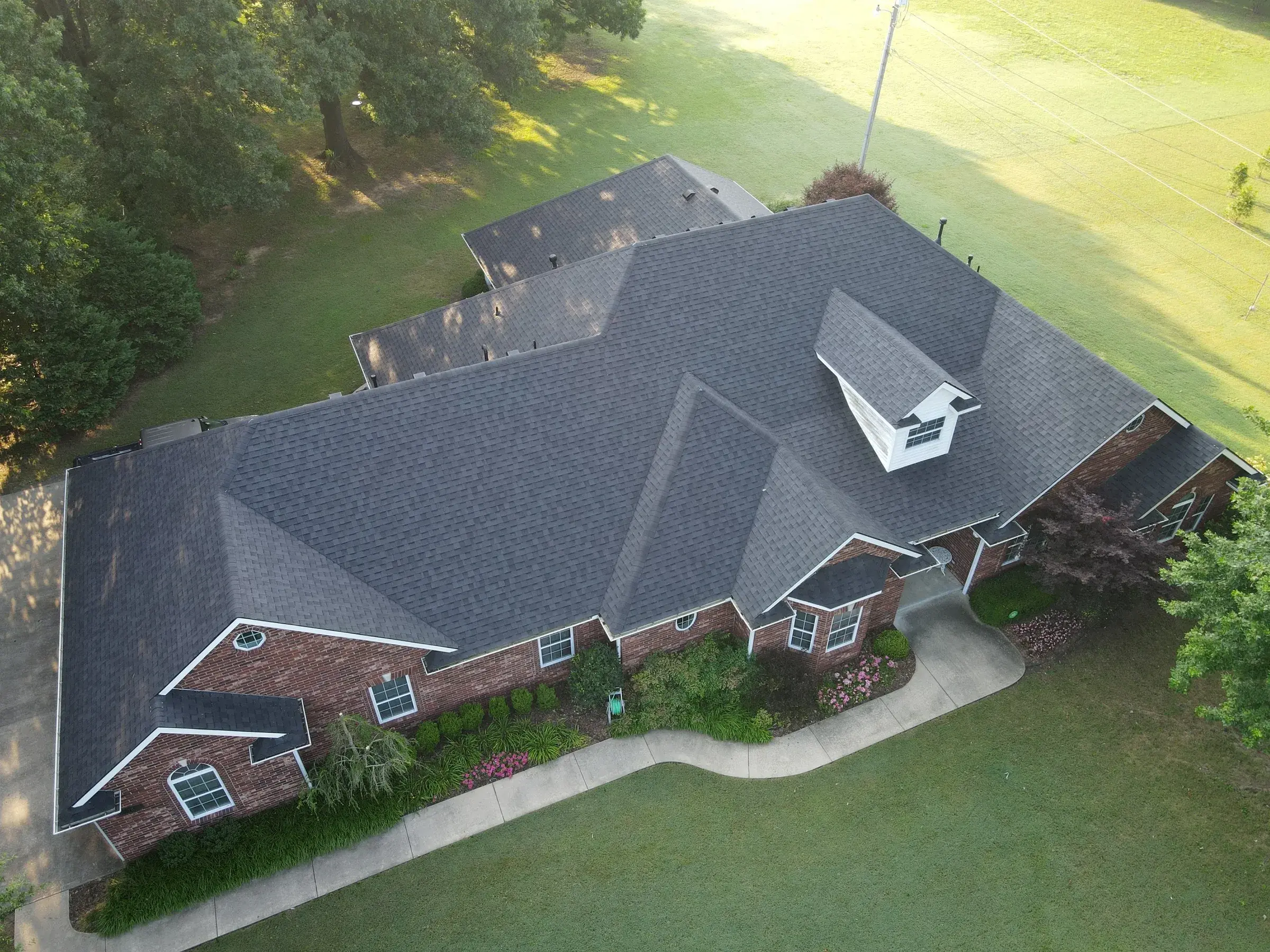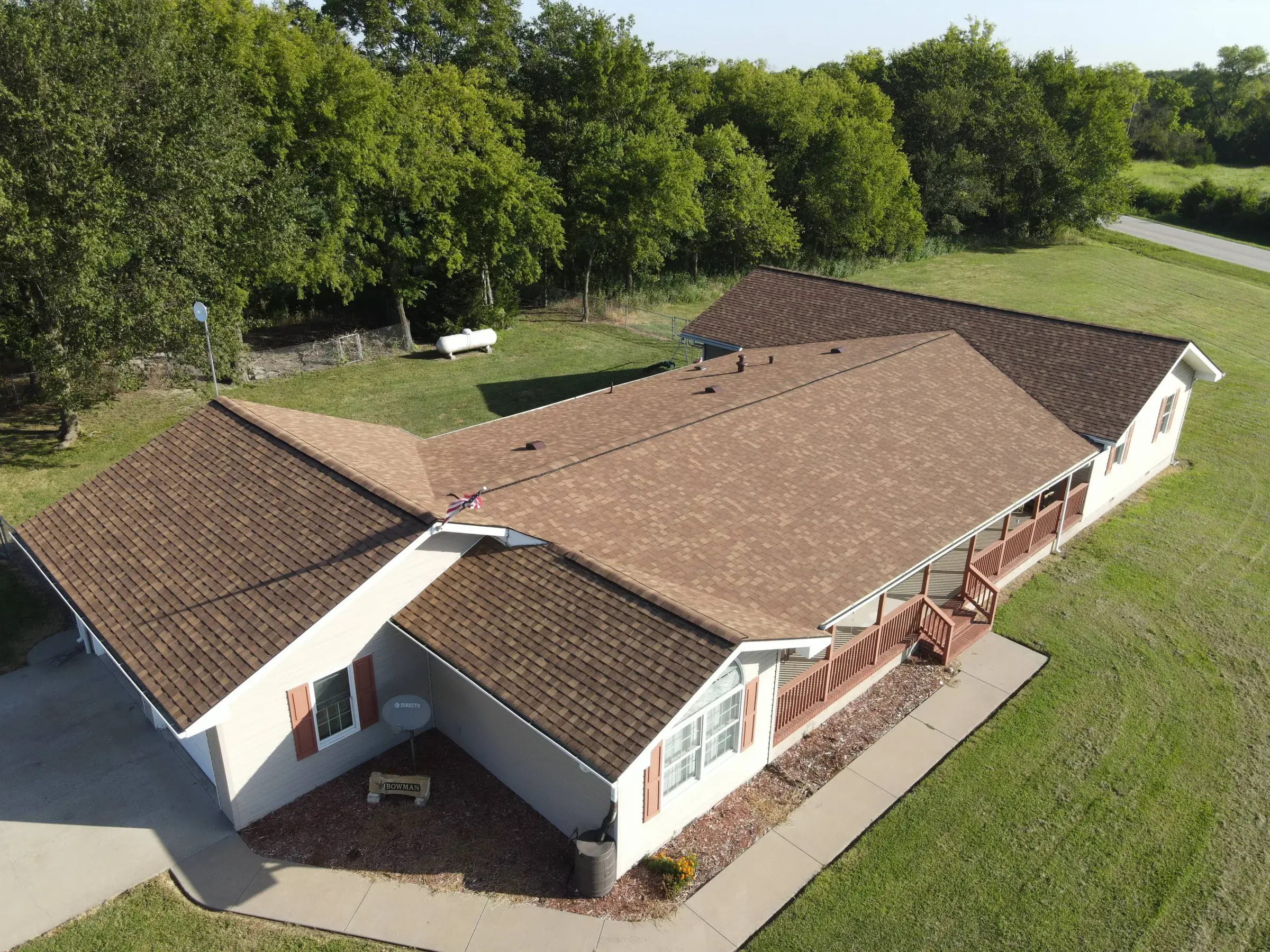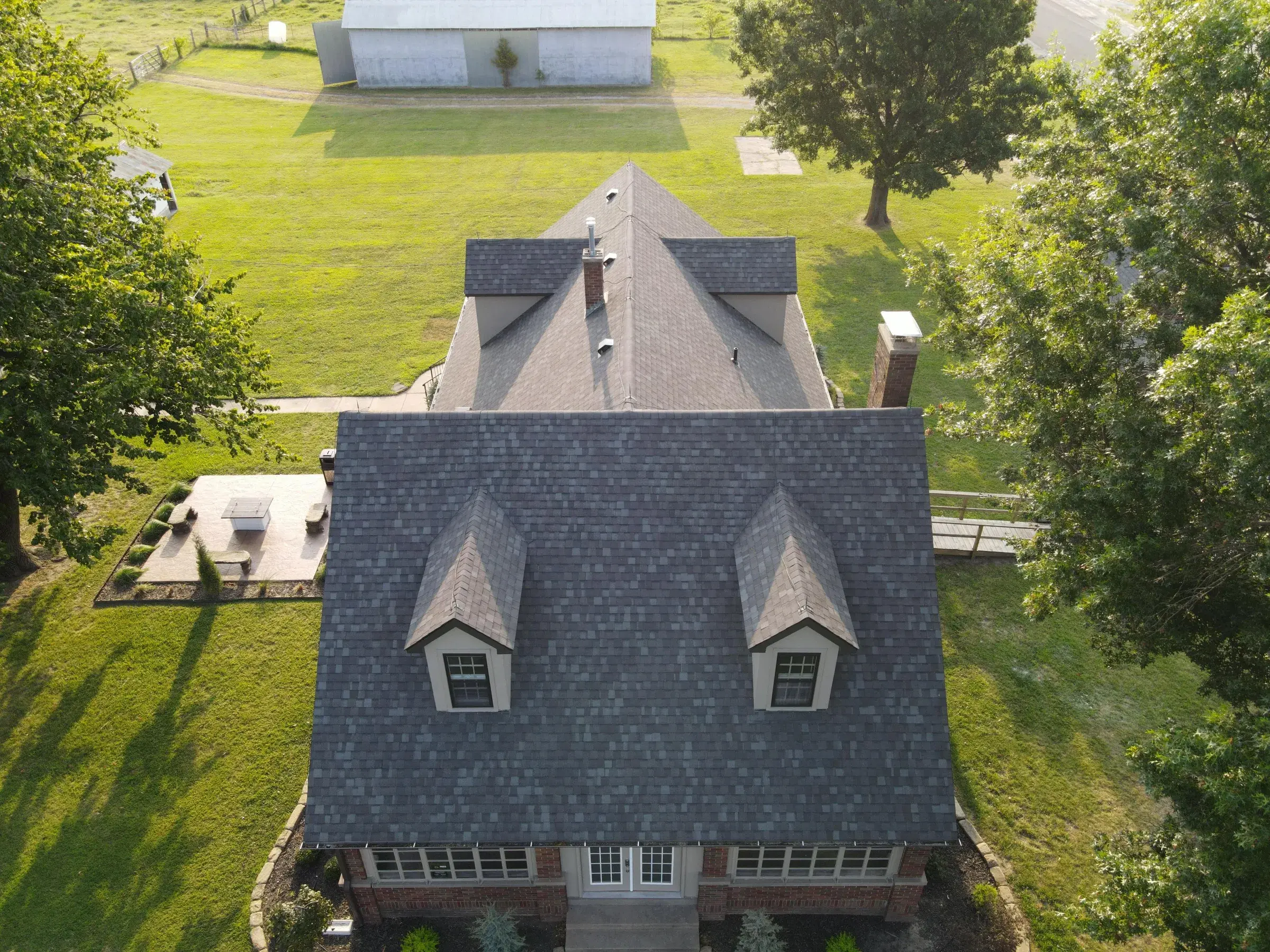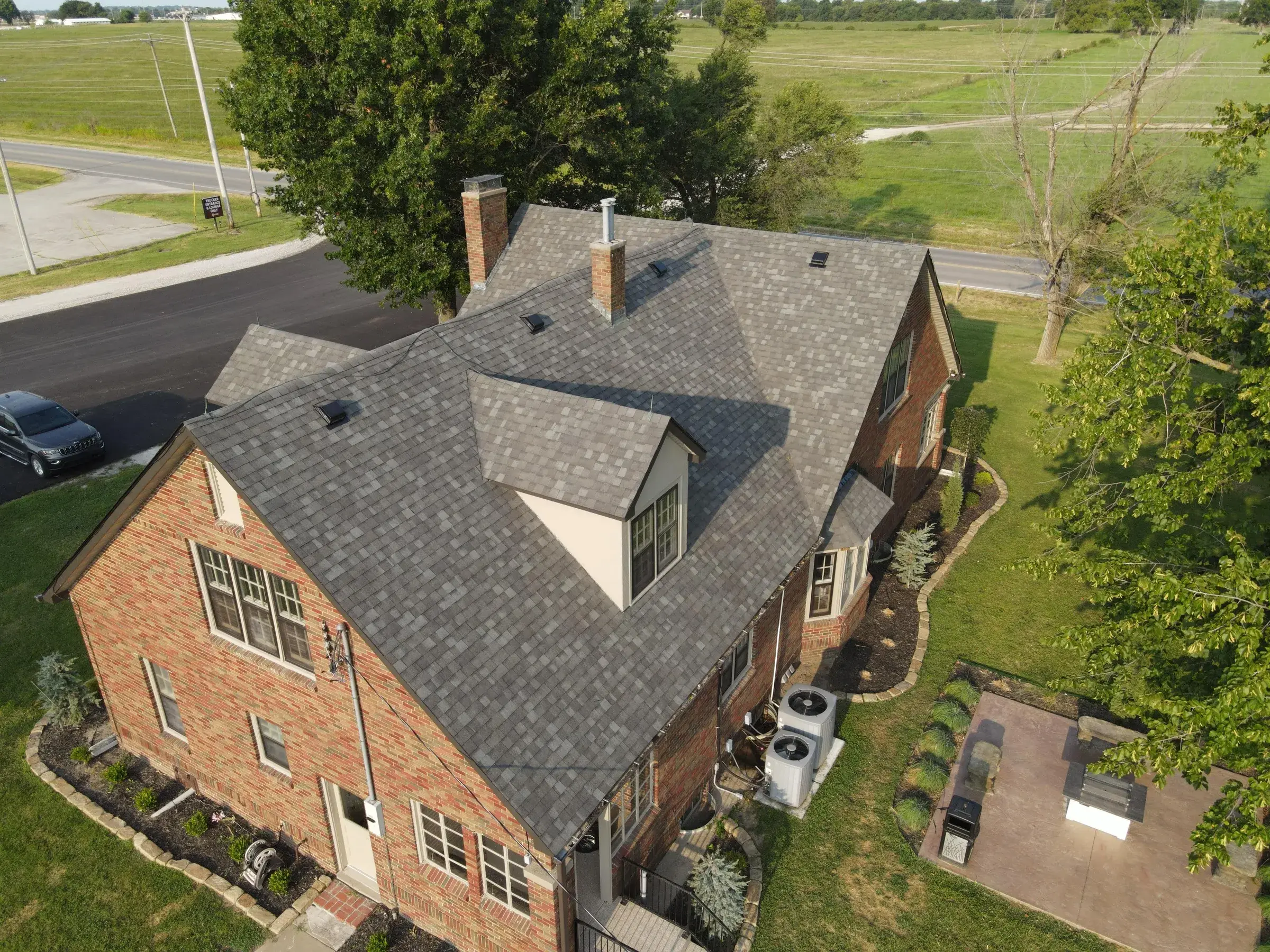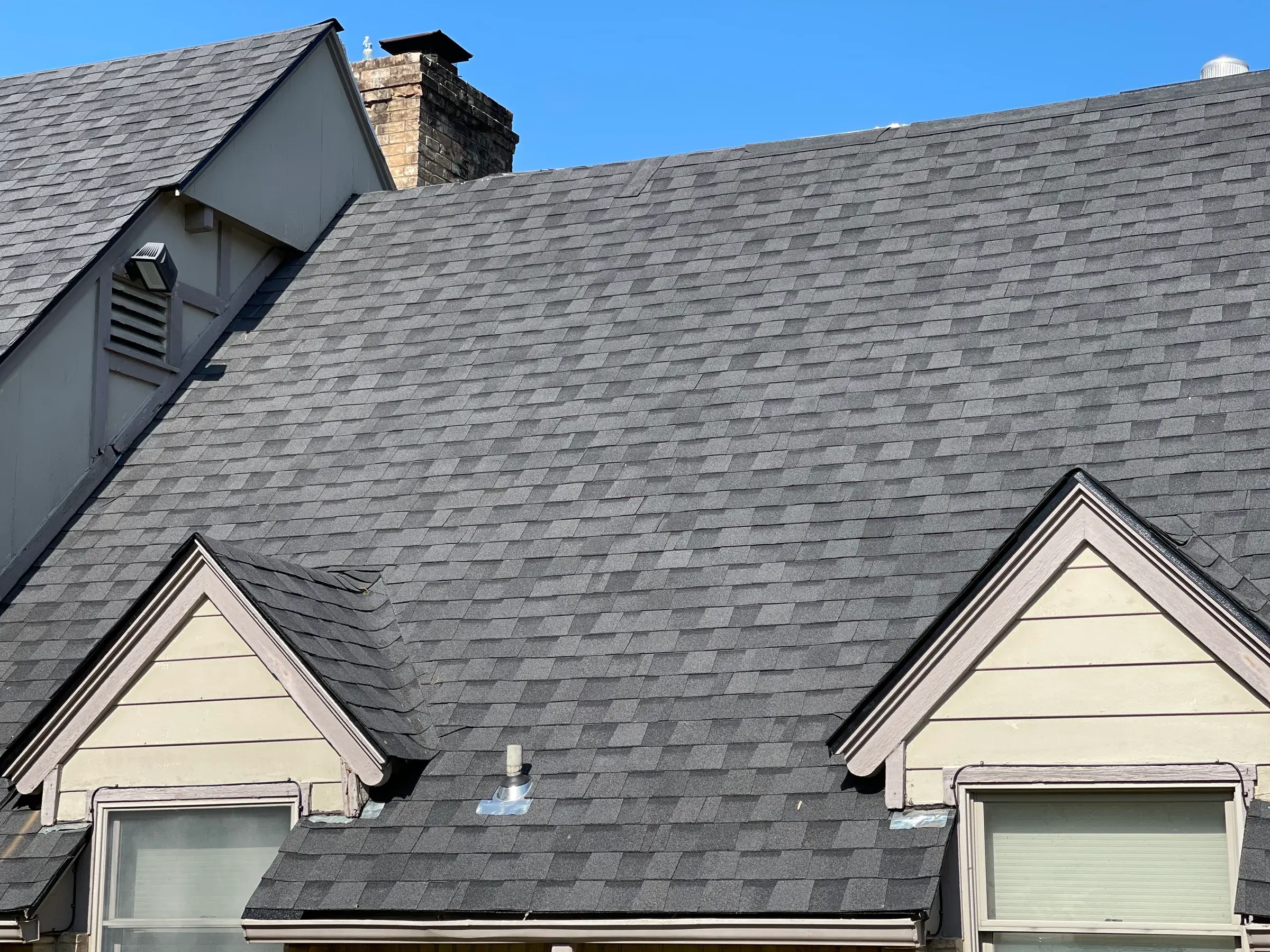
Insurers pay for sudden, accidental damage — not deterioration. Hail bruising fractures the shingle mat at a discrete moment and looks fresh; wear and tear shows as uniform granule loss, thermal splitting, blistering, and cupping across the whole roof. Cosmetic exclusions go further, declining hits that mar appearance without shortening roof life.
The core principle: insurance pays for sudden loss, not deterioration
Open your policy to the insuring agreement and you will find some version of the phrase "direct physical loss." That phrase is the hinge everything else swings on. A homeowners policy is a contract to restore what a sudden event took away — a hailstorm, a straight-line wind event, a limb off a hackberry. It is not a maintenance agreement, and it was never priced as one. Every homeowners form sold in Oklahoma carries an exclusion for wear and tear, deterioration, and gradual loss, and the Oklahoma Insurance Department's consumer material on homeowners exclusions says the same thing in plainer words: aging is the homeowner's cost.
The problem is that roofs do not age in a laboratory. A roof in Ottawa County that is old enough to vote has been through a lot of weather. The Oklahoma Climatological Survey's 1991–2020 normals for this area put us at 4 to 5 days a year with hail larger than three-quarters of an inch. Multiply that across the life of a roof and you get a covering that has both things on it at once: real storm damage and real deterioration, mixed together on the same slope, sometimes on the same shingle.
So the adjuster's job is not "is this roof beat up." It is "which part of this is a covered event, and which part is the calendar." That is a narrower question than most homeowners expect, and it explains why a roof that looks terrible can still produce a small check, or none. If you are earlier in the process, our overview of [whether homeowners insurance covers hail damage](/blog/does-homeowners-insurance-cover-hail-damage-roof) walks the coverage side; this article is about the line itself.
What wear and tear looks like on an asphalt roof at 10, 15, and 20 years
Asphalt shingles fail in a predictable order, and the order matters because each stage has a signature an adjuster is trained to recognize. Asphalt is a petroleum product. It cures, hardens, and eventually loses the volatile oils that keep it flexible. The granules on top are not decoration — they are the sunscreen. Once enough of them wash off, ultraviolet light goes to work on the asphalt directly, and the mat underneath gets brittle.
Northeast Oklahoma accelerates that on both ends of the thermometer. The Climatological Survey's normals give this area roughly 57 days a year above 90°F, about 5 above 100°F, an August daily high normal of 91.5°F, and about 62 percent of possible sunshine — that is the UV and heat load. Then there are about 89 nights a year below freezing, which is the freeze-thaw load. Water gets into a granule scar or a nail hole, freezes overnight, expands, and levers the opening a little wider. Do that eighty-odd times a winter for twenty winters and you have aging that owes nothing to any storm.
A realistic aging timeline
| Roof age | What is normal and not a claim | What would be worth a closer look |
|---|---|---|
| About 5 years | Light granule shed in gutters (loose granules from manufacturing wash off early). Color still even. Shingles lie flat and feel pliable. | Any bare asphalt showing, missing tabs, or nail heads visible through the surface — that points to installation, not age. |
| About 10 years | Slight dulling of color. Granule loss beginning at the drip edge and in the gutter line. Sealant strips still holding. | Blisters opening up, or splits running with the slope. Neither is hail, but both change how the roof performs. |
| About 15 years | Visible granule thinning on the south and west slopes first. Some shingles slightly stiff. Minor curl at the corners of tabs. | Widespread cupping, brittle tabs that crack when lifted, or sealant strips that have let go across a whole slope. |
| About 20 years | Broad granule loss with asphalt showing through in patches. Cupping and clawing. Mat is brittle and cracks under foot traffic. | At this stage the question usually shifts from repair to replacement, and hail on a brittle mat behaves differently than hail on a flexible one. |
The Insurance Institute for Business and Home Safety has published aged-shingle impact research making a point that cuts both ways: an old, hardened shingle fractures more readily under the same stone than a new one does. That helps a homeowner in that damage is real. It hurts in that an insurer looks at a twenty-year-old roof and sees a covering already at the end of its service life, which shapes what any settlement is worth. On an actual cash value policy, depreciation is doing more work than the cause-of-loss argument.
What hail bruising looks like next to it — and why fresh hits look different
A hail bruise is a mechanical event with a moment attached to it. A stone arrives, and the impact fractures the fiberglass mat inside the shingle without necessarily tearing the surface. That is the whole concept: the damage that matters is under the granules, not on top of them.
Physically, a hail hit is round or roughly round. It is random — it does not line up in rows or follow a pattern. It knocks granules loose in a circle, exposing asphalt that is darker and shinier than the weathered asphalt around it, because it has not seen sun yet. And when you press a thumb into it, it gives. That soft, slightly spongy feel is the fractured mat. Haag Engineering's damage-assessment reference, which a large share of adjusters in this market are trained on, treats that combination — random distribution, circular granule displacement, and a mat fracture you can feel — as the working definition of hail damage on asphalt.
Size and speed matter more than people assume. NOAA's National Severe Storms Laboratory notes that a hailstone's fall speed climbs with its diameter, so the impact energy delivered to a shingle rises far faster than the extra fraction of an inch suggests. That is why pea-size hail can strip a little grit and do nothing structural, while a stone half an inch larger fractures mats across a whole slope on the same afternoon.
The other tell is the soft metal. Hail does not discriminate. If stones were large enough to bruise your shingles, they almost always left dents in the gutters, the downspout faces, the furnace and plumbing vent caps, the AC condenser fins, or a metal shed roof out back. Soft-metal denting is corroborating evidence with no aging explanation — a gutter does not dent itself over time. We go through this at more length in our guide to [identifying hail damage on a roof](/blog/hail-damage-roof-identification).
| Feature | Fresh hail bruise | Thermal split |
|---|---|---|
| Shape from above | Round or oval, roughly the diameter of the stone | A straight or slightly wandering line, often several inches long |
| Direction | No direction — impacts are random across the slope | Runs with the slope or straight across it; frequently follows the mat's weak axis |
| Surface | Granules displaced in a circle; exposed asphalt is dark and unweathered | Granules still in place right up to both edges of the split; the crack is clean |
| The mat | Fractured through, but the top surface may be unbroken — the break is internal | Torn through top to bottom; you can often see the deck or felt in the gap |
| Feel underfoot | Soft, gives under thumb pressure, springs back slightly | Firm; the shingle around the split is stiff and brittle |
| Underside | Fracture visible on the back of the shingle, matching the hit above | Split continues cleanly through; no bruise ring around it |
| Distribution | Scattered, uneven, denser on storm-facing slopes | Repeats in similar spots across many shingles — a pattern, not a scatter |
Blistering, thermal splitting, and cupping: aging that gets mistaken for hail
Three specific aging conditions get called in as hail more than anything else, and it is worth knowing them by name before an adjuster names them for you.
Blistering
Blisters are small raised bumps in the shingle surface. The Asphalt Roofing Manufacturers Association's technical bulletins attribute them to moisture or gas trapped in the asphalt that expands when the shingle heats up, pushing the surface into a dome. When a blister pops, it leaves a small crater with granules missing — and that crater looks a great deal like a hail hit at ten feet.
Up close, the difference holds. Popped blisters are typically smaller than hail bruises, more uniform in size, often clustered, and the edges are ragged and raised rather than pressed in. Most importantly, there is no fractured mat underneath. Press it and it is firm. ARMA is also clear that blistering is a heat-and-moisture condition, which in practice means attic ventilation — and ventilation is a building issue, not a storm.
Thermal splitting
Shingles expand in August heat and contract on a January night. On a roof that swings across an 89-night freeze cycle every winter, the mat eventually gives up and splits. ARMA treats thermal splitting as a temperature-cycling condition. Its signature is a line, and hail does not make lines.
Cupping and clawing
Cupping is when the edges of a tab lift and the middle stays down. Clawing is the reverse. Both come from the shingle drying out and shrinking, and both are pure age — often accelerated by a hot attic. Cupped shingles catch wind that flat ones shed, which is why an old roof on the open prairie side of Ottawa County starts losing tabs in weather it used to shrug off. That is a real consequence, but it is not a hail claim.
The cosmetic damage exclusion: what it is, what it typically applies to, and where it shows up on metal roofs
Here is where a lot of Oklahoma homeowners get blindsided. Even when hail damage is confirmed — undeniably hail, correctly dated, well documented — the policy may still decline to pay for it. That is the cosmetic damage exclusion, and it is a separate hurdle from the wear-and-tear question.
Metal is where this bites hardest, and metal is increasingly common on shops, barns, additions, and standing-seam residential roofs across this corner of the state. A hailstone that would fracture an asphalt mat often just dimples a metal panel. The panel sheds water exactly as it did the day before. The finish is intact. It simply looks like a golf ball now. Under a cosmetic exclusion, that is the insurer's textbook excluded loss — the damage is real and visible and it is not covered.
Two things worth knowing. First, denting that cracks or flakes the paint system, or that opens a seam or a fastener, is not cosmetic — it starts a corrosion clock and it shortens service life. That distinction is worth photographing carefully. Second, if you are shopping for an impact-resistant roof in part to reduce hail exposure, Oklahoma does not require insurers to give you a discount for it. There is no statute mandating one. Ask your own insurer directly whether they offer a credit and what documentation they want; do not assume the discount exists because a contractor said so.
Why a hail hit that doesn't shorten the roof's life may still not be paid
This is the sentence that makes people angry, and it is worth sitting with, because it is not the adjuster being difficult. It is the contract.
Insurance restores function, not appearance. If a stone dented a metal panel and the panel still does its one job for the same number of years it would have anyway, the policy — with a cosmetic exclusion attached — considers you not to have suffered a covered loss. You have suffered an aesthetic one. The policy did not agree to buy that.
On asphalt it plays out differently, and this is worth being precise about. Granule loss from hail is not automatically damage. A stone can scuff granules loose without fracturing the mat. If the mat is intact, the shingle's waterproofing is intact, and many adjusters — following the same Haag framework — will record it as granule displacement rather than as bruising. The fracture is the thing. This is exactly why a homeowner who walks a roof, sees dozens of light-colored scuffs, and assumes a total loss is often disappointed. The scuffs may be the least significant thing up there.
The flip side is the one that actually costs people money: a bruise with no visible surface break at all can be a legitimate covered loss, because the mat under it is broken. You cannot see that from the driveway. That is why the roof gets walked, chalked, and photographed square by square, and why our piece on [what adjusters look for during a roof inspection](/blog/what-adjusters-look-for-roof-inspection) spends so much time on test squares.
Old hail vs. new hail: how age of damage gets assessed
A policy covers losses that occurred during the policy period. So a bruise from a storm four years and two carriers ago is not payable under today's policy, even though it is unambiguously hail. Dating the damage is therefore a real part of the file, and it is done with physical evidence.
Fresh bruises expose asphalt that has not been weathered — it reads dark, sometimes faintly glossy, and it stands out against the surrounding surface. Over months and years, that exposed asphalt oxidizes to a dull gray-brown, and airborne grit settles in. So an older hail bruise blends in; a fresh one does not. Soft metal ages the same way. A new dent in a gutter shows bright bare metal or a clean break in the oxide layer; an old one has already dulled and, in this climate, may have started to chalk.
There is also the paper trail. When a claim is filed, the storm date gets checked against radar and hail reports for this specific location — not for Ottawa County generally, and not for Tulsa. Miami sits far enough northeast that a storm that hammered Vinita may have missed Main Street entirely. If your reported date does not have a hail signature over your address, that is a problem, and it is one reason to file promptly rather than in the spring after.
Manufacturing defects and installation errors: neither is a storm claim
There is a third and fourth category that gets folded into "hail" more often than it should, and both are excluded — but they may be somebody's responsibility, just not your insurer's.
Manufacturing defects show as a pattern. If a condition repeats in the same position on shingle after shingle — the same distance from the same edge, the same shape, the same size — that is a factory condition, not weather. Weather is random. Machines are not. Manufacturer warranties handle these, and the claim goes to the manufacturer with a batch number, not to your carrier.
Installation errors show as geometry. High nails that missed the nail line, overdriven nails that cut the mat, missing starter course, step flashing — the L-shaped metal that ties a roof into a sidewall — replaced with a smear of caulk, or exposed fasteners where none belong. These leak, and they leak in ordinary rain, which is exactly why they are not a storm loss.
| Indicator | Hail damage | Wear and tear | Manufacturing defect | Installation error |
|---|---|---|---|---|
| Shape of the mark | Round or oval, size of the stone | Broad granule thinning, straight splits, curled edges | Consistent repeated shape | No mark — the problem is placement |
| Distribution | Random; heavier on storm-facing slopes | Uniform across the roof; worst on south and west slopes | Same position on many shingles | At the same detail every time (valley, wall, penetration) |
| Exposed asphalt | Dark and unweathered if recent | Dull, gray, weathered evenly | Varies | Not applicable |
| The mat | Fractured — soft to thumb pressure | Brittle, cracks, but no discrete bruises | Sometimes delaminated from the factory | Torn by fasteners, not by impact |
| Soft metal (gutters, vents, AC fins) | Dented, corroborating the event | Faded and chalked, not dented | No relationship | No relationship |
| Timing | Traceable to a dated storm | Gradual, no date | Present from installation forward | Present from installation forward |
| Who is responsible | Possibly your insurer | You | The manufacturer | The installing contractor |
Maintenance history as a factor in the file
Every policy has a duty tucked in it: you are expected to maintain the property and to protect it from further damage after a loss. Neglect is where an otherwise clean hail claim gets complicated.
Ottawa County splits down the middle in a way that shows up on roofs. East of Miami you are into the Ozark Plains — rockier, wooded, rolling — and that means overhanging limbs, shade, leaf litter in the valleys, and moss on the north slope. Moss holds water against shingles and lifts their edges; a shingle that moss has already loosened is not the shingle the manufacturer tested. West of town you are in the Neosho Lowlands, flat and open, with a long wind fetch and nothing to slow anything down. Different problems, same outcome in a claim file: a condition that predated the storm is a condition the storm did not cause.
None of this means a poorly maintained roof cannot have a covered hail loss. It means the file has more to argue about, and the settlement is more likely to be split into covered and uncovered pieces. If your claim was reduced or turned down on grounds like these, our walk-through of [a denied roof insurance claim in Oklahoma](/blog/denied-roof-insurance-claim-oklahoma) covers what your options actually are — and what nobody can promise you.
What this means before you file: setting realistic expectations
Nobody can tell you in advance how a claim will be decided, and be skeptical of anyone who tries. Coverage is the insurer's determination under your policy, and neither a cosmetic finding nor a wear-and-tear finding comes with a guaranteed path to reversal. What you can control is whether the file is accurate and complete when it is opened.
Before you file: get these squared away
- Find the endorsement list on your declarations page and check whether a cosmetic damage exclusion or a separate wind/hail deductible applies to your roof.
- Confirm whether your roof is covered at replacement cost or actual cash value — on a 15- to 20-year-old roof, this changes the number far more than the cause-of-loss argument does.
- Photograph the soft metal first: gutters, downspout faces, vent caps, AC condenser fins, any metal outbuilding. It dates the event and it has no aging explanation.
- Pin down the storm date for your address specifically, not for the region. Reports for Vinita or Grove do not establish hail over Main Street in Miami.
- Get a written estimate for the work that would actually be performed, so you have a number that is independent of the adjuster's scope.
- Verify any contractor you talk to at verifyroofing.cib.ok.gov — the Oklahoma Construction Industries Board's public lookup. Registration requires at least $500,000 in liability insurance for residential work, and it takes under a minute to check.
- Walk away from anyone who promises to handle, fight, or maximize your claim, offers help with your deductible, or uses the phrase "free roof." Both are against Oklahoma law and both put your claim at risk.
- If the roof is open to weather, get it tarped now. Letting further water in is the one thing that can genuinely damage your position.
One more Oklahoma-specific point that surprises people at the far end of this process. Oklahoma amended the residential code's section on roof replacement, IRC R908.3.1.1, to require a full tear-off rather than a shingle-over in defined conditions — so "just lay new over the old and save a few dollars" is often not on the table here, whatever a friend in another state did. The City of Miami also requires a permit for new roofs and re-shingles, and we pull it. If the outcome does end in a full [roof replacement](/services/roof-replacement), those two facts shape the scope and the price more than most homeowners expect.
If you want the roof looked at before you decide anything, that is what a [roof inspection](/services/roof-inspections) is for — free, with a photo report you keep either way, and we can meet your adjuster on site if you ask us to. Call (209) 758-8550.
We are roofing contractors, not public adjusters or insurance attorneys. Coverage decisions are made by your insurer under your policy.
Questions people ask about this
My roof has hail hits all over it but the adjuster called it cosmetic. Can that be overturned?
Nobody can promise you it can. If a cosmetic damage exclusion applies to your policy, it is contract language, and the question is whether the damage is genuinely limited to appearance. What sometimes changes the picture is evidence the adjuster did not have: denting that cracked the paint system on metal, opened a seam, or loosened a fastener is not cosmetic, because it shortens service life. Photograph those specifics and ask your insurer to review them. The insurer still decides coverage under your policy.
How can I tell a popped blister from a hail bruise myself?
Press it. A hail bruise has a fractured mat underneath, so it gives slightly under thumb pressure and springs back. A popped blister is firm — nothing is broken beneath it. Blisters are also usually smaller than hail hits, more uniform in size, often clustered, and their edges are ragged and raised rather than pressed inward. The Asphalt Roofing Manufacturers Association attributes blistering to moisture or gas trapped in the asphalt expanding under heat, which typically points back to attic ventilation rather than any storm.
Does granule loss by itself mean I have a hail claim?
Usually no. Granules wash off steadily as a roof ages, and hail can scuff granules loose without fracturing the shingle mat. The fracture is what most adjusters are looking for. What does matter is the color of the asphalt underneath: freshly exposed asphalt reads dark and unweathered, while asphalt exposed years ago has oxidized to a dull gray. That difference is one of the main ways the age of the damage gets assessed.
How old is too old for a hail claim on my roof?
There is no age at which a roof becomes ineligible, but age changes the economics. Research from the Insurance Institute for Business and Home Safety indicates aged, hardened shingles fracture more readily under the same hailstone than newer ones — so the damage is often real. The catch is that on an actual cash value policy, depreciation on a 20-year-old roof can leave very little after your deductible. Check your declarations page for replacement cost versus actual cash value before you decide whether filing makes sense.
A roofer told me he could get my roof approved and cover my deductible. Is that legitimate?
No, on both counts. Under 36 O.S. § 6202, a contractor who negotiates or represents your interests on a claim for compensation is acting as a public adjuster, and doing so without a license is a misdemeanor — a signed authorization does not cure it. Separately, 59 O.S. § 1151.30 makes it unlawful to advertise or promise to pay any part of your deductible, directly or indirectly, or to offer anything of value in connection with an insurance job. You can verify any contractor's registration at verifyroofing.cib.ok.gov.