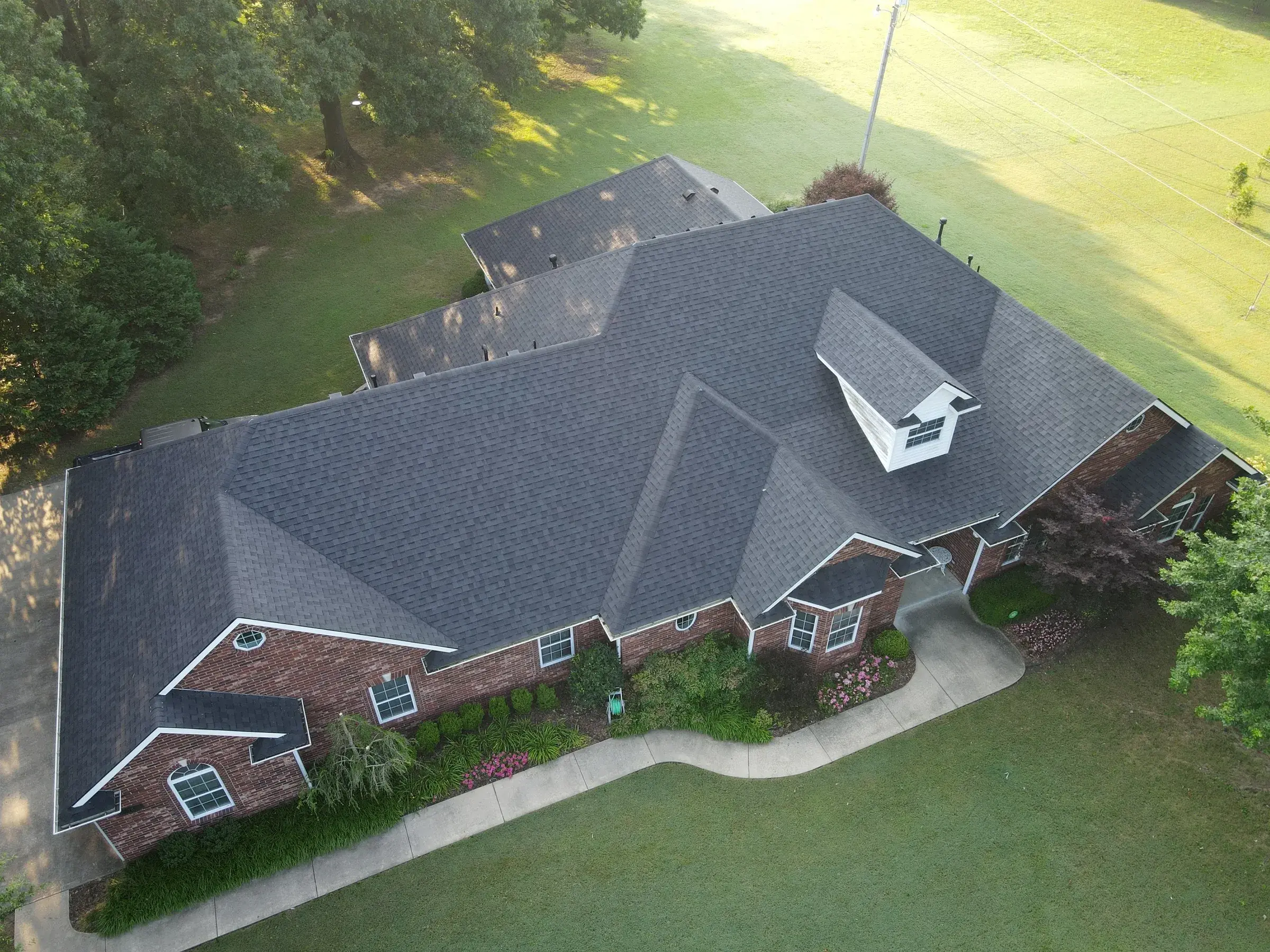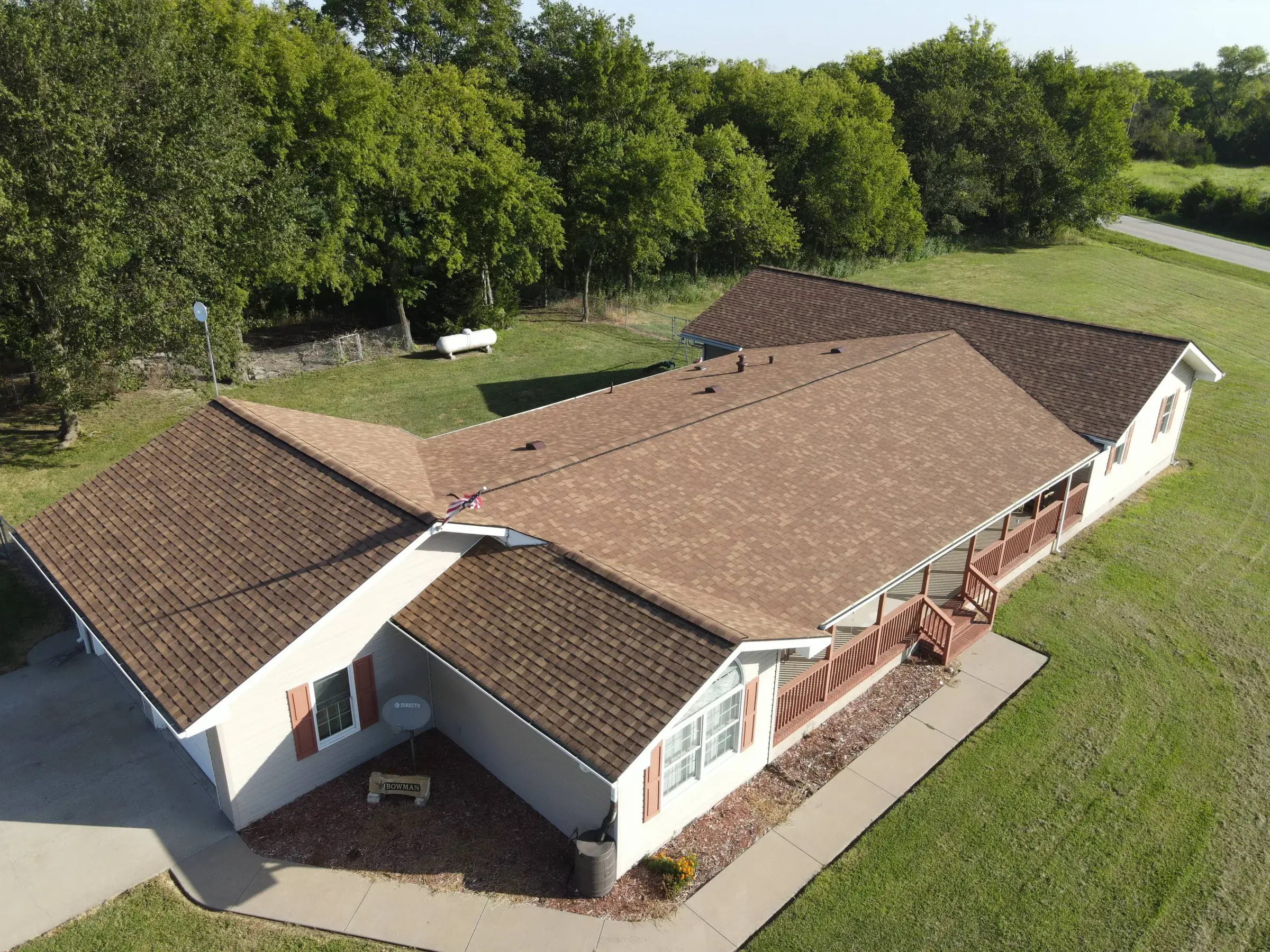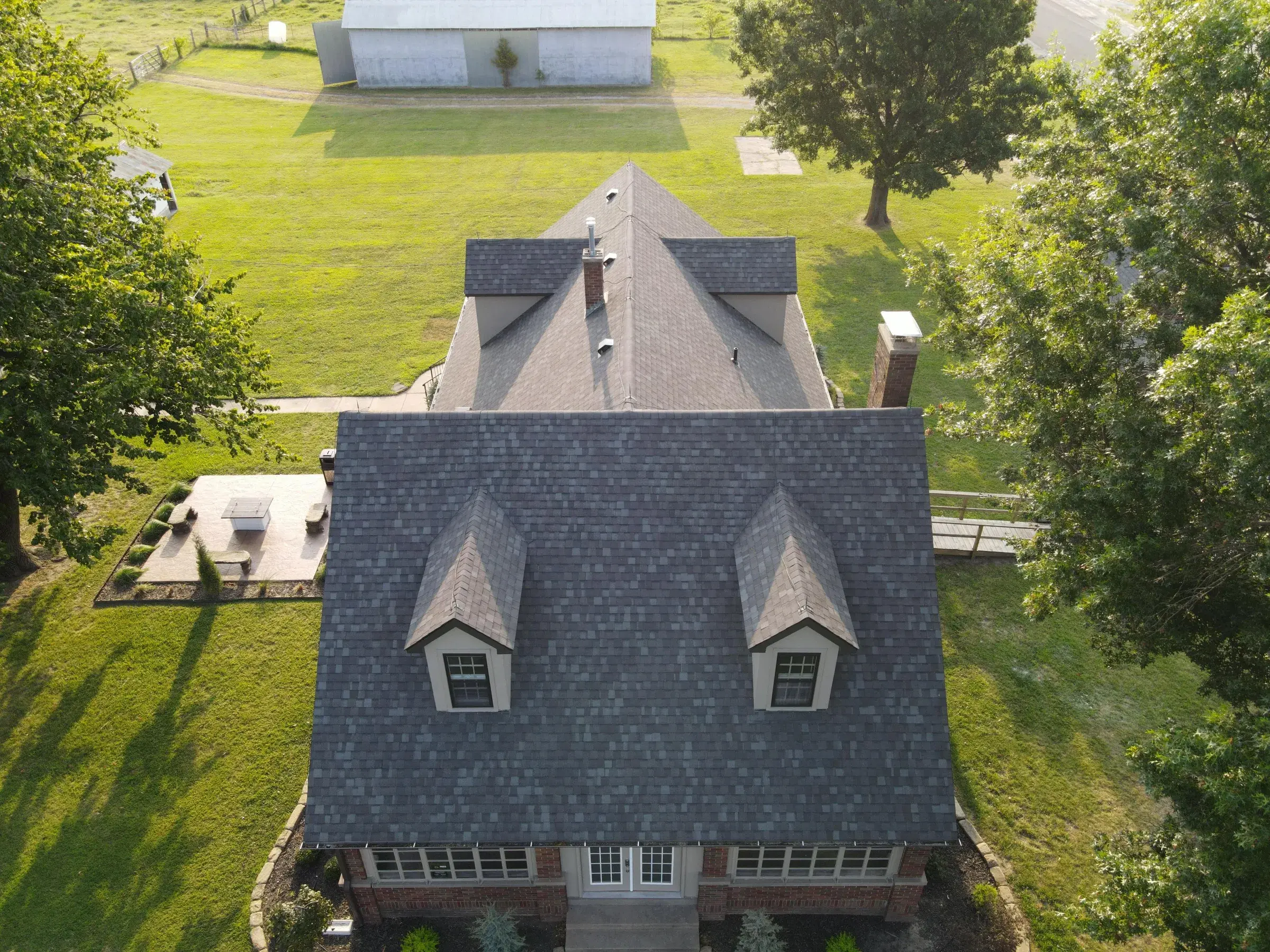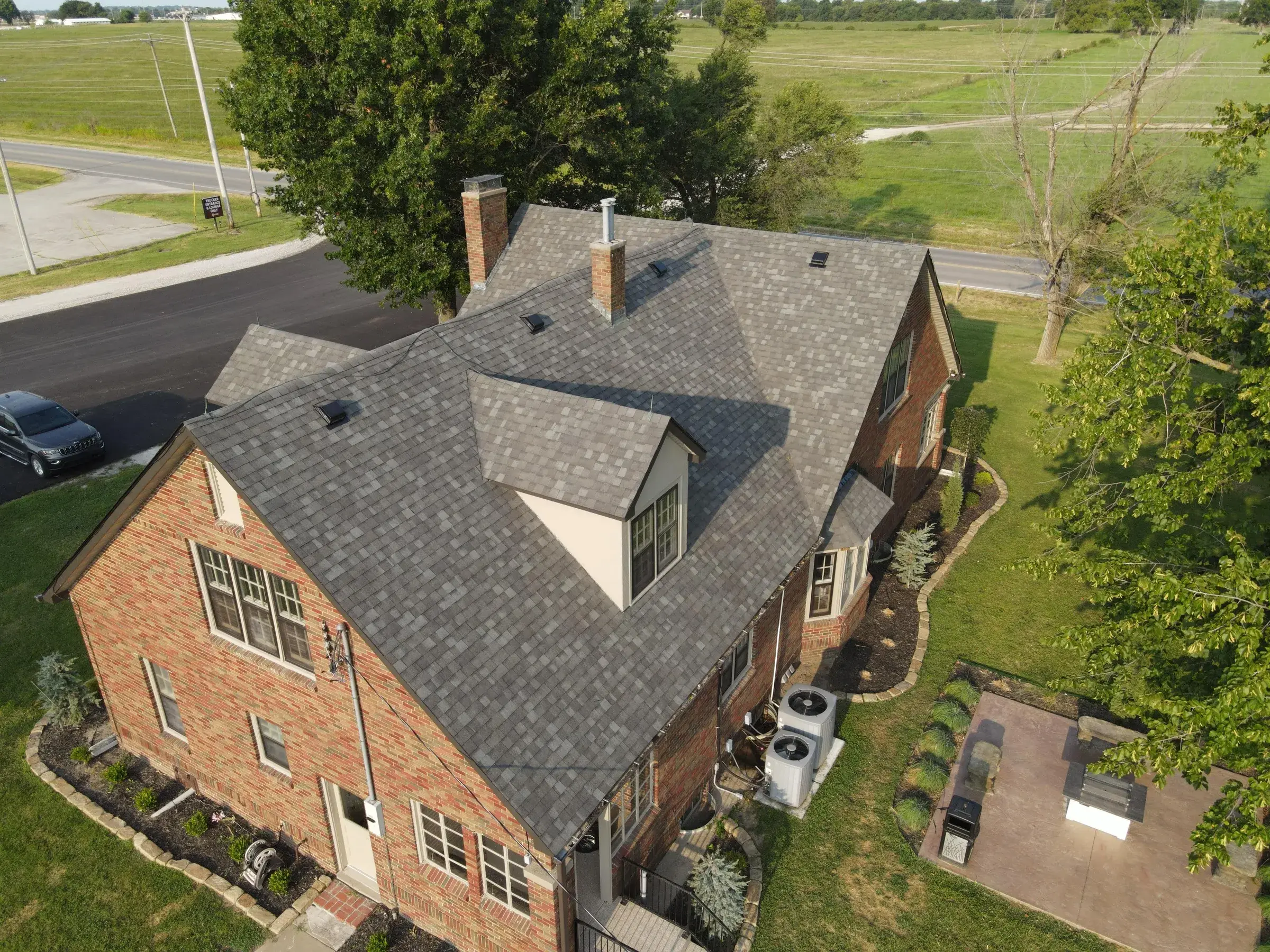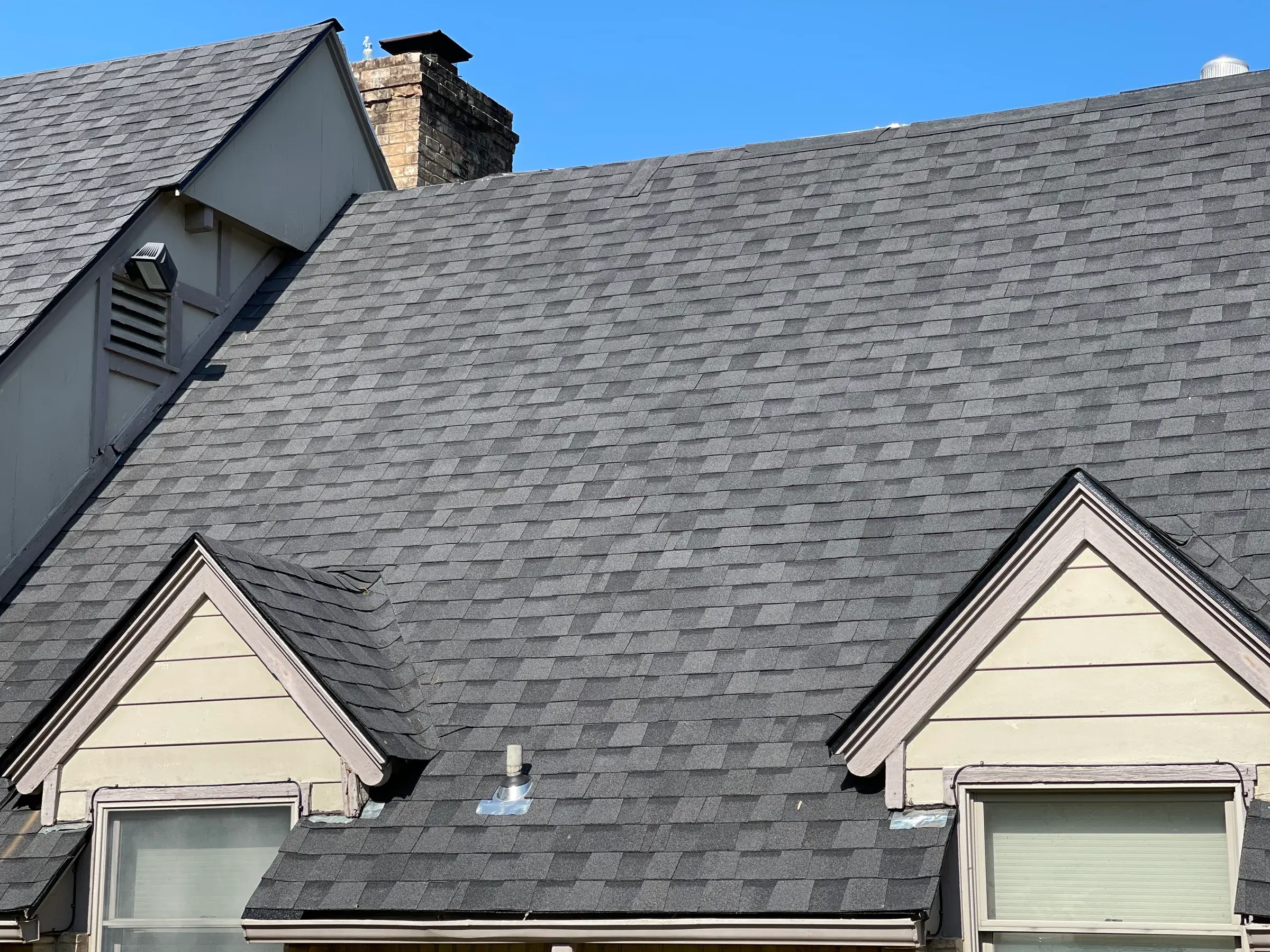
Most standard homeowners policies cover sudden hail damage to a roof, but how much you receive depends on your endorsements — a roof payment schedule, a cosmetic damage exclusion, a separate percentage wind/hail deductible, or actual cash value settlement on the roof can each dramatically reduce payment. Read your declarations page before you assume.
The short answer, and why "covered" is not the same as "paid in full"
There is a gap between two sentences that sound identical to most homeowners. "Hail is a covered peril" means your policy does not exclude hail. "My roof is covered" means your insurer will pay to replace it. The first is almost always true in Oklahoma. The second depends on four or five lines of small print that were added to your policy at some point, often at renewal, often without a phone call.
This matters more here than in most of the country. The Oklahoma Climatological Survey's 1991–2020 normals put Ottawa County at roughly four to five days a year with hail larger than three-quarters of an inch. That is not a rare event you plan around once a decade. It is a recurring cost that insurers have spent twenty years engineering their policies to manage — and the roof is where nearly all of that engineering landed.
So the useful question is not whether hail is covered. It is: how does my specific policy pay for a hail-damaged roof, and what will actually land in my bank account? That is answerable in about ten minutes with your declarations page, and this article walks you through it.
Hail as a named peril vs. open perils: how coverage is triggered
The NAIC describes the standard homeowners structure this way: the most common form written in the United States insures your dwelling on an open-perils basis and your personal property on a named-perils basis. Open perils means everything is covered unless the policy specifically excludes it. Named perils means only the listed causes are covered.
Your roof is part of the dwelling. So on a typical open-perils dwelling form, hail does not need to appear on a list to be covered — it simply needs to not appear on the exclusion list. That is why the coverage question is usually the easy part.
But open perils also carries a requirement that trips people up: the damage has to be sudden and accidental. A hailstorm qualifies. Twenty-two years of Oklahoma sun steadily cooking the asphalt out of your shingles does not. NOAA's National Severe Storms Laboratory explains in its Severe Weather 101 material that hail forms when updrafts carry raindrops high into the freezing parts of a thunderstorm, and that stones grow until the updraft can no longer hold them. The result is a discrete, dateable event — which is exactly what a policy is built to pay for. Slow deterioration is not.
This is why the distinction between storm damage and age matters so much on an adjuster's report, and why it is worth understanding the difference between [hail damage and ordinary wear and tear](/blog/hail-damage-vs-wear-and-tear) before anyone climbs on your roof.
The four endorsements that change everything
An endorsement is an amendment to your policy. It is listed on your declarations page, usually as a form number and a short title, and it overrides the base policy language. Five of them decide most hail outcomes. Here is what each one does and the exact question to ask about it.
| Feature | What it does to a hail payout | Where to find it | What to ask your agent |
|---|---|---|---|
| Roof payment schedule (roof surfaces endorsement) | Pays a set percentage of replacement cost based on the roof's age and material — the percentage drops each year. A shingle roof deep into the schedule can be worth a fraction of what it costs to replace. | The forms and endorsements list on your declarations page; often includes the word "roof" or "roof surfaces" | "Is my roof on a payment schedule? What percentage applies at its current age?" |
| Cosmetic damage exclusion | Excludes dents and marring that do not affect the roof's ability to keep water out. Most often written against metal roofing. | Endorsement list; may be titled cosmetic damage, or loss to metal roof surfacing | "Do I have a cosmetic damage exclusion, and does it apply to my roof material?" |
| Separate wind/hail deductible | Replaces your flat deductible with a percentage of the dwelling limit for wind and hail losses only. Every other peril keeps the flat deductible. | The deductible block on the declarations page — look for a second line, not just the first | "Is my wind/hail deductible flat or a percentage? What dollar figure is that today?" |
| Matching / line of sight | Governs whether undamaged slopes get replaced when the damaged slope's shingle is discontinued and nothing on the shelf matches. | The loss settlement language in the policy form; frequently not on the dec page at all | "How does my policy handle matching if my shingle is no longer made?" |
| ACV vs. RCV loss settlement | ACV subtracts depreciation and keeps it. RCV subtracts depreciation up front and releases it after the work is finished and invoiced. | A "loss settlement" line on the declarations, or an endorsement | "Is my roof settled at replacement cost or actual cash value — and is the roof rated differently from the rest of the house?" |
Notice a pattern. Every one of these can apply to the roof alone while the rest of your house keeps broader terms. A policy can be replacement cost on the siding, the windows and the deck, and actual cash value on the shingles. That is not a mistake. It is a deliberate carve-out, and it is legal, disclosed, and easy to miss.
Percentage deductibles: how a 1–2% wind/hail deductible actually calculates
The Insurance Information Institute notes that in states with significant hail exposure, separate percentage deductibles for wind and hail have become common. The Oklahoma Insurance Department's consumer guidance flags the same thing, and makes a point worth repeating: the percentage is applied to your dwelling limit, not to the amount of the damage.
That distinction is the whole ballgame. A 2% deductible on a $250,000 dwelling limit is $5,000 whether the hail did $6,000 of damage or $60,000.
Here is a hypothetical, using round illustrative numbers rather than any real claim. Assume a $250,000 dwelling limit (Coverage A) and a roof that would cost $18,000 to replace.
| Line | 1% wind/hail | 2% wind/hail | $1,000 flat (comparison) |
|---|---|---|---|
| Coverage A dwelling limit | $250,000 | $250,000 | $250,000 |
| How the deductible is calculated | 1% × $250,000 | 2% × $250,000 | Fixed dollar amount |
| Your out-of-pocket before anything is paid | $2,500 | $5,000 | $1,000 |
| Illustrative replacement cost of the roof | $18,000 | $18,000 | $18,000 |
| Insurer's share at full replacement cost | $15,500 | $13,000 | $17,000 |
| Same roof, but the storm caused $4,000 of damage | $1,500 paid | $0 — under deductible | $3,000 paid |
Two things fall out of that table. First, the difference between 1% and 2% is $2,500 of your money on a single event — far more than the premium difference between the two options in most years. Second, a percentage deductible quietly turns small claims into non-claims. That bottom row is not an edge case; it is the ordinary outcome of a moderate storm on a house with a 2% deductible.
One more mechanic worth knowing: if your policy has inflation guard, your Coverage A limit rises at each renewal. A percentage deductible rises with it. The dollar figure you calculated three years ago is not the dollar figure today.
ACV vs. RCV on the roof specifically
Actual cash value is replacement cost minus depreciation. Replacement cost value pays what it costs to put the roof back — but in two steps, and that second step is where homeowners get surprised.
On a replacement cost policy, the first check is usually the ACV check: the full estimate, minus depreciation, minus your deductible. The withheld portion is called recoverable depreciation, and most carriers release it only after the work is complete and they have a final invoice. If you take the first check and do not do the work, you do not get the rest. That is the deal, and it is written into the loss settlement clause.
On an actual cash value policy, there is no second step. Depreciation is gone. On a fifteen-year-old asphalt roof, that can be most of the value of the claim. We have written a fuller breakdown of [how ACV and RCV settle differently on a roof](/blog/acv-vs-rcv-roof-insurance), because this single line on a declarations page moves more money than everything else on it combined.
What is typically excluded: wear and tear, prior damage, neglect, ongoing leaks
Standard homeowners forms exclude wear and tear, deterioration, and "inherent vice" — insurance language for the thing simply reaching the end of its life. They also exclude faulty workmanship in the original installation, and neglect, meaning failure to take reasonable steps to protect property after a loss.
In practice, four things get a hail claim denied or reduced in this market:
- Age-related granule loss that looks like hail from the driveway but not on the shingle. Northeast Oklahoma runs about 62% annual sunshine, and Ottawa County averages roughly 57 days a year above 90°F. UV and heat strip granules on their own schedule.
- Prior damage from an earlier storm that was never claimed. If an adjuster can date the bruising to a different event than the one you reported, it belongs to a different claim — possibly one that is now too old to file.
- Foot traffic, satellite dish installs and HVAC service damage, which leave marks that read as impact but are not weather.
- An ongoing leak. Once water has been getting in for months, the resulting rot and mold usually fall under a long-term seepage exclusion, even if a covered storm started it. The storm damage may be covered; the neglect afterward generally isn't.
Freeze-thaw is the local wildcard. Miami averages about 89 nights a year below freezing. Water gets into a hail fracture, freezes, expands, and widens it — so damage that was marginal in May can be obvious by February. That helps you and hurts you at the same time: it makes the damage more visible, but it also gives an adjuster a reason to argue the cause was time rather than the storm. If you know a specific storm hit your house, the right move is to have it documented then, not eighteen months later. What hail bruising actually looks like on a shingle — the soft, dented spot with the granules knocked loose and the mat exposed — is covered in our guide to [identifying hail damage on a roof](/blog/hail-damage-roof-identification).
Roof age: why a 20-year-old roof and a 5-year-old roof settle differently
Two identical houses, two identical storms, two very different checks. The only variable is the date on the roof.
A five-year-old architectural shingle roof on a replacement cost policy has minimal depreciation and generally isn't on a payment schedule. The claim math is close to: estimate, minus deductible, with a modest depreciation holdback you recover when the work is done.
A twenty-year-old roof is a different animal. It may have aged into a roof payment schedule tier that pays a low percentage of replacement cost. It may have been moved to actual cash value at some renewal. Its shingle is probably discontinued, which turns matching into a live dispute. And it is close enough to end-of-life that an adjuster will look hard at whether the failure is hail or arithmetic.
The honest takeaway: the time to find out how your policy treats your roof is when the roof is young and boring, not the week after a storm. Ask now. The answer will not change because you asked.
How to find your own answer in your declarations page in 10 minutes
Your declarations page is the two-to-four-page summary at the front of your policy packet. It arrives at every renewal. Most people file it unread. It contains the answer to every question above.
| The line you're looking at | What it actually means for a hail claim |
|---|---|
| Coverage A — Dwelling | The number your percentage deductible is calculated from. Not the amount of your damage, not your home's market value. |
| Deductible — All Other Perils | Applies to fire, theft, water, and everything except what has its own line. Often the only deductible people remember. |
| Windstorm or Hail Deductible | The one that matters here. If you see a %, multiply it by Coverage A and write the dollar figure on the page in pen. |
| Loss Settlement — Replacement Cost / Actual Cash Value | Whether depreciation comes back to you after the work is done. Check whether the roof is called out separately from the dwelling. |
| Forms and Endorsements | A list of codes and short titles. This is where the roof schedule and the cosmetic exclusion hide. Any title containing "roof" deserves the full form text. |
| Inflation Guard / Automatic Increase | Your Coverage A grows each year, so a percentage deductible grows with it. |
| Policy Form (e.g., HO-3, HO-5) | Tells you whether the dwelling is open perils. The NAIC's consumer material explains what each form covers. |
The ten-minute policy review
- Find your most recent declarations page — renewal packet, carrier app, or agent's office.
- Write down your Coverage A dwelling limit.
- Find the wind/hail deductible line. If it's a percentage, multiply and write the dollar amount down.
- Find the loss settlement line. Note whether it says replacement cost or actual cash value — and whether the roof is treated separately.
- Read every endorsement title. Circle anything with "roof," "cosmetic," "metal," or "payment schedule" in it.
- Request the full text of any endorsement you circled. You are entitled to it.
- Write your roof's age and material on the same page. That's the input the schedule uses.
- Call your agent with the three questions you now know to ask, and keep the answers in writing.
If your agent cannot answer, or you want a neutral party, the Oklahoma Insurance Department has a consumer assistance line and publishes homeowners guidance covering deductibles and endorsements. They do not sell you anything. Nothing here is personalized insurance advice — your agent and the OID are the right sources for your specific policy.
Impact-resistant roofing and premium credits: what to ask your agent
Impact-resistant shingles are rated under UL 2218, which drops steel balls of increasing size onto a shingle and checks the back of the mat for cracking. Class 4 is the top rating. IBHS — the Insurance Institute for Business & Home Safety — has run extensive research on impact-resistant roofing and publishes ratings work on how products perform under hail impact, including the point that laboratory steel balls and real hailstones are not identical projectiles.
Now the part nobody tells Oklahoma homeowners plainly: this state does not mandate an insurance discount for impact-resistant roofing. A full-text search of Title 36 returns nothing for "UL 2218" or "impact resistant." Any credit you get is a voluntary underwriting decision by your carrier. It varies by company, and we won't publish a percentage or a dollar figure, because there isn't a reliable one to publish.
So the question to your agent is simply: "Do you offer a credit for a Class 4 impact-resistant roof, how much is it, and what documentation do you need?" Ask before you buy the shingle, not after. And be clear-eyed about what Class 4 does: it reduces the odds of a functional failure from moderate hail. It does not make a roof hailproof, and it does not exempt you from a cosmetic damage exclusion — in fact those two things sometimes get sold together.
When it isn't worth filing at all
This is the section most roofing companies leave out, because the honest answer sometimes costs them a job.
A claim is a claim whether it pays or not. Denied and closed-without-payment claims still show up in loss history. If your damage is close to your deductible, filing can cost you more over the next five years than it returns this month. Getting a real number on the damage before you pick up the phone is the entire point of a [free roof inspection](/services/roof-inspections) — you want to know what you're deciding about.
Is this worth filing? Work down the list
- Do I have documented, storm-specific damage — not just an old roof? If no, stop. Filing on wear and tear wastes a claim.
- What is my wind/hail deductible in actual dollars? If it's a percentage, you calculated this in the ten-minute review.
- Is the written repair or replacement estimate meaningfully above that deductible? If it's within a few hundred dollars, paying cash is usually the better trade.
- Am I on a roof payment schedule or ACV settlement? If yes, reduce your expectation to the scheduled percentage and re-run the comparison.
- Does a cosmetic damage exclusion apply to my roof material? If the only damage is dents in metal, coverage may not attach at all.
- Is the roof leaking now, or is water getting in? If yes, file — the neglect exclusion starts working against you the day you know and do nothing. Tarp it first.
- Have I asked my agent what filing does to my rating and my loss history? Ask before, not after.
If the answer is file, the process from there — notice, adjuster meeting, scope disagreement, supplements, depreciation release — follows a fairly predictable sequence, which we lay out in our walkthrough of the [Oklahoma roof insurance claim process](/blog/oklahoma-roof-insurance-claim-process). If the answer is don't file, you still have a roof to deal with, and paying for a [roof replacement](/services/roof-replacement) outright is a normal, sane decision that a lot of people in Ottawa County make.
One last thing. The most valuable version of this article is the one you read on a quiet Tuesday, not the one you find at 11 p.m. after a storm. Pull your declarations page out tonight and spend the ten minutes. If you'd like a written photo report of what your roof looks like right now — before there's a claim to argue about — we'll come out and document it. Call (209) 758-8550.
We are roofing contractors, not public adjusters or insurance attorneys. Coverage decisions are made by your insurer under your policy.
Questions people ask about this
Will filing a hail claim raise my homeowners premium in Oklahoma?
It depends on your carrier's rating rules, and no roofer can tell you otherwise. Weather losses are treated differently than at-fault losses by most companies, but claim history is still a rating factor for many, and denied or closed-without-payment claims can appear in your loss history too. Ask your agent directly what a hail claim does to your rating before you file. The Oklahoma Insurance Department can also answer general questions about how carriers use claim history.
My neighbor got a full roof replacement and I got denied after the same storm. How?
Almost always because of the policy, not the roof. Different carriers, different endorsements, different roof ages, and different loss settlement terms produce very different outcomes from identical hail. A neighbor with a five-year-old roof on a replacement cost policy and no roof payment schedule is in a completely different position than a twenty-year-old roof on an ACV settlement. Compare declarations pages, not results.
Can a roofing contractor waive or cover my deductible if the claim gets approved?
No. Under 59 O.S. § 1151.30, it is unlawful in Oklahoma for a contractor to advertise or promise to pay any part of an insurance deductible, directly or indirectly — and the section was strengthened effective 1 November 2025. That includes rebates, discounts written to absorb the deductible, and payments dressed up as yard sign or referral fees. Anyone offering it is telling you something important about how they operate.
Does an impact-resistant Class 4 roof guarantee an insurance discount in Oklahoma?
No. Oklahoma does not mandate a premium credit for impact-resistant roofing — nothing in Title 36 requires one. Some carriers offer a credit voluntarily and the amount varies, so the only reliable answer comes from your own agent. Ask whether they offer a credit, how much it is, and what documentation they need before you commit to the product.
How long do I have to file a hail claim after a storm?
Your policy sets it, not a rule of thumb you heard from a door knocker. Homeowners policies require prompt notice of a loss and typically include a separate time limit for bringing legal action against the carrier. Read the duties-after-loss section of your own policy, and if the language is unclear, ask your carrier in writing or call the Oklahoma Insurance Department. Practical advice: the older the damage, the harder it is to tie to a specific storm, which is an argument for documenting it early regardless of the deadline.